
Arlette Anderson, The R&A’s Director of Sustainable Golf, talks to GCMA Insights about what golf clubs must do to welcome in a more sustainable future…
This article is part of GCMA Insights – topical content for golf industry professionals, discussing the things that matter to those who work in golf clubs.
Anyone who has glanced out of a window over the last month or so will need no reminding about the odd weather patterns that seem to be the norm.
When we think about sustainability, we instinctively think about the impacts of climate change. The subject, though, is much wider – covering not only environmental aspects but economic and social too.
Steering golf through such a vast and complicated topic is Arlette Anderson, The R&A’s Director of Sustainable Golf.
Few have more experience in the field, having worked for a series of huge companies – including BNP Paribas Real Estate, RICS, Royal Mail, Balfour Beatty Rail, Gatwick Airport, and Vodafone – where she advised and supported those organisations to become more sustainable.
The challenge facing her is considerable, not only in directing the sector and a host of governing bodies and stakeholders but also in spreading best practice and pressing home the importance of sustainability to thousands of golf clubs.
Arlette sat down with GCMA Insights to discuss her role, how The R&A is leading the way in researching and promoting sustainable golf, and how our sport needs to adapt to some immediate challenges as well as those pressing on the horizon…

Golfers can have a narrow interpretation of what sustainability is – can you define it for us?
Sustainability means a balance between economic, social, and environmental aspects. Essentially, it’s around what an organisation, or a club, can do in terms of meeting its needs now without compromising the future needs it has.
When we’re looking at sustainability issues in relation to a golf club, let’s firstly focus on environmental issues of sustainability. That is what the outside space is all about. Members and players see environmental aspects of sustainability at their golf clubs.
That is my primary focus around The R&A’s sustainable golf approach – the environmental sustainability issues and, in particular, the turf grass aspects, or the agronomy aspects: the presentation of that golf course and the facilities themselves.
You’ve got considerable experience in sustainability…
My experience covers a range of different sectors and environments – predominately around critical infrastructure.
But when you’re talking about sustainability, it has been around for about 25 years. There is now the realisation that it’s reached this critical point and particularly around the impacts of climate change.
My experience is in a variety of different areas in terms of sustainability leadership and getting those organisations to become more sustainable.
Whether that is aviation, telecommunications, or critical infrastructure, organisations are now realising the important part they play in addressing some of the sustainability challenges for them to continue in the future.
What attracted to me about golf? It’s an outside sport and when you’re looking at the environmental issues of sustainability, I think golf has the potential to realise the positive impacts it can have in some of those challenges of the future.
Get involved in the debate.
To join the GCMA, click here, or to organise a call with a member of the GCMA team, just complete the form below.
Woking in aviation seems particularly relevant as it’s an industry with a reputation for not being the most climate friendly. That’s obviously an accusation thrown at golf courses. You’re well versed at dealing with perceptions and challenges from outside of the industry you’re in…
There are almost 3,000 golf courses in urban, rural, or coastal environments in the UK. Think of the role they can play in species conservation or habitat protection.
That’s the potential golf has to provide solutions to some of the climate change challenges we’re facing in the future.
The R&A have been looking at sustainability for some time – through projects like Golf Course 2030. Can you give us a brief history of where they are?
We want to provide leadership. What are the practical solutions and guidance we can provide?
We invest in our research agenda. Golf Course 2030 examines some of the climate change issues relating to golf, and how it affects golf, with the idea of producing practical solutions and guidance for the industry to understand what changes they need to make in their club.
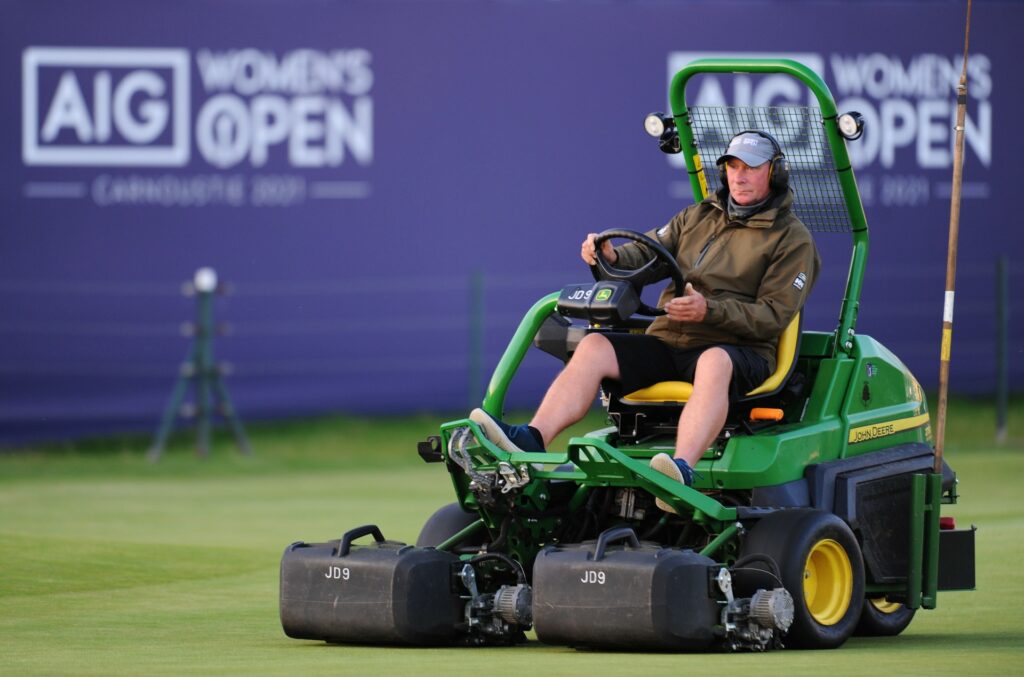
We also provide sustainable agronomy professional advice, where our consultants can go out and provide specific practical guidance on sustainable agronomy techniques that a club can consider.
We invest a lot in sustainable agronomy, and greenkeeping skills, through our scholarship programme and educational opportunities.
And we’re not just working with some of the top universities around the world in terms of supporting scholarships, we’re also starting to see how we can influence the curriculum for sustainability understanding in greenkeeping, and the changes greenkeepers can make in terms of how their clubs are managed, to adopt more sustainable practices.
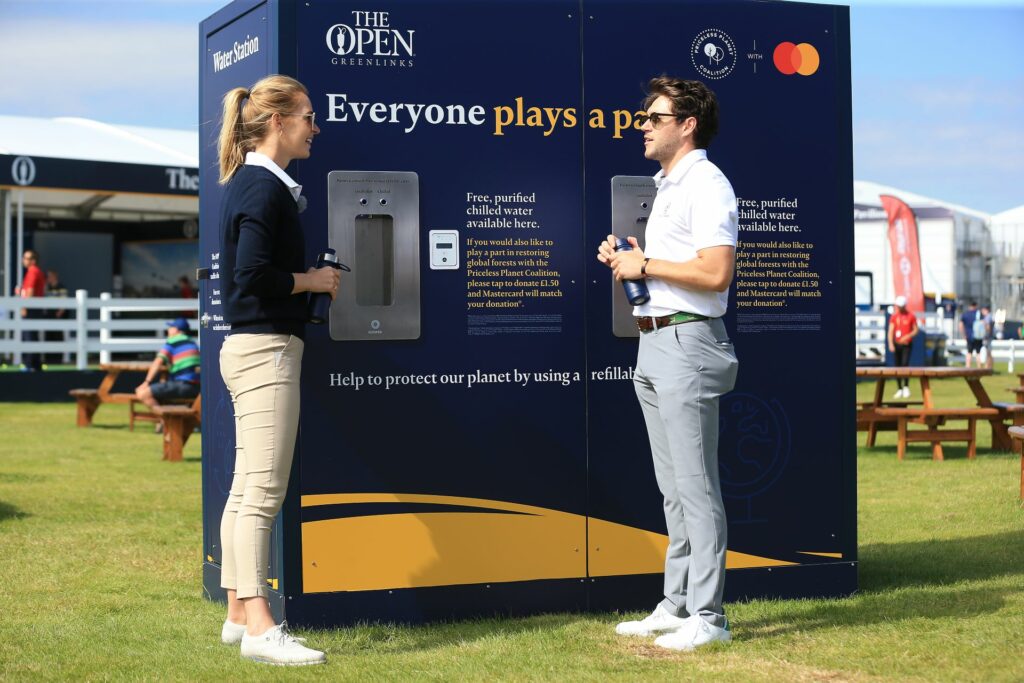
We also use our championship events like The Open as an opportunity to engage with players and spectators around hosting a sustainable event.
Is a key part of your role to impress upon golf clubs there are specialist resources they can call on?
Very much so. Our role, in terms of sustainable golf, is around four key areas: the advice and guidance we can provide, the practical solutions in terms of our research, our education programme, and our platform around engaging people with sustainable events.
These are opportunities we can have to change that perception and show golf is a sustainable sport and help individual clubs take up more sustainable practices.
We have to influence their decisions and one of our roles is to find the practical advice and guidance for them to do that. It’s important for them to engage with their players, and their members, around what their expectations are for the future.
There is a lot around clubs being operationally efficient and effective to be able to adapt to changes in the future but, also, player expectations are beginning to change as well.
WHY JOIN THE GCMA?
Membership of the GCMA unlocks a network of like-minded professionals, provides you with support in your professional and personal development, and provides you with a multitude of benefits. Whether that’s the tools that will help you to excel in your profession, or a wide range of services to support your wellbeing, signing up to the GCMA is joining a community.
What are the changes going to be?
Let me focus on environmental sustainability issues because, in terms of people’s understanding, that’s the first thing they think about.
We look at material issues and it’s around resource use, turf grass preparation, pesticides or fertiliser, water usage, the type of climatic conditions that affect growing conditions, biodiversity and species loss.
Climate change can also incorporate changing weather patterns, rising sea levels, difficulty in terms of supply chain for resource uses, carbon emissions relating to greenhouse gas increases and temperature rises globally. It’s not just a national issue. It’s an international issue in relation to the climate impacts of golf.
That’s quite lot for a club to think about…
What’s really important is to prioritise. What is the significant impact to that particular golf club based on its location or region?
When you’re starting to look at a particular area of the UK, an environmental sustainability issue might be more prevalent than perhaps somewhere else. There are global issues, but that golf course needs to examine what is important to them.
Is it a priority for The R&A to change the culture at golf clubs from one that’s essentially reactive to proactive? If so, how would you go about that challenge?
This is around adaptation to the future and adaptation around climate change. We know, globally, climate change issues are affecting golf courses. We are at that acceptance point where we know we need to do something about them.
It’s a question of getting into the decision making, the financial planning, and the risk management for clubs to be able to survive in the future.
It’s thinking about the immediate things that can be done, but also starting to think about five to seven-year financial planning and what significant climatic risks are affecting a club that could potentially be detrimental.
The impacts of climate change are now creeping into a club’s risk management or resilience to the future.
Are we going to have to accept our golf courses are going to change?
You have to be bold in that statement – to say a golf course is going to look different in the future. It is. That’s due to a number of different pressures.
But it’s around explaining to your members, your golfers individually, why those changes are happening and the reasons why the club is perhaps adopting a different course set-up or look.
Change is coming. It’s important individual members are brought along with the message of that need to change.
How can golf clubs better educate themselves?
It’s really important to engage with members. So, for example, if you’re looking to invest in irrigation, the reason for that is to secure water in the future in a most effective and technological way. And, ultimately, that will save resources, money, and secure that water resource.
It is significant funding, initially, but it is preparation for the future – in terms of water security and meaning that less water is required for that golf course.
It’s important to engage and it is also looking at the future resilience of that club.
Clubs shouldn’t be shy in asking for that help…
We can visit your golf club and talk through what some of those sustainable agronomy issues are and the opportunities to become more sustainable and more resilient to the effects of climate change.
What are the next steps with Golf Course 2030? It has been a technical piece until now. Do you see it becoming more accessible to the golfer?
It was important to start the research agenda and the purpose of what sustainable golf was doing in relation to bringing people together collaboratively, and really understanding what the climatic issues affecting golf were back then.
Things have evolved and, in terms of the climate impact on golf, it’s speeded up somewhat. There are new challenges being realised. It’s all about the outside space. It’s all about sustainable agronomy. It’s all about biodiversity and resource management and it’s all about climatic impacts.
Sustainability issues are prominent, but they are now more focused on the practical guidance that clubs can adopt.
Biodiversity is a very positive aspect of sustainability. What’s The R&A’s role here?
It’s around protection of habitats but also conserving species as well. We have a partnership with the RSPB, I think we’re into the fourth year of that, and that’s an opportunity for RSPB advisors to talk with clubs individually about how they can increase their biodiversity.
They are supporting us with another project as we look to understand the biodiversity value of golf clubs and we look to our national government about biodiversity protection and the role golf clubs can play in increasing, valuing, or providing habitat for biodiversity to thrive.
So it’s advice and guidance that we’re able to offer from our RSPB partnership, as well as publications and guidance on what golf clubs can do to understand their biodiversity and the opportunities to increase or preserve that.
If you look at a typical club, there may be about 50 per cent of their land that could potentially be used to increase biodiversity. That’s a great opportunity.
Something as simple as putting up some bird boxes, or houses for bees, can have a remarkable effect on the golf course environment…
It’s not just a question of increasing biodiversity but it’s also the opportunity to look at the conversation of these areas and species conservation.
There is a part that members can play in species identification. Some clubs have partnered with local wildlife clubs and members can really understand the biodiversity of their particular club and play a role in protecting species too.
What happens if we don’t get a grip of these sustainability issues?
A lot of the actions and requirements for sustainability in golf are voluntary. If the sector does not evolve quickly enough, it may be subject to some form of regulation or mandatory implementation requirements.
You’re talking about governmental involvement?
Absolutely, because the sector is significant. It has a role to play, and it can play a very positive role.
This article is part of GCMA Insights – topical content for golf industry professionals, discussing the things that matter to those who work in golf clubs.
Get involved in the debate. To join the GCMA, click here, or to organise a call with a member of the GCMA team, just complete this form and we’ll be in touch!
Enquiries
"*" indicates required fields