Sarah Barter has been appointed England Golf’s new Head of Handicapping and Course Rating. In her first interview, she talks to GCMA Insights about her plans to move forward the World Handicap System in the country
This article is part of GCMA Insights – topical content for golf industry professionals, discussing the things that matter to those who work in golf clubs.
Little seems to get golfers as excited as their handicaps. It’s approaching five years since the launch of the World Handicap System and yet in England passions still run high – both for and against the global order.
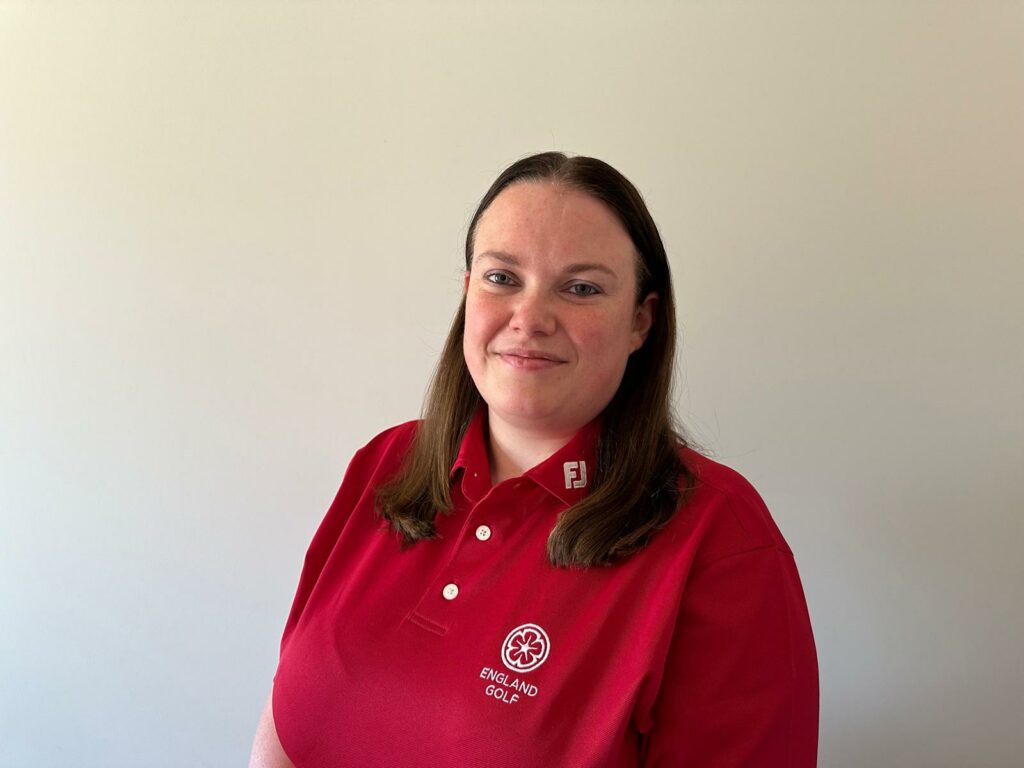
Entering this maelstrom is Sarah Barter, England Golf’s new Head of Handicapping and Course Rating. Having arrived at Woodhall Spa in February, following seven years as Membership and Events Manager at Frilford Heath, she is steeped in the sport.
In her first interview, she talks to GCMA Insights about her background, why she is excited to take on such a high-profile role, and how England Golf are – and will continue – to support club managers and handicap committees as WHS hits headlines…
Get involved in the debate.
To join the GCMA, click here, or to organise a call with a call with a member of the GCMA team, just complete the form below.
Congratulations on your new role at England Golf. How did you end up in the handicapping chair?
My golfing history started at Woburn. I worked there seasonally as part of the Golf Services Team and really enjoyed my time there. I worked with some incredible people
I did that through A-Levels and university (four years in total) which led to my first full-time paid position at Mentmore Golf & Country Club, which sadly no longer exists. I really enjoyed my membership role there – getting involved in competitions and the handicapping side of things – and then went to Aldwickbury Park in a similar role.
It was at Frilford Heath, where I really came into my own as Membership and Events Manager. I helped develop and deliver the competition calendar there – we had over 450 competitions within a calendar year across all the different sections. There was a lot of competitions – ranging from Stablefords all the way to club championships and I was fortunate enough to be involved in tournament preparations for Regional Open Qualifying, a Challenge Tour event and European Tour Q-School.
They were fantastic experiences, and I was there for just under seven years. I started as England Golf’s Head of Handicapping and Course Rating in February and am looking forward to embracing the challenges and opportunities that come with the role.
Let’s get the big handicap question out of the way. What’s yours?
My handicap is 2.5, though if you look at my swing you might say it’s not particularly good. My bunker play definitely isn’t good! I am fortunate enough to be at the lower end of the handicap spectrum and my husband is also a former pro, who has recently returned to amateur status.
He’s off a plus handicap so, between the two of us, it does get pretty competitive.
What attracted you to this role? Why handicapping?
Handicapping and Course Rating is such an emotive subject and it’s the foundation of what underpins golf within the world – not just this country. It’s a real opportunity to put a stamp on that element but also to have an overall view of what Handicapping and Course Rating provisions we have within this country and really look at developing them and improving them and, hopefully, providing golfers and handicap committees and clubs with more resources so they can better understand the system.

As you joined, the system has been in for four-and-a-half years. How do you feel it has settled in? How does it work for you as a golfer? You obviously enjoy it, otherwise you wouldn’t have taken on this position…
It’s a really good system. It allows you to play golf pretty much anywhere and allows your handicap to adapt to the difficulty, or playability, of that golf course.
If you look at my record, I have been fortunate to play in some really nice places and to be able to record those scores and have that noted down is fantastic.
Historically, low handicappers were not allowed to put in general play/supplementary scores so to have that flexibility is fantastic.
It’s a really inclusive system and allows everyone to play on that basis.
You’ve joined at a hectic time – an intense period of England Golf WHS workshops for handicap committees. How have you found that period of going and meeting people who are delivering the system at the front end?
We’re very lucky that we have a very good team of people who have been doing a fantastic job of delivering those workshops and educating golfers and committees up and down the country. I am really grateful for the time they have spend putting into that – even before I arrived.
It’s really interesting being at the workshops. Everyone cares and is passionate about the handicap system and it’s great that people are so engaged with it, want to learn more about it, and want to better understand it and be given the tools to do that. The responses we have had from our workshops is their knowledge and confidence levels have improved massively from those workshops. They’re really doing what they’re meant to be doing.
WHY JOIN THE GCMA?
Membership of the GCMA unlocks a network of like-minded professionals, provides you with support in your professional and personal development, and provides you with a multitude of benefits. Whether that’s the tools that will help you to excel in your profession, or a wide range of services to support your wellbeing, signing up to the GCMA is joining a community.
For those who haven’t been to a workshop, one of their purposes has been to further educate handicap committees on the tools that are available to them to deal with potential manipulation. What are some of those ways?
As well as the Regional Handicapping and Course Rating managers, we have a fantastic team of Club and County Support Officers (CCSO), who visit clubs within their respective regions and are always on hand to help make sure committees are set up correctly and to ensure their procedures and policies are in place.
They’ve done a fantastic job of that over the last couple of years with the Respect in Golf movement.
In these workshops we have been covering the reports that are available on the WHS platform, which help handicap committees gather evidence if they suspect manipulation is happening at their golf club.
If they feel or want to take action then they can get the support they need from their county, or from their Regional Advisor, to know they are responding in the correct manner and with enough evidence behind it as well.
There are a lot of reports available and they are so helpful. I do urge anyone to make sure they’ve got the access to the platform – as a chair of a handicap committee you really need to make sure you’ve got that access available. It’s part of your role to have that.
You also need to be looking at those reports – not daily but checking maybe once a month to make sure you understand your golfers and how your golf club is operating.
You can play around with those reports and if you don’t understand what they mean you can reach out to your CCSO or County Handicap Advisor, who will certainly be able to help you understand those better.

Yes, there is a lot of detail in there. So if people don’t understand how to interpret the data, can you just elaborate on what they can do?
If they’re really unsure what to do with that data then, as I said, their first point of contact is to speak to their CCSO or County Handicap Advisor. If it is more in-depth than that then, following a restructure of the team, we’ve got regional support in the North, Midlands and South – specifically for handicapping and course rating and those guys can step in and get involved.
But, ultimately, your County Handicap Advisors are fantastic. They volunteer their time freely and they are super knowledgeable and super helpful and will be able to help interpret that data for you and tell you what it means.
So you’ve got an ample support system around you.
There is a section of golfers out there for whom WHS is problematic. What do you think your role will be in trying to educate and assuage their concerns?
It’s still early days for me at this stage to really commit to what that might look like but I really do believe education is the way forward and giving people the tools and the mechanisms they need to do the roles that they do.
We’ve done some early work already in highlighting specific roles around WHS: from a golfer, to a PGA pro, to a club manager, and what knowledge levels they need to have to effectively deliver WHS in this country.
I look forward to working with the team in more depth on that and building that to a level where we can put some proper education programmes and policies out there that can really help people understand the system more and, hopefully, make them feel better about it.
There are always going to be some people who don’t like change, or don’t like the software, but it is a system that, as Jeremy Tomlinson (England Golf Chief Executive) has already said, is going to stay and it’s better to work with it than against it.
Are you looking forward to the role? There are few things that get golfers more excited than handicapping?
Yes, 100 per cent. I was really excited when I was offered the position. I couldn’t say yes fast enough. It’s a great opportunity and, yes, I understand the responsibility that comes with it but, given my background and the team we’ve got, we’re in a really good place to put Handicapping and Course Rating™ in a really strong position.
I look forward to being given the time to be able to deliver that.
This article is part of GCMA Insights – topical content for golf industry professionals, discussing the things that matter to those who work in golf clubs.
Insights Signup
"*" indicates required fields