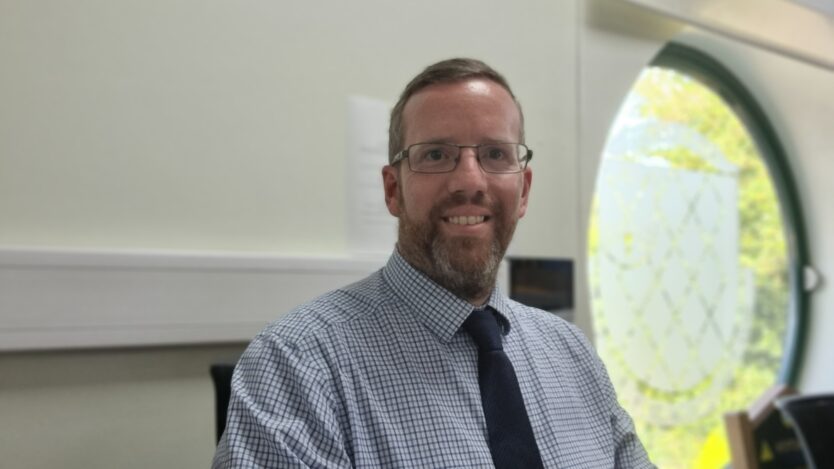
A career in golf club management was not part of his original plan, but Aspley Guise & Woburn Sands Golf Club GM Paul Lancaster is excelling in the industry now.
Paul Lancaster’s route into golf club management began in hospitality, where he built his early career in hotels, focusing on events and functions.
That experience opened the door to his first role in golf at Brocket Hall, managing corporate days and weddings before becoming Clubhouse Manager. He later moved to Gerrards Cross Golf Club as House Manager, providing his first taste of working within a member-owned environment.
It was there that Paul decided to fully commit to a career in golf club management. With the club’s support, he completed several GCMA training courses and, in 2017, landed his first General Manager role at Aldenham Golf & Country Club.
After a steep learning curve and overseeing a full clubhouse refurbishment, Paul made the move back to member-owned clubs and is now General Manager at Aspley Guise & Woburn Sands Golf Club, a role he’s held for the past two and a half years.
We caught up with Paul after he recently achieved Accredited Manager Level 3 Status…
What motivated you to pursue GCMA Accredited Manager Level 3 Status, and what does achieving it mean to you professionally?
The Accreditation process was a great introduction by the GCMA to allow managers to pull together their experience and achievements within the industry and I felt that it was a good way to record and reflect back on my journey within golf. I had already held Level 2 status and thought I give the Level 3 submission a go. It can take a process like this to remind yourself actually how much you have achieved, and it is always nice for this to be recognised by your industry.
Did you always aspire to become a Golf Club Manager, and what do you enjoy about the role?
Not at all, a career in golf clubs was never on my radar in my early hospitality career, I had never played or had any interest in golf at that stage. Brocket Hall changed that – what better place to get the golfing bug! I love the varied nature of the role; you certainly have to keep lots of plates spinning, which can be a challenge at times, but now I can’t see myself doing anything else.
How would you define your approach to management?
I try to combine the business-minded approach that is embedded in you within the proprietary golf and hospitality sector with the member-centric approach that the best member-owned clubs adopt. Ultimately, we are in a service industry and whilst we can’t please everyone all the time, we are here to try and deliver a customer/member experience that is memorable for the right reasons and represents good value.
What were your primary objectives when you took the role at Aspley Guise & Woburn Sands?
When I joined the club there was a degree of member discontent with course standards and inconsistent catering offering which had been highlighted amongst other areas in a membership survey. The priority in my mind was to halt that decline, and with the club not having had a GM in role for about nine months prior to my start, provide a visual management presence which includes regular weekends which took quite a few members by surprise. It was then a case of achieving some quick wins ahead of renewals before starting to review and update as necessary all the various policies that were in place, or not.
What are the key initiatives you have implemented and what achievements are you most proud of?
In my current role I played a lead role in a governance review which resulted in a change of management structure earlier this year. The process was lengthy and involved a lot of research, re-writes and member consultation but culminated in successful adoption at an EGM in late 2024. Whilst still in its infancy, the progress this year, compared to previous, is really pleasing to see and stands the club in good stead for the future.
I was keen to add value to membership, outside of just the day-to-day course and clubhouse activities. I have introduced a reciprocal programme with hand-selected neighbouring clubs that have the same values and of similar standing to ourselves. We now partner with five golf clubs and two indoor golf venues. On top of this we have partner agreements with a local hotel and a sports physio offering preferential rates to club members.
We operate with a cap on membership which meant those who were having medical or health issues either had to renew knowing they might not be playing or move to social membership in which case they wouldn’t get a golfing space back until the following year. I proposed and introduced a medical absence category, which falls outside the cap, and is subject to a minimum four-month absence period at the start of the subscription year. The member can return when they are ready after this point and regain their playing rights. I felt this was important to recognise the role golf can play in the recovery and rehabilitation in these situations both physically and mentally.
What are your main priorities in the foreseeable future?
The immediate priority is the recruitment of a Course Manager as our current CM moves on in a couple of months. I am currently working with the Board to produce a long-term strategic plan covering all aspects of the Club to give us more structure to future developments and importantly provide the membership with a route map of what is coming down the line; it is so important to keep members informed without over-promising.