The club’s five-year plan blends water security, revenue growth, and member experience, laying the foundations for a strong future.
When James Howard took the helm at Stratford Oaks, he stepped into his first General Manager role at a club in transition.
Formerly proprietary and now member-owned, the Warwickshire venue recognised the need for a long-term plan but waited for the right person to help shape and deliver it. That task fell to Howard, who worked with the board and chairman to produce a five-year strategy that balanced long-term sustainability with immediate growth opportunities.
The plan outlined investment in critical infrastructure, most notably water security and irrigation, while also setting out a programme of revenue-generating projects designed to strengthen cash flow.
Alongside the headline goal of developing a reservoir to reduce reliance on mains water, it mapped out improvements to golf operations, expansion of the driving range, the introduction of new teaching and retail facilities, and enhancements to the clubhouse environment, ensuring members and visitors saw tangible benefits while the club prepared for its future needs.
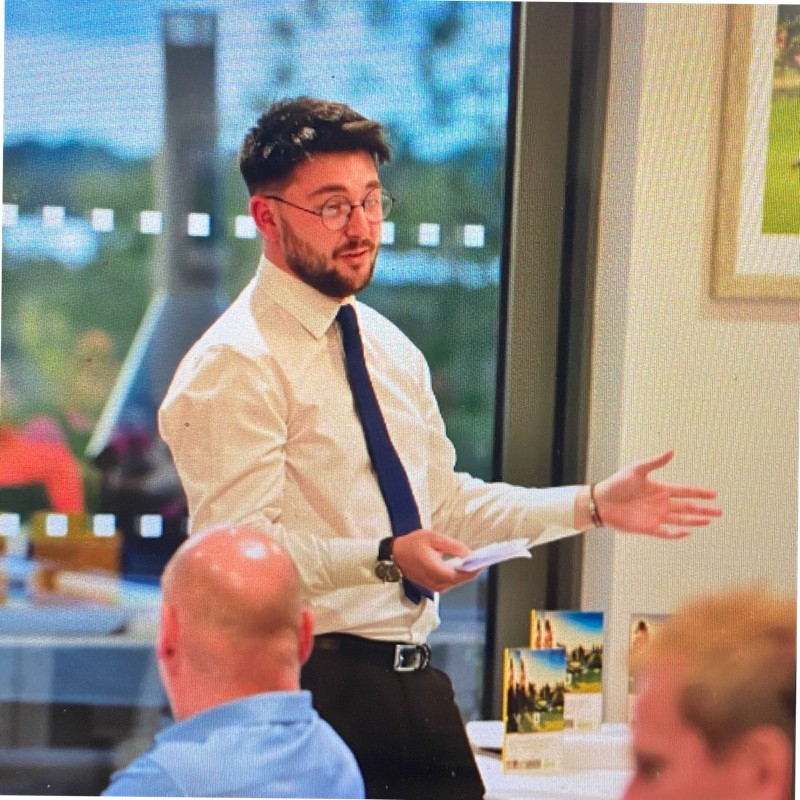
“The board had an idea of what they wanted to do and what they wanted to achieve for the club, but they were waiting to bring somebody in before really pressing on with the planning side of it,” he said on the Golf Club Talk UK podcast. “We worked on that for a good four to six months, myself, the chairman, the rest of the board, to put that together and produced a five-year plan for the club. We presented that to the membership, showing our intentions. Thankfully, it was well received, which is always nice.”
Central to the five-year plan is a commitment to tackling water security, a theme that has become increasingly urgent across the industry. With Stratford Oaks currently reliant on mains supply, the club is looking ahead to expected legislative changes and the need for a sustainable long-term solution.
“We’re currently operating on mains water, and everything that we’re trying to achieve within our five-year plan is pointing us in the direction of moving away from mains and being self-sustaining before that legislation change in a few years’ time,” he said. “We’re very early stages with both The Environment Partnership and The R&A, who’ve helped us with that and had an initial survey done.
“We think what is right for us may well be a reservoir or a large pond, where we harvest that water from the south side of the estate and then start to move it around from there.”
That level of investment requires careful planning, and the strategy recognises the need to build strong financial foundations before embarking on major capital works.
“The focus was primarily those projects that are revenue-generating, cash flow-generating for the club,” said Howard. “So we have that cash flow come five years’ time to produce whatever is needed for us to be self-sufficient with our water management. Thankfully, we’ve had amazing support from the board and the membership – there’s the green light, let’s get on with it.”
A prime example of this thinking has been the club’s TrackMan-powered driving range, which Howard revealed had quickly established itself as both a financial success and a feeder into wider membership growth.
“It’s made a huge difference for the club financially. We are a very popular driving range with 1,200 range members, so we seem to be doing something right in that department,” he explained. “We’ve also seen close to 200 new members in 12 months, and we’re tracking a fair few transition over from the driving range into golf club membership, which is excellent.
“We also introduced what we call a Range Plus membership, almost a step in the door, where you can be a member of the range but have either four or eight rounds of golf over a 12-month period. It’s an intermediate ground where they get used to the club and can make an informed decision.”
The range is only the start of a broader pipeline of initiatives aimed at diversifying income and enhancing the member and visitor experience.
“We’re exploring extending our outdoor bays, adding TrackMan to them, and making them year-round,” said Howard. “We’ve had planning permission granted for two new swing studios – coaching, custom fitting, simulator hire – new revenue streams we haven’t had previously. And within the next 12 months, the introduction of a brand new golf shop. I think it adds to the experience and the service that people get when they come to the club.”
Ultimately, all of these strands link back to the bigger picture of building a sustainable future for Stratford Oaks, with financial resilience supporting the environmental priorities at the heart of the plan.
“It’s about sustaining the future of the club more than anything, not just resolving a problem by 2030,” he said. “We’re talking about the next 50 years of the golf club and then whatever else follows. It will most likely come with a big bill, but that’s exactly why we’re doing what we can now, to generate that revenue and cash flow through shorter payback projects, to make sure we’re in a position to give the green light when the time comes.”
Three takeaways for managers:
- Anchor your plan in long-term sustainability. A clear focus – in this case, water security – gives structure to all other projects.
- Use short-term revenue initiatives to fund big investments. Driving range technology, coaching studios, and retail upgrades provide cash flow for major infrastructure needs.
- Keep close to experts. Partnerships with governing bodies and environmental specialists ensure strategic projects are built on solid foundations.