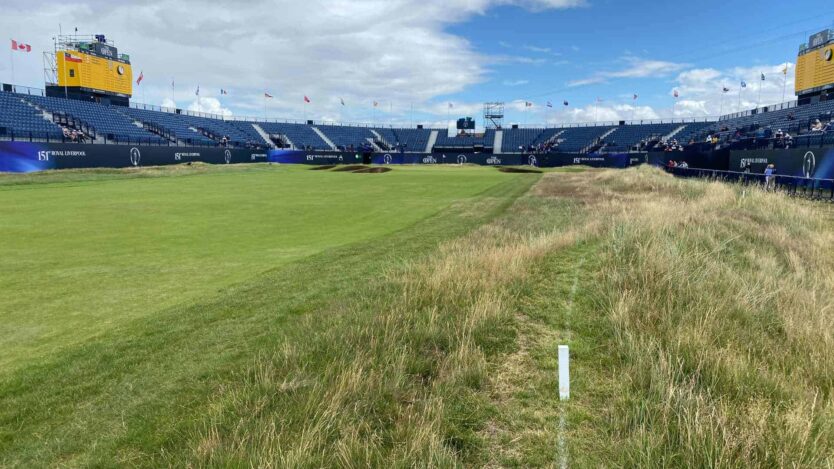
The latest 2026 rules clarifications allow committees to decide how internal out of bounds applies – whether it’s just from the tee or more of the hole
This article is part of GCMA Insights – topical content for golf industry professionals, discussing the things that matter to those who work in golf clubs.
A new year means new rules and, for clubs with internal out of bounds, the latest R&A and USGA clarifications give committees more flexibility.
Clubs might use internal out of bounds for course design or safety reasons – the opening hole at Royal Portrush springs immediately to mind – and a competition committee can choose to specify that a “particular part of the course is out of bounds during the play of a particular hole”.
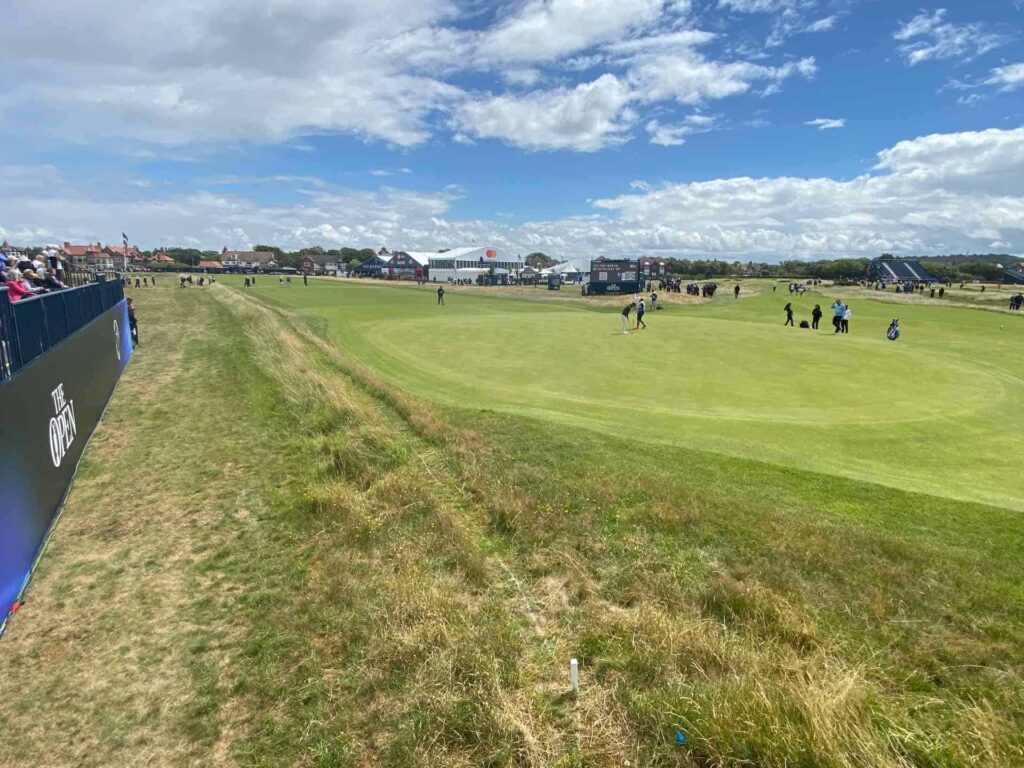
You might see it used to stop players from hitting their ball into another part of the course, such as by cutting a dogleg, and a Local Rule allowed clubs to specify a hole, or a section of the hole, as out of bounds.
Get involved in the debate.
To join the GCMA, click here, or to organise a call with a call with a member of the GCMA team, just complete the form below.
But in a new clarification, the R&A and USGA have now split that single Local Rule into two:
- Model Local Rule A-4.1 specifies that a “particular part of the course is out of bounds during the play of a particular hole”
- Model Local Rule A-4.2 allows a Committee to specify that the boundary only applies to strokes made from the teeing area of a particular hole.
The official text of Model Local Rule A-4.2 reads:
“During play of [specify hole number], the [specify location or side] of the hole, defined by [insert description of method of defining out of bounds, for example, white stakes], is out of bounds for any stroke that must be made from the teeing area.
“These [insert objects used to define out of bounds, for example, stakes] are boundary objects during the play of [specify hole number] for any stroke that must be made from the teeing area. At all other times, they are [immovable | movable] obstructions.”
What does this mean?
It essentially allows a committee to choose their restriction. If it is only required from the tee shot, then Model Local Rule A-4.2 can cater for that.
At any other time, boundary objects – usually white stakes or a white painted line – are either movable obstructions or immovable obstructions, depending on what officials decide, from which players can take free relief.
But if a wider restriction is required, Model Local Rule A-4.1 can apply, which sees boundary objects remain as such throughout the play of the hole.
That means a player is not entitled to free relief if the objects interfere and if their ball goes beyond them it is out of bounds.
For all other holes, they can once again be either movable or immovable obstructions.
WHY JOIN THE GCMA?
Membership of the GCMA unlocks a network of like-minded professionals, provides you with support in your professional and personal development, and provides you with a multitude of benefits. Whether that’s the tools that will help you to excel in your profession, or a wide range of services to support your wellbeing, signing up to the GCMA is joining a community.
What are the key takeaways?
The revised Local Rules allow:
- Flexibility of out of bounds designation – clubs can choose whether internal out of bounds applies only from the tee or for more of the hole.
- Better guidance for players – markers are treated as immovable obstructions outside of tee shots, helping golfers to understand when they can take free relief and reducing confusion.
- You can tailor the rules to your course – the split between A-4.1 and A-4.2 means committees can apply out of bounds rules strategically. It ensures the rules fit the course layout rather than forcing a one-size-fits-all approach.
This article is part of GCMA Insights – topical content for golf industry professionals, discussing the things that matter to those who work in golf clubs.
Insights Signup
"*" indicates required fields