
Could running be the key to better performance at work?

Mountain Ash GM Gareth Evans explains how running helps him stay balanced, focused and resilient.


When you step into a general manager’s role, particularly at a members’ club navigating financial recovery and cultural change, the demands are constant.

The responsibility to lead staff, reassure members and pave the way for a sustainable future can easily stretch beyond office hours. For Mountain Ash Golf Club’s Gareth Evans, maintaining perspective has meant finding a deliberate outlet from his first GM role.

For Gareth, who spent 10 years with Citizens Advice before taking on the job at a club where he had been a member for two decades, that outlet is running – a pursuit that has grown from curiosity into a considerable commitment over the past four years.

“It’s really important to have pursuits outside of work that motivate you and are good for you,” he said. “I found running in 2022 and it’s now my main release. Golf was my life, but now the club is my workplace, so I make a conscious effort not to spend all my free time here.

“Running with Pontypridd Running Club gives me a different community and a way to switch off. The role can be very time-consuming, so it’s good to have something else to lean on.

“I race regularly, mainly middle and long distance. I ran the London Marathon last April and did the Cardiff Half as well. I wouldn’t call myself an elite athlete, but I take it seriously and really enjoy it.”
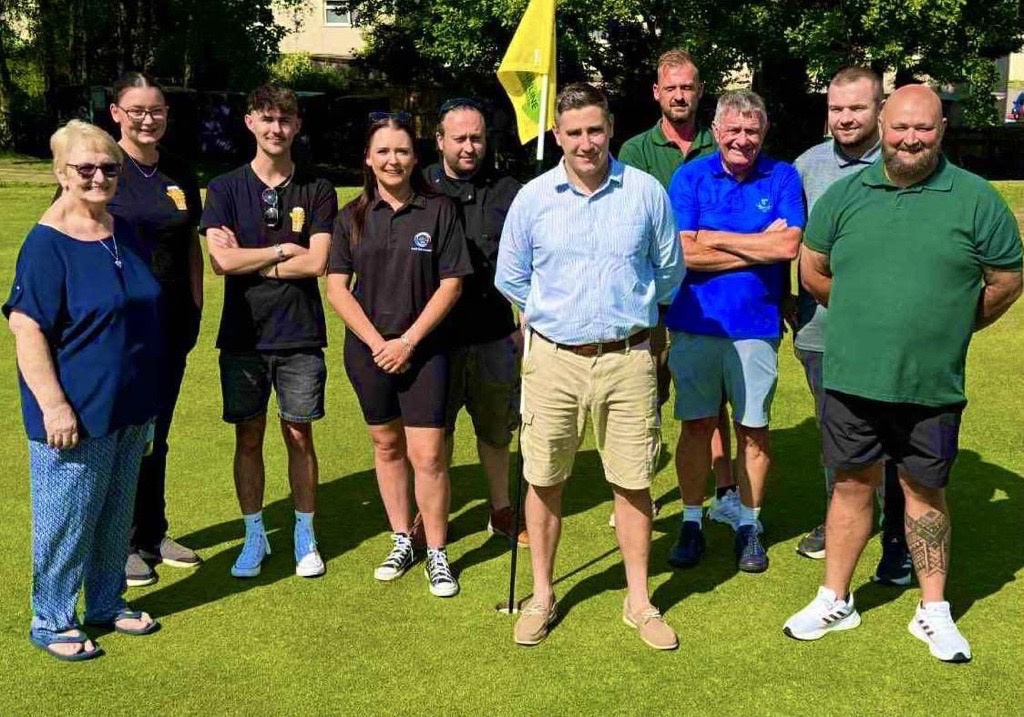
The team at Mountains Ash

When your passion becomes your profession, boundaries can become blurred. For many club managers, the temptation is to remain ever-present – at competitions, social events, informal member gatherings. While visibility is important, so too is time away from the spotlight.

Gareth’s decision to invest in a separate community, with different goals and conversations, offers a practical example of how to create a meaningful escape from the pressures of work, while also promoting positive physical and mental wellbeing.

There is clear evidence that pursuits such as running offer tangible benefits beyond enjoyment. The NHS recommends adults undertake at least 150 minutes of moderate-intensity activity each week, highlighting benefits including improved mood, reduced stress, better sleep and a lower risk of heart disease and type 2 diabetes.

Aerobic exercise such as running is associated with the release of endorphins and improvements in mental wellbeing – a crucial factor in high-responsibility roles such as golf club management.


Key takeaways

  • Protect your boundaries. When your hobby becomes your workplace, create space elsewhere.
  • Find a different community. External networks provide perspective and emotional balance.
  • Treat wellbeing as performance strategy. Physical activity supports resilience, clarity and long-term leadership effectiveness.


By GCMA Content Team

More from Your Community

Close

Allister Frost


A former Microsoft Digital Strategy leader who now inspires audiences to discover the life-enhancing benefits of having a Future Ready Mindset. As a tech pioneer, Allister gained unique insights into how to transform uncertainty into opportunity, and now loves giving others the positive mindset and simple habits needed to:

  • Stay resilient in the face of uncertainty and change
  • Spot quick win opportunities for improvement
  • And *create* a brilliant future!


With AI and robots coming for our jobs (hint from Allister: they won’t, if we know how…), many people are anxious about the future. But Allister asserts that we’ve nothing to fear when we leverage our human superpowers and ingenuity to thrive alongside emerging technologies. That’s why having a Future Ready Mindset is now a must-have skill to remain competitive and relevant to the people we serve, our golf club members and the local community. And the best bit: everyone can do it!

This will close in 0 seconds

John Steele


John Steele is a former professional athlete, sports coach, Olympic Leader and is the Executive Director of Sport at Loughborough University. He has been Chief Executive across a range of sectors. Drawing on leadership experience of nine different Olympic and Paralympic Games (including the amazing events at the Rio Games), John reflects on the lessons from this unique period in British sport and relays his fascinating views on creating high performing teams.

Indeed, inspired from PyeongChang 2018 Olympic Winter Games, by the most successful performance ever for Team GB, he has a whole host of new business and leadership insights into how this was brilliant performance was achieved and how it can translate back into your organisation.

John moved into the corporate world, before he enjoyed an outstanding career as a professional rugby player achieving international honours. After his playing career, he turned his hand to coaching and achieved the highest accolade for a British club coach by winning the European Cup with Northampton Saints. He then became Executive Director on the Saints Board during a period of unprecedented growth, and served on the England Rugby Board during the successful world cup campaign of 2003. It was no surprise that John’s talents were called upon to drive through a change and modernisation programme as CEO of the Rugby Football Union – a challenge that became controversial and ended in his departure from the post after only a year, but with his dignity and professional pride intact.

Headhunted by UK Sport, John took up post as CEO the day before London won the 2012 Olympic bid – and this promising start was sustained as he embarked on developing the UK’s high performance sport system, which he led for a six-year period of unprecedented success through the Beijing and London Olympic and Paralympic Games.

Post-London 2012, with the Olympic legacy in place and an obligation to continue inspiring a generation, John took up his post as Group Chief Executive of the Youth Sport Trust. He has also succeeded Steve Cram as Chairman of the English Institute of Sport, an organisation described as ‘the team behind the team’, which delivers a range of performance impacting solutions to over 40 Olympic and Paralympic sports and some non-Olympic sports.

This will close in 0 seconds

Dr Jo Salter MBE


Dr Jo Salter MBE is famed for becoming the first female fast jet pilot, having flown the Panavia Tornado ground attack aircraft during her services in the Royal Air Force. Joining the RAF aged 18, Jo has since taken Air Cadets into the skies as part of Air Experience Flights, become the Director of Global Transformative Leadership for PWC, and most recently become a Global Advisory of GenAI for PwC.

Jo has piloted flights in the Air Cadets Air Experience Flights and inspired countless budding armed service members to pioneer a male-dominated sector, having been the leader of an all-male squadron. Since leaving the military behind, Jo has established a strong business career working in roles such as Head of Technical Services for NetConnect, European Operations Manager for Automated Power Exchange and Managing Director of Saltin Ltd.

Having developed first-class expertise in leadership, analytical thinking and performing under pressure, Jo is now a highly sought-after public speaker to share stories from her time in the skies.

Jo is a passionate Trustee of The Royal Air Force Club and an Ambassador of the Global Angels charity, an organisation that gives communities around the world access to clean water, education, healthcare and encourages female and youth empowerment. Jo has also authored two books, titled Energy: 52 Ways to Fire Up Your Life and Become an Energy Angel and Energize: Spring Clean Your Mind and Body to Get Your Bounce Back Today and Every Day.

In recognition of her achievements throughout her career, Jo has also been named as one of the 50 Most Inspiring Women in the World by Harpers & Queen. She is now working as the Director of Global Transformation Leadership at PWC, after working in other roles such as Director of Risk Technology Strategy, Director Chief of Staff to Head of Technology & Investments and the Director of People & Organisations.

In 2022, Jo was invited personally by Tom Cruise to attend the premiere of Top Gun: Maverick. Most recently, Jo received an honorary doctorate of Arts from Bournemouth University.

This will close in 0 seconds

Colin MacLachlan


Colin Maclachlan, star of Channel Four's captivating reality TV drama SAS: Who Dares Wins and Channel 5’s ‘Secrets of the SAS’, is an operator with over 25 years of security and risk related experience who is a popular and frequent fixture on the speaking circuit.

Colin Maclachlan, celebrated for his roles on Channel Four's SAS: Who Dares Wins and Channel 5’s Secrets of the SAS, brings over three decades of expertise in security and risk management. Colin's military career began in 1989, and after serving nine years with the Royal Scots, he joined the elite 22 SAS at just 23. His time in the SAS saw him participating in numerous high-stakes operations, including the notable rescue of hostages from the West Side Boys in Sierra Leone—a mission so perilous it was dubbed Operation Certain Death.

Colin was also pivotal during the longest hostage siege on UK soil, when a hijacked Afghan plane landed in London in 2000. The standoff lasted four days with Colin as the first sniper on the scene.

After leaving the SAS, Colin exchanged insights with international forces such as Delta Force and Seal Team 6 and provided security consultancy to the Saudi Royal Family and various celebrities. His academic pursuits led him to earn a First Class MA (Hons.) in History from Edinburgh University and an M.Litt in Terrorism from St. Andrews University.

Today, Colin extends his expertise through television, books, radio, and video games. He supports numerous charities and has founded Who Dares Cares, which assists veterans and those experiencing stress. As a speaker, Colin excels in discussing Resilience, Teamwork and Leadership.

This will close in 0 seconds