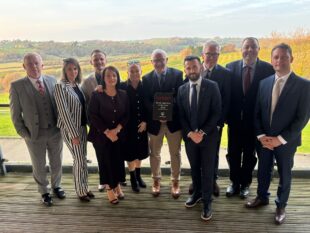
When a colleague dies, the impact at a golf club is often profound.
At Feldon Valley Golf Club, the death of PGA Professional Gary Wills last year was a moment of profound loss – and, equally, a demonstration of how a club community can respond with dignity and unity.
Gary had spent more than three decades in the game, building a reputation as a gifted coach and an even better man. From early success as a talented junior to a long professional career across Oxfordshire and Northamptonshire, he coached golfers of all abilities, including tour players and elite sportsmen.
He joined Feldon Valley in the wake of the pandemic, reconnecting with lifelong friend Tom Jones, now Director of Golf. For Assistant Professional Tom Gardner, Gary’s influence went far beyond the golf course.
“He was an absolute legend,” said Tom. “In the short space of time that I’d known him, he didn’t just make me better at my job – he made me a better person.”
When Gary was diagnosed with pancreatic cancer in April and given a limited prognosis, the shock was immediate. Staff continued to operate the golf shop and manage bookings, initially telling members only that he was unwell while the situation became clearer. Behind the scenes, the priority was simple: Gary’s wellbeing and comfort.
“It was very much a case of, we will muddle on as best we can and do what’s best for Gary,” Tom explained. “The priority was him being as well and as comfortable as he could be.
“He would come down whenever he felt up to it and it was amazing how he was with us, given what he was going through.”
One of the many harsh realities of such circumstances is that practicalities do not disappear – lessons had to be rearranged and staffing covered – but the club managed that process respectfully. Feldon Valley kept Gary employed, removed pressure, and allowed him to engage with the club on his own terms when he felt able.
The fundraising day that followed showed the depth of feeling within the membership and wider golf network. Originally planned as a modest team event, demand quickly outstripped capacity. Around 160 players took part, with many more wanting to. Prizes were donated from across the industry; suppliers, neighbouring clubs and well-known names in sport and entertainment all contributed. More than £26,000 was raised for Gary and his family.
“In four years of being here, it’s probably the best thing the club’s ever done,” Tom reflected. “There was no need to encourage anyone to get behind it – it was just a case of, ‘We’re doing this for Gaz, so let’s crack on’. There was a real sense of togetherness and a will to do something positive in the most difficult of situations.”
The emotional toll, however, is harder to manage. Tom admits much of the early response involved turning up and putting on a brave face.
“I remember the day he told me. I couldn’t look at him, and I had to stop the car twice on the way home. I don’t know if I’ve processed it properly. I’ve never lost a colleague like that; I’m not sure if there is a ‘right’ way to get through it.”
For managers, the lesson is not to assume resilience means recovery. Creating space for conversation – even if individuals do not immediately take it – is essential. So too is acknowledging the strange duality of loss in a workplace: the need, eventually, to recruit again, even when “replace” feels like the wrong word.
Today, Feldon Valley plans to continue honouring Gary through future charity activity in support of pancreatic cancer causes. His wife Sarah and family remain in contact with the club, and stories of Portugal trips, Ryder Cup-style matches and shared meals are retold with equal parts laughter and sadness.
From “cardboard sausage rolls at Forest Green to chicken wings in Vilamoura”, as Tom put it, the memories endure.

Debbie Kleiner leads Wellbeing in Work, helping organisations embed mental health into everyday working life. With an MSc in Workplace Health & Wellbeing, a stress management diploma and Mental Health First Aid accreditation, she designs practical strategies and training to build resilient, supportive workplace cultures.
Here, she offers some guidance on dealing with the loss of a colleague.
DK: When a colleague dies, people don’t just lose a co-worker, they lose routine, identity, and a sense of safety. The most powerful support a club can offer is human: acknowledge, allow time, check in, and don’t rush people to ‘be over it’.
We would suggest as follows:
1. Immediate response (first days) – Acknowledge the loss openly
- Inform staff promptly and sensitively.
- Avoid euphemisms; be clear and compassionate.
- Let people know it’s okay to feel affected, even if they didn’t work closely with the person.
Create space to talk
- Offer a short team gathering or briefing.
- Allow people to share memories if they wish, but never force this.
- Have a quiet space available for anyone who needs time out.
Practical adjustments
- Reduce non-essential demands for a short period.
- Be flexible with shifts, time off for funerals, and concentration levels.
2. Ongoing support (weeks following)
Manager check-ins
- Encourage line managers to have simple, human conversations:
“How are you doing since we lost [name]?” - Watch for delayed reactions – grief can surface later.
Peer support
- Buddy people up, especially those who worked closely with the colleague.
- Normalise that people grieve differently (some go quiet, some get irritable, some seem ‘fine’ but aren’t).
Professional support
- Signpost to MHFAiders where relevant:
- Employee Assistance Programme (if available)
- Local counselling services
- National bereavement charities (e.g. Cruse Bereavement Support in the UK)
3. Remembering without getting stuck
Mark the loss
- A card, book of memories, tree planting, or moment of reflection.
- This helps give emotional closure and shows the person mattered.
Return to routine with care
- Routine can be comforting, but avoid “back to normal” language too quickly.
- Recognise anniversaries can re-trigger emotions.
4. Leadership and culture
Train managers and captains
- Basic guidance on:
- How to talk about death
- What not to say (e.g. “They’d want us to move on”, “At least…”)
- When to encourage professional help
Clear bereavement policy
- Compassionate leave
- Flexible working
- Phased return if needed
5. Red flags to watch for
Clubs should be alert to:
- Withdrawal or isolation
- Increased mistakes or accidents
- Changes in mood or behaviour
- Increased alcohol use
- Persistent distress weeks later
In those cases: gentle, supportive conversations and referral to professional help.
Cruse is a recommended resource for bereavement support and information.
To learn more about the help and support the GCMA can provide, click here: Mental Health and Wellbeing – GCMA