Britain’s first female fast jet pilot shares lessons on pressure, empathy and leading through uncertainty.
When Dr Jo Salter MBE took to the stage at the Golf Club Management Conference & Exhibition, she provided a rare glimpse into a world that very few people get to experience.
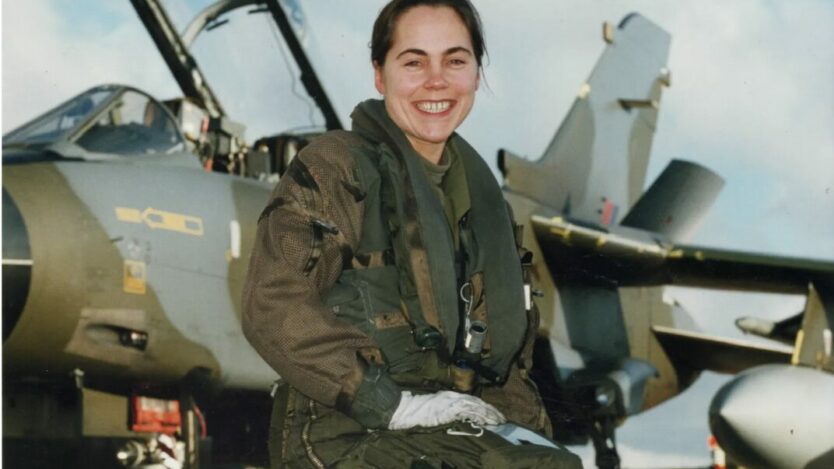
She made history as the RAF’s first female fast jet pilot, flying the ground attack Panavia Tornado during her military career. She joined the Royal Air Force at just 18 and, in the years that followed, not only broke new ground on the frontline but also flew Air Experience Flights with the Air Cadets, helping introduce young people to aviation. Today, she serves as Director of Global Transformative Leadership and Global Advisory of GenAI at PwC.
During her service, Jo led an all-male squadron and became a visible role model for aspiring personnel entering what had long been a male-dominated profession. After transitioning from the RAF, she built a successful business career, holding senior positions including Head of Technical Services at NetConnect, European Operations Manager at Automated Power Exchange and Managing Director of Saltin Ltd.
Drawing on deep experience in leadership, decision-making and performing under intense pressure, Jo is now a sought-after speaker, sharing practical lessons and personal reflections from her years in the cockpit and the boardroom.
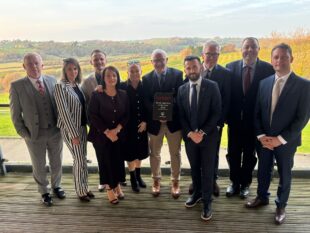
It was that wisdom and experience that she brought to bear during her keynote speech at the De Vere Cotswold Water Park Hotel in November, drawing surprising links between the rarefied realms of jet pilots and the somewhat more grounded environment of golf club management.
Jo opened by transporting delegates into the cockpit, asking them to imagine flying 25 tonnes of metal at 600 miles an hour at treetop height, constantly processing information, weighing risk and making decisions. That environment, she explained, is one of relentless judgement calls and mental noise.

“When you’re down in that valley, what happens when the weather rolls in is that it rolls down the hillside, and you’re looking for what is like an envelope – is that enough vertical distance, horizontal distance, will I get through? What about my wing man? What if I’ve got another wing man? What if I need to pull up? Who am I going to call? What about radar control? There’s all these decisions going on in your head all the time.”
While club managers may be more familiar with being sat at a desk than at the control panel of an airplane, they still face the challenge of having to make multiple decisions under pressure while weighing up risks.
Jo also reflected on the barriers she faced entering a profession that had previously excluded women. When she presented a school electronics project, her teacher dismissed it outright.
“I was the only girl in the class and I remember taking my electronics project into him, and he looked at me and he said, ‘I’ll enjoy marking your father’s work.’ And I said, ‘But I did it, sir’. And he looked at me again and he said, ‘And I will never believe that’. And that was my first inkling that I might get treated differently because of gender.”
As in any industry, opportunity at first requires visibility. Talent cannot flourish if people cannot see a pathway. Jo explained: “How can you be something you can’t see? How can you imagine being something that isn’t in your social group, that isn’t in the conversations that you’re having? But it’s amazing what a difference one person can make to the whole trajectory of your life.”
In clubs striving to attract and retain diverse teams, that challenge remains highly relevant, and it’s important to recognise when talent is being thwarted by a lack of visibility.
A recurring theme throughout Jo’s keynote was anxiety and the cost of wasted mental energy. Recalling the RAF’s training in which she was captured and subjected to various stress tests, she described the fear of not knowing where the “point of duress” lay.
“How much time do we spend worrying about the unknown? When we look at the future and wonder what might be coming and what might change, the anxiety and the thoughts that can just run round about what might be and what could be – there is so much wasted effort in that. How do we say no to that? No to that fear, no to that anxiety, no to whatever it may be that is hindering us?”
She also spoke candidly about the rise in anxiety among younger generations entering the workforce, drawing on her own experience as a parent. Leaders, she suggested, must meet people where they are.
“I absolutely believe that there is nobody on earth who doesn’t want to be seen more, heard more and honestly valued and loved more,” she said. “I have this expression: 100% caring and 100% daring. And what I mean by that is that we need people in this time of change to really be courageous enough to step out and to put a flag in the sand and say, ‘Do you know what? This is the way we are going – come on.’ But they need to be able to do it with humility… and we have to do it with empathy and care.”
That combination – courage with compassion – underpins high-performing teams. Jo’s experience on elite squadrons reinforced that emotional connection and feedback are critical.
“Really good leadership is so not about ego, and it’s not about self, it’s about other people, and it’s about the impact that you make and how you help other people thrive in everything that they’re doing.”
Resilience, she argued, is deeply personal. During interrogation training, she witnessed a senior officer reduced to tears while she herself responded differently, shaped by her upbringing.
“What is resilience for me is not what is resilience for any of you,” she explained. “And we tend to look at other people and think you should have the resilience that we think you should have, or that we have. But what we need to do is we need to meet people where they are.”
In a club environment, that insight is particularly pertinent. Staff teams are multi-generational, members bring differing expectations, and what feels manageable to one individual may feel overwhelming to another.
Finally, Jo challenged delegates to reframe discomfort as growth. Drawing on both flying and life beyond the RAF, she urged leaders not to retreat from the moments that stretch them.
“We all have a comfort zone, and the more time we spend in our comfort zone, the smaller it becomes and the less we can achieve. So we need to be stretching. We need to learn to become comfortable in discomfort.
“My mum bought me a book when I was 22 called ‘Feel the Fear and Do It Anyway’. How do you make that the energy that courses around your veins that allows you to step forward and do more and become more?”
For delegates in the room, the fighter jet stories were extraordinary, but the message landed much closer to home. Club management may look very different to flying a Tornado, yet the pressures, the split-second decisions and the responsibility for others can feel familiar.
Key Takeaways
- Leadership is courage plus care
High performance is not driven by ego, but by empathy. Be bold in setting direction, but grounded in humility and genuine concern for your team.
- Meet people where they are
Resilience looks different for everyone. Effective managers recognise individual starting points and create environments where people feel seen, heard and valued.
- Growth lives outside the comfort zone
Whether embracing new technology, reshaping club strategy or tackling difficult conversations, progress demands discomfort. The key is to “feel the fear and do it anyway”.