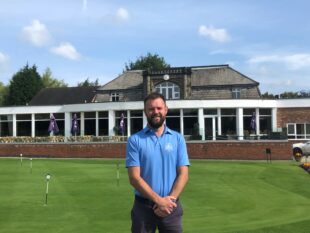
Pitched in at the deep end as the key man at Close House 18 months ago, Jonathan Lupton has successfully made the transition from professional golfer to managing director. As the Newcastle club prepares to host the British Masters next month, he tells Steve Carroll he’s loved every second.
Your background is in professional golf. How did you turn to management?
I was teaching 40 or 50 hours a week. John Glendinning, our previous managing director, became CEO at The Wisley and, shortly after he informed owner Graham Wylie he was leaving Close House, I was contacted by Graham and asked if I would be interested in the new role. It wasn’t something I was planning for but I understood the business. I knew there was a good team around me. It’s very much a team effort at Close House and I knew I could help lead that team, develop things, and continue the good work that John had done.
 Drilling down to it, why did you want to do it?
Because I was immensely passionate about Close House and I felt that we could continue along the lines we had. Obviously, the business evolves and we are quite a dynamic business. The foundation was in place but it was a case of continuing along the same line – with a little bit of fine-tuning. I thought because I understood the way it had been run previously that it was the best thing for Close House.
Was it a bit daunting? It was a role completely new to you…
I went straight in at the deep end but there was good support in place. There are also good friends at Close House, who have been successful in business. When they found out I was changing role, they were very supportive of me. The members of the club, as well, really helped me through that transitional period.
I had built a lot of relationships over the seven years I had been at Close House before changing role and I had some good advice.
I was very fortunate to have amazing business leaders from the North East who would spend some time with me.
How was that process from being the head professional to becoming the managing director?
The first thing I had to do was fully understand the business and make sure we had the team in place. Our internal communication is better between the heads of department and I think we share more information than we did before and everyone buys in more to that. Jonathan Greenwood, who is general manager here – we work very closely and the pair of us are always looking for the next step – the next way to develop Close House.
 There’s a trend now for professional golfers to move into management. Is that going to continue?
I guess when clubs look, hopefully they see talent within the PGA.
When they are looking for a secretary, sometimes the roles amalgamate. Sometimes the opportunity is to change what you do. I would say that the PGA training is quite diverse. You can follow lots of paths and you can specialise. I encourage our assistants to try and specialise if they can.
‘Look at the multitude of roles at Close House. Is it coaching that you want to go down but don’t be scared that at some time, you might take a different junction. You might change direction at some point.’ But I do think it’s important to specialise.
What are the biggest opportunities you have found since becoming managing director?
Building on the brand that was already created. The brand of Close House, and the way it was developed, is so strong. If we can make that accessible to more people I think Close House will become even stronger.
And, in opposite, the biggest challenges?
We have enormous service levels and that comes at a really high cost. The cost to the business, to offer the levels of service we do, is a challenge.
 You unashamedly, I think, pitch your membership at quite a high end? How is membership doing?
Full members – we are happy where we are. We could still take a few more. Year on year, we are ahead of where we were. I do think individual membership is tough for us.
There are lots of people in the region who may pay £2,100 to be a member of a golf club but they probably won’t leave their friends and relationships that they have at other golf clubs. We are confident of the standard of what we offer but those groups and relationships are quite hard.
And you have to offer something different. There are a lot of golf clubs in Newcastle and the surrounding area. There’s a lot of competition… There are. but hopefully it’s the standard and the attention to detail, whether it be from the bar and the F&B or the big team of greenkeepers.
There is such an investment in the facilities that we hope we separate ourselves from the market.
Graham spent millions here, and continues to do so…
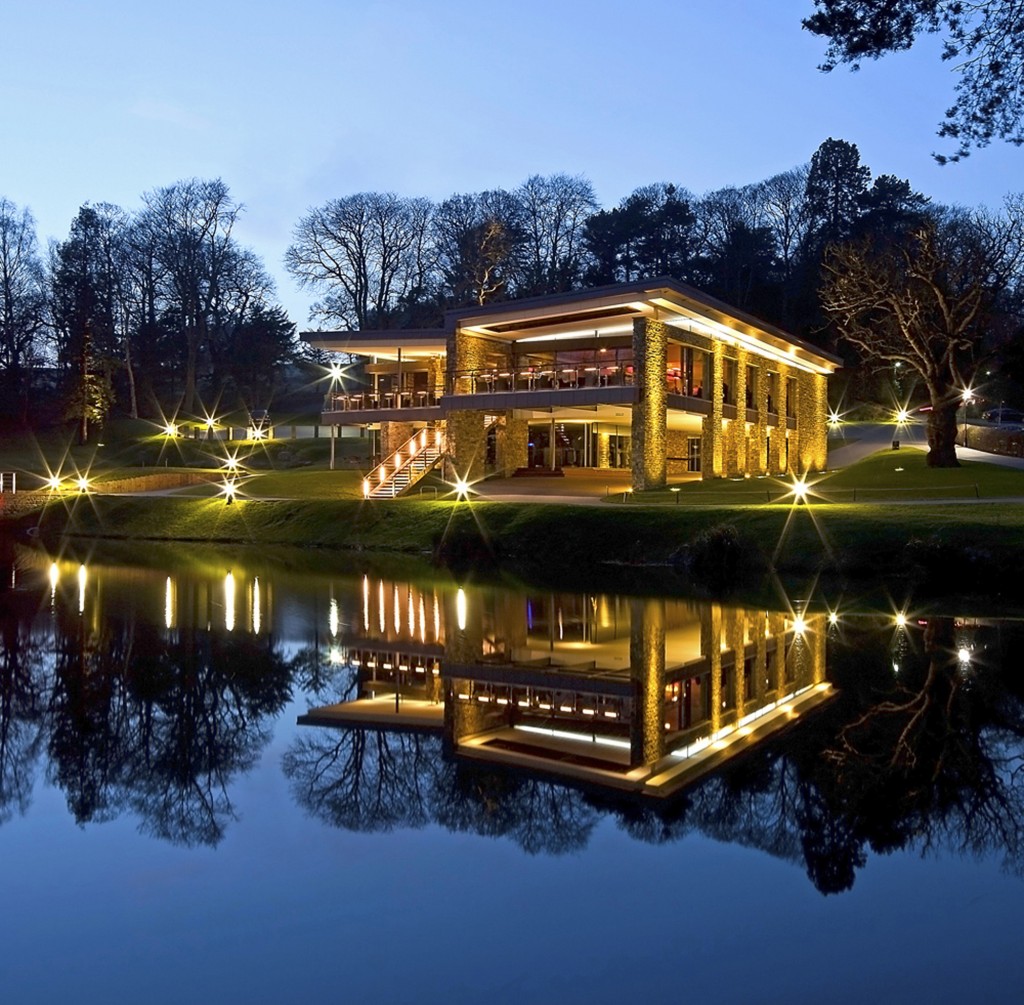
We are continually investing and developing and if we can make a business case in a board meeting, it’s really empowering to have that opportunity to develop and continually develop. We are currently refurbishing the old cricket pavilion – that will become a two-bedroom golfers’ lodge and the lodge house as well. We currently have 16 bedrooms and 17 rooms and we will have 21 by late September.
 You’ve restructured country membership, which was originally a very high-end offering. There are now a variety of options. How successful has that been?
Living in Teesside, I was quite aware of Ganton’s success and, living in Newcastle, you can look at Goswick and Bamburgh Castle and they are very successful on a country membership basis. Potentially, and previously, the country membership was maybe explained to Graham in the wrong manner.
Graham thought if we added more value, people would come. But £2,100 is still an expensive fee whether you live in York or Teesside. Hopefully, we are worth the drive but if it is double what you are paying for a golf club membership where you live then that’s quite a hard leap of faith.
What we looked at initially was ‘what would people in our target regions probably pay for a membership?’ and, hopefully, confident that what we offer is better. People would then think ‘well it’s worth the 50, 60, 70-mile journey to come and play golf and be a member of Close House.’
We have the different levels and it has been very successful for us. The first day we advertised we had seven or eight members straight away through the door.
 A lot of clubs are now putting additional emphasis on country membership. It’s extra revenue but not necessarily an additional burden on your existing membership. You wouldn’t expect them to be here every single week…
But also it’s quite reasonable on the other hand to offer them a preferential deal on that basis. That’s really what we have tried
to do. Rather than having it at the same level with more value, we’ve tried to reduce the price so it is more attractive for people to make that initial entry into Close House and see what we do.
We’ve also brought in a new level of membership called Academy Premium. We had an academy membership in place, which was basically use of the full facilities at the academy and the Yearling par 3 course. A lot of people were signing up to that membership and finding they wanted to go on a golf course but they didn’t want to make the step up to full membership.
It was a big step – £160 a month difference. So we put in a membership that’s fairly similar to golf clubs around the area, where you can use the Filly course as well.We have had an unbelievable reaction to that. The country membership has gone well and will continue to do well. But the Academy Premium, which we launched in March, we’ve had 85 new members.
We have a ceiling of 100 and they are paying £720. It was really about trying to give more people the opportunity to experience what we have created at Close House.
When I think about Close House, I think about Lee Westwood. There’s a debate about attached professionals and what they bring, but he’s here a lot…
He originally came to open the golf course on May 10, 2011. Two days before, we were apprehensively watching the European Tour event because if Martin Kaymer finished in the top four, Lee wasn’t world number one. So we had two plaques ready and we were delighted when Martin finished sixth and Lee was number one when we opened the golf course. Lee came along and was an absolute gent.
Someone from ISM spoke to Close House about potentially having an attached tour professional. They suggested a couple of names and Graham said ‘how much is Lee?’ Since then, the relationship has developed. Through the experiences and the warmth of the membership and the North East people, Lee really bought into what we had. We have great practice facilities, we have golf course that can challenge him when he is practising and Newcastle is his home so he uses this as his base.
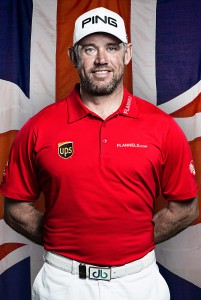 He’s a very visible presence here for the members…
He’s here that much that we’ve actually put a parking space in for him outside the clubhouse. He played in the club championship last year, because he was going out to the PGA Championship and wanted to practice for 36 holes. He played in the club knockout last year with the owner and lots of our members have had the chance to play with one of the game’s leading players. That’s something that is brilliant about golf. If you’re a football fan, you are not really going to get the chance to play with a leading footballer.
Lee has been World No 1, played in 10 Ryder Cups, and had 40-odd worldwide victories and the members get the chance to play with him. It’s amazing.
What input did he have into the golf courses?
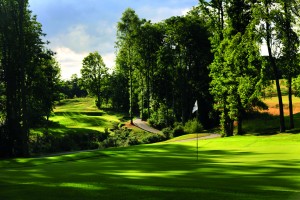
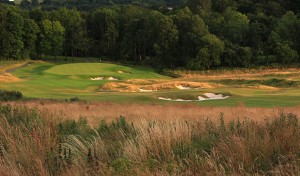
He’s having progressively more. All the changes for the British Masters on the Colt course, Lee has been involved in those. If we go to the 16th for the British Masters, originally that was a very wide fairway – probably 75 yards wide off the tee. There was trouble down the left but you just aimed it right to keep it out. The fairway now is 35 yards wide, there’s two bunkers there, the rough is growing in and we have reshaped the back left of the green. All of that is input from Lee.
On our 5th, the 1st for the British Masters, there is a new bunker down the left hand side.There’s a new tee – back 35 yards – again that was Lee. There’s a new tee on the 2nd (our 6th), so it’s a really strong start to the course for the event. I will certainly use Lee in the future to continue to develop the courses.
Let’s talk about the British Masters. This has been on the cards for Close House since it was announced Lee would host. Logistically, how difficult has it been to host the tournament?
They had the event at Woburn in early October 2015 and, from that moment that it was announced Lee would be hosting the event, we were interested. It wasn’t something we were planning for but it was certainly something that – when the possibility arose – we became very interested in. Lee, early on, expressed his interest to bring it to Close House and we started negotiations with the European Tour. I changed role six weeks later and so my first job was to start to convince the European Tour that we could do it.
No pressure then…
I would say golf course-wise that was pretty easy. Creating the logistical plan that would mean the tournament could work was a little bit trickier.
 From a management perspective, how hard was that? You can probably argue that, in golf, we’ve never had an event quite so big in the North East.
There have been big events at Slaley Hall but this has a £3 million prize fund and, hopefully, with Lee’s influence we are going to get some of the game’s leading players to attend the event.
It was tricky but we passionately wanted to do it. One thing that comes through at Close House, right from the owner and through myself and the staff, is passion. When the European Tour came here and they realised just how much we’d bought into it – there were a few things and potential problems that they had put in the way and very quickly we sat together and found solutions for them.We actually made it difficult for them not to come here.
Graham bought 27 acres more land, which will become the tented village and spectator area and that really linked everything together. It helps with the parking. It’s left of the 5th. It was a piece of land that we’d always wanted and the landowner wanted lots of money for it.
Eventually, we did a deal that both parties were happy with and it means, firstly, that we grow the estate but, secondly, that the little bits around the edge were the key areas. We have rented two big fields across the main road. The spectators will walk through, straight into the main village, and they will be by one and 18. As soon as that came together, that was the final piece of the jigsaw.
Did you find it a stressful time, or did you thrive on it?
I didn’t find it particularly stressful. All we could do was prove to the European Tour, every time they came, just how much we wanted it–how much it meant to us and how much it meant to the region. On the back of that, the European Tour realised if they brought the event to the North East it could be something special.We’ve got to make sure that everybody comes but the Sky Thursday sold out in 34 minutes online, we’ve sold north of 1,000 hospitality places already and we weren’t far off that figure in February through the membership of Close House.
Did you have any choice but to change the existing configuration of the course?
We couldn’t have built the infrastructure because of the water down the right hand side of our current 18th and the big trees. Getting the stands and the build there would have been a challenge. We looked at a few options but the 4th was the one that definitely worked for us.
I am genuinely excited about finishing on a par 3. I think it is going to become something really special and, hopefully, separates Close House from other venues.
 What is your role going to be leading up to the tournament?
I never quite understood this when I played but the European Tour don’t own the full rights to every event. This is one of their key events and, because of that, the level of support and the structure behind it, has been amazing. Rory Colville, tournament director, visits Close House every three or four weeks with his team. We just constantly evolve the tournament plan and brochure. We’ve got a working document on the event and that develops on a six-weekly basis. We just evolve until we get up to the event but the plans have been in place for some time now.
It’s a very exciting time…
Yes. If we go back 18 months, I was thrown in at the deep end but the journey has been so much fun and we just can’t wait until September. We’ve developed a good reputation in the local region and, hopefully, the British Masters enables us to develop it nationally. That’s the plan.
Close House is such a dynamic business that, one thing’s for certain, the future will be exciting.
By Mike Hyde