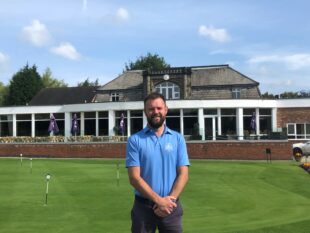
It’s one of the largest UK golf club projects seen since the recession – a total relocation to a new course. We talk to those involved in Royal Norwich’s move to Weston Longville
 What a difference little shoots of green poking through the surface can make. Where once there was mud, now there is a golf course – or the semblance of one, anyway.
It’s the moment everyone connected with Royal Norwich’s relocation realised that it really was happening. Construction workers have been on site at the club’s soon-to-be new home at Weston Longville for a year but – despite an architect’s vision and the shapes carved out by a bulldozer – it still took imagination to see those long drives and approaches to shapeless greens.
Now as the construction company MJ Abbott prepares to hand the growing course back to the club, and a year of bedding in ensues, the day the first shot is hit at the £10 million project is starting to get tantalisingly close. Royal Norwich had been at their Hellesdon site for 125 years but the club was beset with problems.
Envisaged by Jeremiah James Colman – he of the mustard fame – as an out of town retreat, it had been hemmed in by the ever- expanding city. Trying to cross the main road that split the course in two meant taking your life into your hands. And burdened by a clubhouse that was quaint but unsuited to the rather crucial activity of getting money into tills, club chiefs felt there were only two choices – move or watch the historic outfit slide into obscurity. So they sold the course, which had the hand of James Braid laid upon it in the 1920s, and used the money paid by house builders Persimmon to envisage a 24-hole complex 10 miles down the road at the former Weston Park Golf Club.
 Half a dozen sites had been under consideration but there was only ever one that truly fitted the bill. Even so, making the decision to pack the bags was tough. “It’s a wrench to leave,” admitted Royal Norwich general manager Phil Grice. “I’ve been a PGA member for nearly 30 years now and I am a golf geek. “So losing somewhere like this, and being part of the reason it’s happened, doesn’t always sit well with me, if I’m honest, but you have got to stay focused on the future.”
That future is being shaped with the help of European Golf Design’s Ross McMurray. The architect behind the Twenty Ten Course at Celtic Manor, his brief was to create a playable, yet still challenging, layout that would appeal to the club’s target audience. “People here want it to be fun, to play in a nice setting, be challenged a little bit but without coming away thinking it had been too tough,” he said. “It has challenges, though, linked to the fact that some of the site is new and open grazing land with very few trees. “Trying to design a golf course where some of it is routed through mature parkland, some of it is woodland and some of it is open grazing land, and tying the whole thing together is quite tricky.
“Some of the holes in the more open land, such as the 12th, had to have a lot of excavation to make them work. It’s trying to get the balance between shaping something and doing what you need with it but not having a completely different feel to everywhere else. It’s tricky.”
His final design was flexible, with five sets of tees on every hole and a course that ranges from 5,300 yards to 7,200. Some of the greens are undulating but these spaces are not over the top, averaging around 550 square metres. What the Weston Longville course is, though, is strategic. It’s perfectly playable for the higher handicapper – the golfer willing to sacrifice a shot here and there to make the overall score more agreeable. The better you are, the more difficult the challenge becomes. The right areas of fairway must be hit to ensure the correct angle in for the second shot. It pays dividends to find certain green sections if an awkward putt is to be avoided.
As well as getting McMurray on board, key to the project was the addition of Peter Todd as head of estates. Todd came from The London Club, where Grice had been impressed with his work ethic and attention to detail. “I’d never seen anything like it. It was an incredible pyramid of youngsters, through to qualified staff and head greenkeepers that were underneath him,” he said. “You could clearly see he was the conductor to the orchestra. All these guys were playing these different instruments fantastically.
“I’d never been in a greenkeeping facility that was so clean. It was like a restaurant.”
“The members on our committee fell in love with him because they loved his attention to detail. They could see the building of the course and the delivery was in incredibly safe hands.”
The relationship between the agronomist and the architect was crucial – and the two quickly developed a mutual respect. He explained: “I have said to Ross things like ‘the prevailing wind will drop those leaves into those bunkers. Can we make them grass hollows and not sand bunkers?’ and he has said ‘Yes, let’s do that’.
“He’s pragmatic. He respects what you think and I respect his architect’s vision.” Grice was similarly enthralled. “If you could see what this site was originally, and some of the bland areas he has turned around, he carries all of those images in his head. “He has had this vision for a piece of land that’s already got a mark on it and I can’t see how he does it. He goes round the site saying ‘that tree is staying, that tree is going’. How do you even do that?”
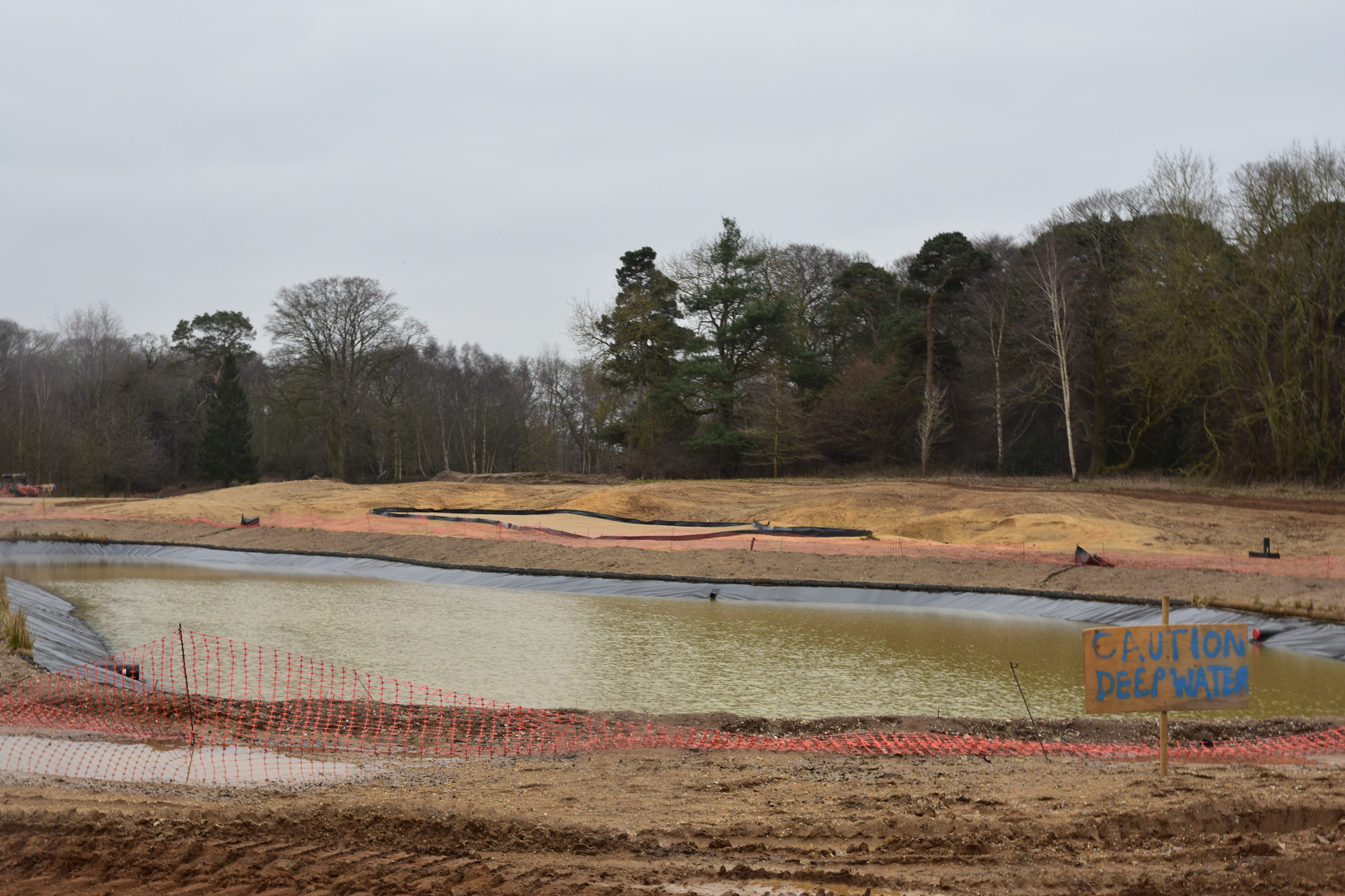
What McMurray and Todd strove to do was produce a course that will live within its means. A massive on-site reservoir will keep down water costs, while the course should also be relatively cost-effective to maintain. “We all know golf follows the economy and goes in boom and bust periods,” Todd added. “What you want these days is a challenging golf course that doesn’t cost a fortune to maintain. “Otherwise, you’ve saddled your business with an uphill task straight away.”
Todd might be most proud of the new maintenance building – a near £1 million two-storey facility that must rank as one of the finest in the country. The aim is to establish it as a turfcare centre of excellence and it has already attracted the attention of large companies wanting to use it for corporate training. If that building sells the club off the course, then the 17th will be the hole that does the job on it. The showpiece par 3, with a long carry over the only water hazard on the layout is part of a daunting – but thrilling – finish that will keep scorecards hanging in the balance until the very end.
Grice said: “During a competition or a society day, what a stunning view that will be. As you drive into the club, you will see the 17th lake and look right down it. “It will be the hole that people remember. You’ve got a great score going and you are going to be scared when you come to the 17th.” But the new Royal Norwich is also about more than just a golf course. The clubhouse, a combination of the historic former stable blocks that formed the old Weston Park building and a new glass-fronted construction, will have its own microbrewery.
That’s not all. An open plan pro shop, conferencing facilities for 250 people and indoor simulators allowing golfers to be both custom fit and play their favourite tracks are just part of the offering designed to keep members and visitors at the club once they’ve played the course. And Royal Norwich hope it will be a younger golfer that is coming through the doors. “The job is to try and fill the membership categories,” Grice concluded. “We’re working to a model and 10 per cent of the club will be juniors and 15 per cent will be between 18 and 30.
“We want a continuity of ages through the club. We could sell our memberships to a huge retired community and that won’t do us any good going forward. It won’t help the cultural aspect of the club. “You need those age categories spreading as best you can for the health of the business.”
So the countdown is on. The whole move has been about acknowledging their heritage but embracing the future, says Grice. He’ll be hoping the balance at Weston Park proves spot on.
ABOUT ROYAL NORWICH
Royal Norwich was formed in November 1893 and the Duke of York, who later became King George V, agreed to become the patron. Within six months of being founded, there were more than 300 members and James Braid redesigned the course in 1923 – providing eight new greens and extending the length to 6,399 yards.
That layout at Hellesdon is the one still largely played today as the club celebrate their 125th anniversary. But, from September 2019, Royal Norwich will move to a new £10 million development at Weston Longville. The site, based at the former Weston Park GC, is being transformed with the help of European Golf Design architect Ross McMurray and construction firm MJ Abbott.