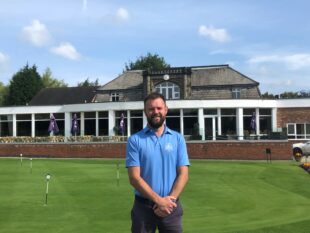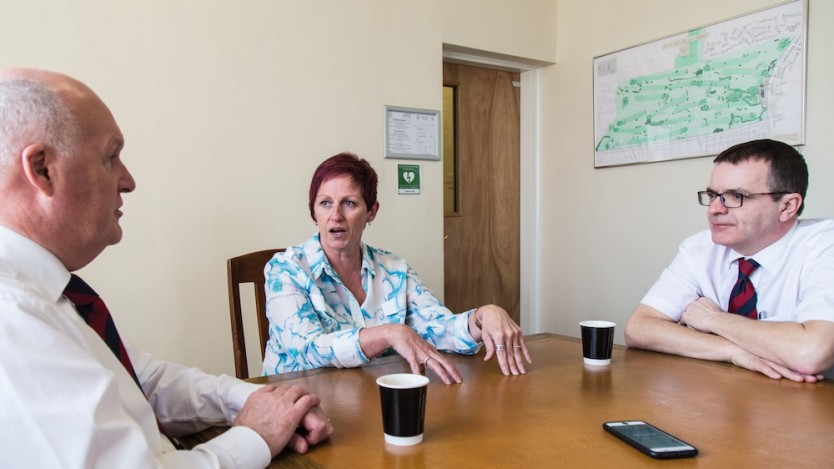
When tradition stands all around you, and you’re in the shadow of a prestigious Open-Championship-hosting club, what are the challenges, and opportunities? Ormskirk’s secretary manager Peter Bowen, Warrington general manager Tracy Rawlinson and GCMA North West regional manager Neil Annandale share their experiences.
Peter Bowen: At Ormskirk, the members probably think one way and visitors coming in think another. We sit 15 minutes from Royal Birkdale. The club thinks we should get a lot more money for visitor rate than we can actually get. My discussions at this moment with the Council are that they want more money but, realistically, if I charge more – I can’t get people in. We’ve got a visitor and society rate, which is very reasonable to me, but the members say I am undercutting it. That’s my challenge. When I got Childwall Golf Club, we were the third tier, like we were at Woolton. I looked at the next tier, which was Ormskirk and Warrington. Hesketh sneaks in, because of where it is, at the first level. But we’re a million miles away from the Southport clubs, because they can play all year round without thinking about it. I’m only 15 minutes away but I am on clay. We are a number two sort of club.
“We have just gone onto online booking, and in two or three weeks, we have taken £600 of business for Open week. That might never have come” – Peter Bown
Tracy Rawlinson: Don’t you think you are a number two/ three, though? I couldn’t consider Warrington as a number two club under a Royal. Ahead of Warrington, if I look at Cheshire clubs, you have got Wallasey. I’d be saying we are a two/three. If I look at what the green fees are at a Royal, I couldn’t consider charging anything like that.
 PB: I think that’s our opinion. Members of Ormskirk and Warrington would see themselves as a two/one – because it’s their club and they don’t see the outside opinion.
Neil Annandale: You’re right. I go back to my Hesketh days and every member considers themselves just below the Royals. That’s because they get the opportunity to rub shoulders with all the other clubs on that England’s Golf Coast. Because they do compete against them and they revolve in the same circles, it’s an automatic impression that they are as good as they are. I’ll be honest, they paid my wages and my job isn’t to knock them, but if I was to look at the seven clubs that I used to rub shoulders with when I was at Hesketh, you had Royal Birkdale at the top of the ladder. Really, even putting us on the bottom rung of that ladder, compared with the other clubs we are actually associating with, would be wrong. We should be maybe halfway up the next ladder along. But that is the problem if you’ve got member perceptions.
PB: I get quoted Hesketh each time I talk about anything.
TR: That makes your job that much harder, because you have to overcome that perception and, to some extent, you are almost working to try and match that perception.
How do you match that aspirational view of where your members think they are?
TR: The answer is we don’t try and match it on behalf of the members. At Warrington, we’ve got a mission statement and it’s to be the best club in Cheshire in terms of member and visitor expectation. We want to be the best that we can be. That’s what we strive for and that’s how we’ve succeeded and improved year on year in the four years I have been at Warrington. I was very lucky because I inherited a good club, as did my course manager two years ago, but we have just built on that. If you set your expectations to a Royal, or just under a Royal, you are setting yourself up for a fall.
NA: There’s a different structure within the Royals. Some of the bigger clubs are fortunate enough to have someone who will look after IT, have dedicated house managers and so on. All of us, in the jobs that we are doing, wear all those different hats at one time or another. The problem is they do place incorrect aspirations on themselves and goals. Hesketh very much used to think that, to bring us up to the standard, it was all about building a new green, lengthening holes and things of that nature. But they wouldn’t go out there and just look at the basics. What is the first impression when you roll up to the car park? When you get to the front door, is the paint all falling off? When you go to the 1st tee, does it look like a rabbit warren with all holes dug in it? Is there litter all over the place? All of those elements, they cost nothing apart from a change in perception from your staff, and also your members. If they see a piece of litter, pick it up.
 Do you have to provide a visitor experience that is as good as those Royal clubs, while tempering the expectations of members?
PB: The level should be the same for both, whatever anyone is paying. I can use the example of when I was going to be interviewed at Ormskirk. I went and played the course, and it did have a bad reputation. Even the Ormskirk members will say that. I went to play and I thought ‘If anyone has a go at me, I’ll walk away.’ We had three very good interactions with staff, members and the pro and it changed my whole opinion. That bad reputation is still there – two and a half years later. We are working on it, but I would like to think the member gets the same experience as the visitor. I wouldn’t like to put one above another.
NA: Your members are there 365 days a year. If you start giving visitors something the members don’t get they, rightly, should shout foul. The easiest way is to have a level playing field to make certain that you are trying your best.
TR: Your member and visitor experience should be the same. Members will tell you differently. They’ll say ‘you treat visitors better than us’ because members are incredibly critical. The staff don’t see themselves as treating anyone any differently. But the members will say ‘those visitors are getting a better deal than I am.’
“If we get any passing trade, it’s because there’s a football or rugby match on” – Tracy Rawlinson
NA: There are some who do engage with the visitors – not because they are particularly interested but because they want to know ‘what sort of deal have you had today?’ If they find out that they’ve had that two-course lunch for £12 and their internal society paid £15, they’ll come knocking on your door straight away.
TR: If we have a society, I will always talk to them and say ‘how did you get on? Did you enjoy the course? What was your overall experience? Can I book you in for next year?’ Equally, it means my working week is that much longer and I will also take time out of my day to go and speak to the members as well because I don’t want them to have the view that we do treat people differently.
 There are challenges with the positioning. What opportunities are there in being around such a rich culture of golfing heritage?
PB: At Ormskirk, you can look on a map of all the golf courses and the Southport eight clubs are there and everyone has got to pass through us – near enough. That’s where we are lucky. People coming from Wales, coming from Scotland, from down south, will pass us on the way in. We are cheaper than them. So it does create the ‘we’re driving up in the morning and we will play in the afternoon there and we can pay the bigger bucks on the other days.’ Location-wise, it’s brilliant. We have just gone onto online booking and, in two or three weeks, we have taken £600 of business for Open week. That might never have come before online booking but we have taken £600, which is in our bank account. That’s because the Open is at Royal Birkdale.
TR: You are lucky. Because of where we are positioned, if we get any passing trade like that it is because there’s a football or rugby match on and they are going to Manchester. That tends to be where we would pick up business but the Royals don’t give us that opportunity, really.
Do you target those two markets?
PB: We’re in with Golfbreaks and Your Golf Travel, linked to Birkdale in particular, so we do target but only in that way. Prior to us getting a new website, that’s the only thing we did.We expected them to come to us. To expect them to come to us, you have to tell them you are there and I still go from my previous employment and say ‘why do Mars advertise? Because no one would buy their chocolate if they didn’t.’ That’s what we are trying to do at Ormskirk – by getting our name back out there.
NA: I think location was the situation for Hesketh. We were very much riding in on the shirt-tails of the bigger Southport clubs. That stretch of coastline is very much a golf destination and the people weren’t just playing one course, they were there for two or three days, staying overnight and putting packages together. You used to have your parties where money was no object. Other societies, they are working on a budget and, because Hesketh’s green fee rates were that bit lower, we were very much the makeweight in the budgeting process.
“I’ll be honest. No one would say ‘I’m going to Southport on a golf trip and I’m going to play Hesketh.’ They will say ‘I’m going to play the Royals, Hillside, West Lancs'” – Neil Annandale
So if they had £350 to spend and they’d already spent £300 of it on two of the bigger clubs, they would pick up the phone and I would do them a deal to come and play Hesketh. I’ll be honest. No one would say ‘I’m going to Southport on a golf trip and I’m going to play Hesketh.’ No. They will say ‘I’m going to play the Royals, Hillside, West Lancs, S&A. But we’re also managing to get a game at Hesketh.’ That’s not being defeatist. That’s being a realist about the situation.
You obviously get to spend a lot of time in the clubs we are discussing. Is there anything you’ve picked up from them?
PB: I think they do exactly the same job as us. They’ve all got history. They’ve all got that something. I can put a picture up of who built the course, and things like that, but I’ve not got much more to do. I think as clubs we are all doing the same job. They might have a few more noughts after everything they do but it is all the same. Yes, they will have a bigger catering team, a bigger party, but we manage with what comes through our front door.
TR: It’s a different scale, isn’t it? When you go to a Royal, or another club like Formby, you can walk through the door and there are things that you can pick up wherever you go.
 NA: I don’t think they should fall into that idea of whatever they do is the best. I would hope their managers, when they walk into other golf clubs, should always be open to the fact that there’s nothing you are doing that you can’t do better. The interesting thing from the bigger clubs is although you’d think they have more a divine right to exist – because they host Open Championships and their phone is ringing off the hook – they don’t take that for granted. They still put a lot of time and effort into that customer service and that first impression. It isn’t a case of ‘they’ll come no matter what.’ They still have to work equally as hard at maintaining their place in the market.
We all aspire to them but treading water and keeping where they are in the pecking order is equally as difficult for them. They’ve got to keep impressing The R&A if they want to continue to be an Open venue. So I think it’s all too easy to fall into that trap of bigger is better. There are some really small clubs out there that are probably more efficient than a Royal Birkdale or whatever. That’s the great thing about the golf club market. No matter what size you are, it should all be about ‘what is my USP and how can I use it to my advantage?’
This interview was first published in The Golf Club Manager – the official journal of the GCMA. If you would like to receive the journal, either join the GCMA today, or subscribe to the magazine.
By GCMA