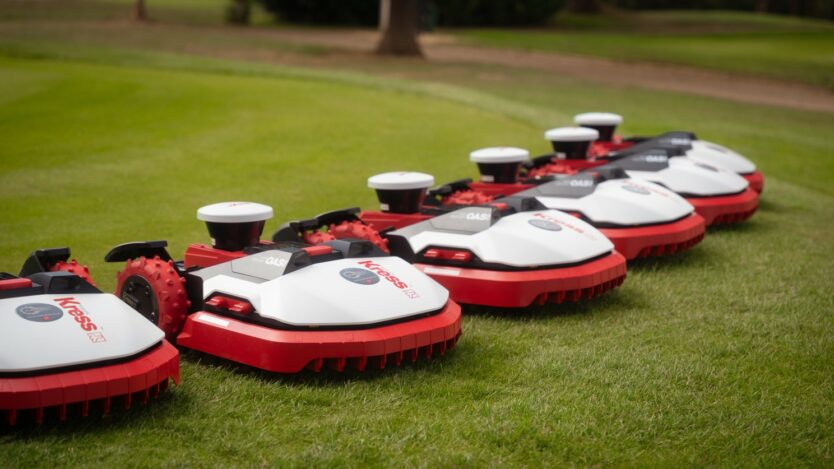
Paul Lancaster shares how robotic mowers are transforming course operations at Aspley Guise & Woburn Sands GC.
Meeting the many demands of managing a successful golf club requires a multitude of skills, but also a willingness to adapt and to innovate.
Few of those demands are more persistent and widespread than the need to satisfy expectations when it comes to the condition and presentation of the golf course. At Aspley Guise & Woburn Sands Golf Club, General Manager Paul Lancaster and Course Manager Andy Copeland have turned to autonomous mowing technology.
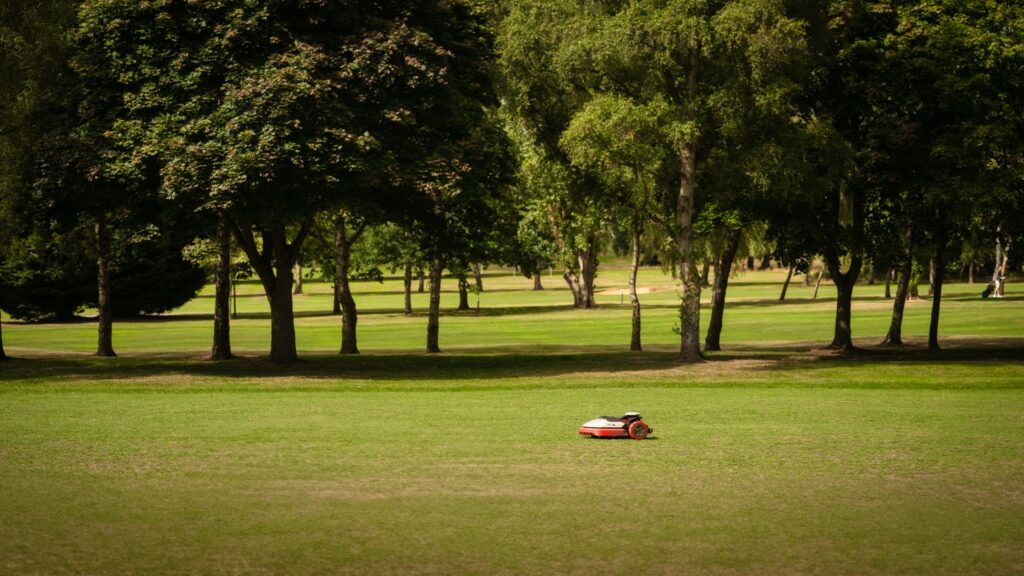
Their decision to integrate Kress robotic mowers was not just an equipment upgrade, but a strategic move designed to unlock long-term operational, agronomic and financial benefits.
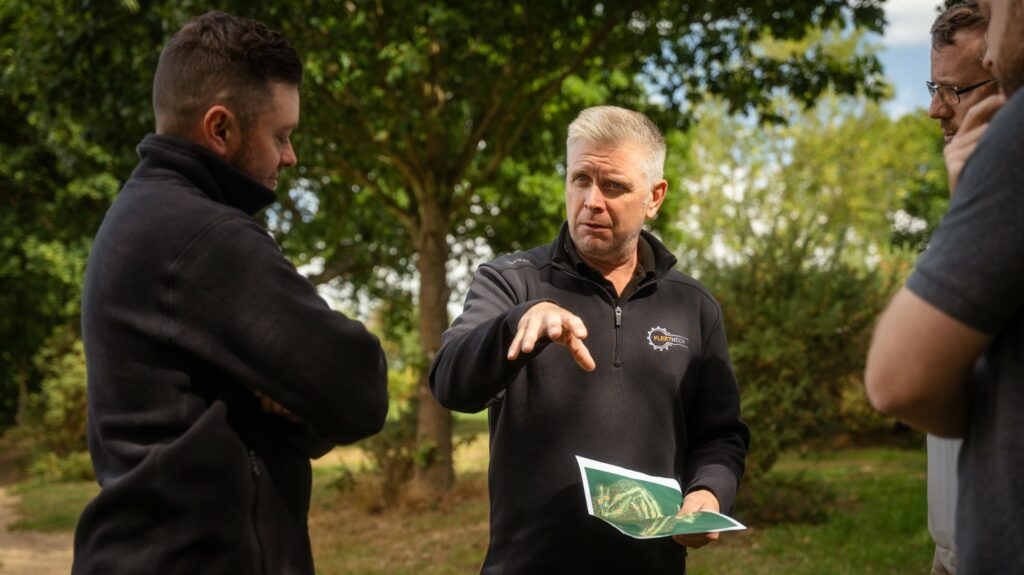
“The initial idea for the robots came from our course manager, Andy,” explained Lancaster. “Between us, we collaboratively looked at what the benefits could be for the club, both from an agronomic point of view and a business case.”
Redeploying staff, not replacing them
Lancaster was determined that automation would not come at the cost of people, insisting there should be no concerns over losing greenkeepers in favour of robots.
“[That’s] definitely not the case,” he said. “We want to redeploy our manpower to utilise the skills and knowledge of our team in the best way we can.”
Copeland added: “The only way that we could achieve what we want to achieve is by redeploying my team’s hours into the more detailed work in and around the golf course.”
Lancaster says the introduction of robotic mowers enables skilled turf professionals to focus on the aspects of course presentation that demand human knowledge and precision.
“Greenkeepers add a different level of knowledge and expertise,” he explained. “The greenkeepers can spot the first signs of turf disease. The greenkeepers can do the detailed work which makes a golf course stand out from a normal golf course to a great golf course.”
That shift in focus is already having an impact, with time previously spent on routine mowing now being redirected to detail work such as “mowing around sprinkler heads, making sure the steps are all nice and tidy, the walk-off areas”. Around 20 hours per week are being saved and reinvested in course refinement.
Sustainability sits at the heart of the project, running alongside agronomic improvement. Lancaster is clear about the dual benefits.
“From a sustainability point of view, that’s a big tick,” he said. “Reducing fuel, we’re reducing emissions. So we’re doing our bit from the environment. Sustainability is big, it’s huge in the industry, we’re all leaning towards it, but it has to stack up from a business point of view as well.”
Capital and operational planning
From a financial perspective, Lancaster points out that the investment in robotics has significant implications for future capital planning.
“Our fairway mower, for example, could be due to be replaced in the next two to three years,” he said. “With the reduced use that it will have following the introduction of the robotic mowers, the lifespan of the machine will increase. The capital that I’d be looking to spend on a new mower can be redeployed in other areas of the club.”
Operationally, the mowers also provide flexibility during adverse conditions. Lancaster added: “There’s periods in the year where the course can be too wet to take out traditional ride-on mowers. The lightweight robot mowers can continue to cut into those winter months and continue to prepare the course the best that we can all year round.”
Keeping members front and centre
For Lancaster, member experience remains the top priority. He is clear that the project must ultimately enhance what golfers see and feel on the course.
“Ultimately the members want a course that they can be proud of,” he said. £They want to bring their guests here, they want to show their club and their course off and be proud of what they have.”
That ethos extends to the scheduling of mowing operations, which are carefully planned around play.
“We’re ideally looking to mow the fairways overnight and then the rough during the day to have as least impact on the playing experience as possible. We don’t want the mowers to impact the golfer experience, we want it to improve it.”
The club has even encouraged members to get involved in lighter moments, inviting suggestions for naming the robotic fleet, one popular idea being ‘Happy Gilmo’.
Looking ahead
For Lancaster, the project reflects a broader commitment to innovation and progress. The decision, he says, was rooted in agronomic benefits but carries wider organisational value.
“The overall decision to implement the robotic mowers here at the club was based formally on the agronomic benefits,” he said. “But looking deeper into it, there’s huge benefits from a staff in a manpower utilisation point of view, as well as the much bigger picture in terms of opening up more opportunities for club development and investment.”
He believes that robotic mowing marks an important step forward for the wider industry.
“We’re really excited at the club of this new introduction. The innovation of the robotic mowers is huge for the golf industry.”
Key Takeaways
- Invest strategically: Build the business case on agronomic, environmental, and financial grounds.
- Protect and empower staff: Redeploy greenkeepers into skilled, higher-value work.
- Prioritise members: Innovation must enhance presentation and strengthen the golfer’s experience.