‘It gives you credibility with the committee and your peers’: Why golf club managers are flocking to sign up for GCMA Accreditation

James Levick

We catch up with a member who has just gone through the Accreditation process to see how it has benefited both them and their team.

This article is part of GCMA Insights – topical content for golf industry professionals, discussing the things that matter to those who work in golf clubs.

It was a ground-breaking enterprise – an industry first attempt to ensure excellence in golf club management could be measured and recognised by the entire industry.

GCMA Accreditation has proved a huge success, with dozens of golf club managers having their skills, achievements, and personal development recognised.

Open to any GCMA member active in a golf club management role, the scheme provides a clear route to develop, encourages applicants to be introspective about what they’ve achieved in their careers, and rewards efforts to enhance the CPD of both them and their teams.

By completing a complete career history and a summary of roles undertaken, along with an up-to-date record of qualifications and learning, applicants could apply for one of four GCMA Accreditation Levels ranging from Aspiring Manager to Level 3 Accredited Manager.

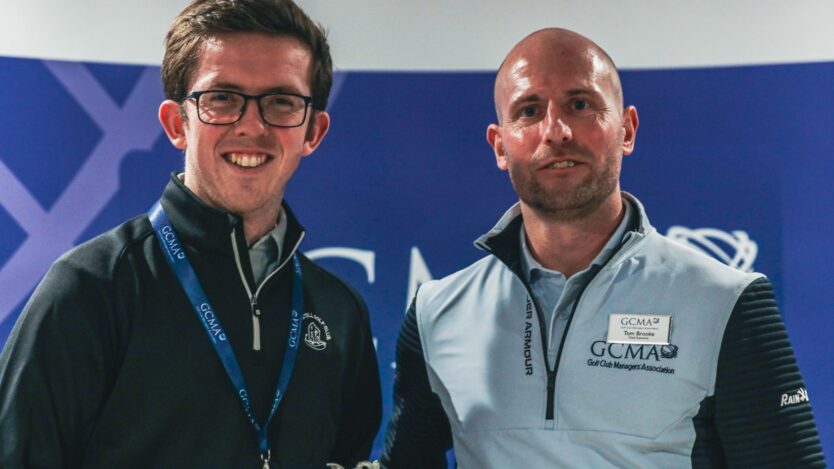
One of the first intake of accredited members was St Austell General Manager James Levick, who achieved Level 2 status.

As the GCMA prepares once more to receive completed submissions for a fresh intake, we caught up with James to find out what it took to be accredited, how it is helping to shape his career, and how it has also benefited his relationship with his team…

Get involved in the debate.
To join the GCMA, click here, or to organise a call with a member of the GCMA team, just complete the form below.

Do you think GCMA Accreditation will help your career? What were your reasons for getting involved?

I wanted to have something measurable – that backed up what I’d achieved, the skill set I’d learned, and my experiences over the years.

There wasn’t really anything out there before that would say, ‘you can do your job to this level, and you have experience of doing all these different things’.

It can only be good to have that and it does give you credibility with the committee and with your peers. 

It’s one thing to put your achievements down on CV, but another to have them recognised by your professional association…

Absolutely. Golf club management is a profession and GCMA Accreditation recognises that. In a lot of other careers, you must do certain qualifications, and this is a way of proving that you know what you’re talking about!

You’ve been professionally accredited – someone has looked at your career and your achievements – and you’ve reached a certain level.

Can you explain the process to me?

It’s an online application and you list your skills, your knowledge, and experience. It covers every area of the golf business – from customer service, to members, dealing with queries, health and safety, training, and recruitment. You explain how you’ve dealt with situations, what you could have done better, and what you’ve learned along the way.

It was a lot of work. It wasn’t a simple tick-box exercise and a lot of thought needed to go into it. 

We don’t often have time to reflect on what we’ve done because we’re always thinking about moving forwards. This gave me a chance to stop and reflect. 

You also need to detail your CV, training, and then back that up with CPD points. That covers a wide range of things: attending conferences and meetings, listening to certain podcasts on business and golf, and so on. 

I liked that part of the process. Although the points awarded were obviously smaller for things like listening to podcasts, it did take that into account. You can pick up a lot of information through that, from a variety of different industries, that are transferable to golf.
GCMA Accreditation

It’s a very introspective process. Did you find it worthwhile?

Definitely. You just don’t remember all the things you’ve achieved. There were some leading questions: ‘Can you give examples of how you’ve dealt with this?’

At St Austell, we have changed our committee structure. We’ve gone through a lot of change in processes and systems and building up our relationships with members, as well as developing the golf club over the last couple of years through Covid.

It was great to reflect on that and think about what we’ve achieved, especially with such a small team.

You take that for granted. You just come to work and don’t always think about the things you’ve done to get to the point where you are today. 

WHY JOIN THE GCMA?

Membership of the GCMA unlocks a network of like-minded professionals, provides you with support in your professional and personal development, and provides you with a multitude of benefits. Whether that’s the tools that will help you to excel in your profession, or a wide range of services to support your wellbeing, signing up to the GCMA is joining a community. 

You’ve achieved GCMA Level 2 Accredited Status and we assume you’ll look to achieve Level 3. How do you think it will help your career in the years to come?

It’s a great personal accolade. It confirms I can do what I say I can and that I’ve gone out of my way to achieve it. To be part of the first intake was very important. It shows that I am proactive. 

It helps to keep a track of CPD and I plan to work more on that over the coming years. I always make sure I attend as many meetings and conferences as possible, but I also plan to invest some time in SkillGate, and the many other courses out there, to improve my knowledge for the betterment of the golf club. 

Has it helped you support the CPD of your team?

I am a big believer in investing in education and training for the team and, following our team members’ appraisals, we use this information to look at ways we can further their education. That investment in the team pays off with an enhanced level of service for members and guests – as well as a higher level of job satisfaction for the team.

What advice would you give to fellow golf club managers who may be considering applying?

Just go for it. The process can only be positive for everyone’s personal development, and I’d set aside the time to do it. I learned a lot along the way. 

To learn more about GCMA Accreditation, and how to apply, visit the association’s dedicated webpage.

This article is part of GCMA Insights – topical content for golf industry professionals, discussing the things that matter to those who work in golf clubs.

Get involved in the debate. To join the GCMA, click here, or to organise a call with a member of the GCMA team, just complete this form and we’ll be in touch!

Enquiries

"*" indicates required fields

This field is for validation purposes and should be left unchanged.
How would you prefer to be contacted?*

By GCMA Content Team

More from Your Development

Close

Allister Frost


A former Microsoft Digital Strategy leader who now inspires audiences to discover the life-enhancing benefits of having a Future Ready Mindset. As a tech pioneer, Allister gained unique insights into how to transform uncertainty into opportunity, and now loves giving others the positive mindset and simple habits needed to:

  • Stay resilient in the face of uncertainty and change
  • Spot quick win opportunities for improvement
  • And *create* a brilliant future!


With AI and robots coming for our jobs (hint from Allister: they won’t, if we know how…), many people are anxious about the future. But Allister asserts that we’ve nothing to fear when we leverage our human superpowers and ingenuity to thrive alongside emerging technologies. That’s why having a Future Ready Mindset is now a must-have skill to remain competitive and relevant to the people we serve, our golf club members and the local community. And the best bit: everyone can do it!

This will close in 0 seconds

John Steele


John Steele is a former professional athlete, sports coach, Olympic Leader and is the Executive Director of Sport at Loughborough University. He has been Chief Executive across a range of sectors. Drawing on leadership experience of nine different Olympic and Paralympic Games (including the amazing events at the Rio Games), John reflects on the lessons from this unique period in British sport and relays his fascinating views on creating high performing teams.

Indeed, inspired from PyeongChang 2018 Olympic Winter Games, by the most successful performance ever for Team GB, he has a whole host of new business and leadership insights into how this was brilliant performance was achieved and how it can translate back into your organisation.

John moved into the corporate world, before he enjoyed an outstanding career as a professional rugby player achieving international honours. After his playing career, he turned his hand to coaching and achieved the highest accolade for a British club coach by winning the European Cup with Northampton Saints. He then became Executive Director on the Saints Board during a period of unprecedented growth, and served on the England Rugby Board during the successful world cup campaign of 2003. It was no surprise that John’s talents were called upon to drive through a change and modernisation programme as CEO of the Rugby Football Union – a challenge that became controversial and ended in his departure from the post after only a year, but with his dignity and professional pride intact.

Headhunted by UK Sport, John took up post as CEO the day before London won the 2012 Olympic bid – and this promising start was sustained as he embarked on developing the UK’s high performance sport system, which he led for a six-year period of unprecedented success through the Beijing and London Olympic and Paralympic Games.

Post-London 2012, with the Olympic legacy in place and an obligation to continue inspiring a generation, John took up his post as Group Chief Executive of the Youth Sport Trust. He has also succeeded Steve Cram as Chairman of the English Institute of Sport, an organisation described as ‘the team behind the team’, which delivers a range of performance impacting solutions to over 40 Olympic and Paralympic sports and some non-Olympic sports.

This will close in 0 seconds

Dr Jo Salter MBE


Dr Jo Salter MBE is famed for becoming the first female fast jet pilot, having flown the Panavia Tornado ground attack aircraft during her services in the Royal Air Force. Joining the RAF aged 18, Jo has since taken Air Cadets into the skies as part of Air Experience Flights, become the Director of Global Transformative Leadership for PWC, and most recently become a Global Advisory of GenAI for PwC.

Jo has piloted flights in the Air Cadets Air Experience Flights and inspired countless budding armed service members to pioneer a male-dominated sector, having been the leader of an all-male squadron. Since leaving the military behind, Jo has established a strong business career working in roles such as Head of Technical Services for NetConnect, European Operations Manager for Automated Power Exchange and Managing Director of Saltin Ltd.

Having developed first-class expertise in leadership, analytical thinking and performing under pressure, Jo is now a highly sought-after public speaker to share stories from her time in the skies.

Jo is a passionate Trustee of The Royal Air Force Club and an Ambassador of the Global Angels charity, an organisation that gives communities around the world access to clean water, education, healthcare and encourages female and youth empowerment. Jo has also authored two books, titled Energy: 52 Ways to Fire Up Your Life and Become an Energy Angel and Energize: Spring Clean Your Mind and Body to Get Your Bounce Back Today and Every Day.

In recognition of her achievements throughout her career, Jo has also been named as one of the 50 Most Inspiring Women in the World by Harpers & Queen. She is now working as the Director of Global Transformation Leadership at PWC, after working in other roles such as Director of Risk Technology Strategy, Director Chief of Staff to Head of Technology & Investments and the Director of People & Organisations.

In 2022, Jo was invited personally by Tom Cruise to attend the premiere of Top Gun: Maverick. Most recently, Jo received an honorary doctorate of Arts from Bournemouth University.

This will close in 0 seconds

Colin MacLachlan


Colin Maclachlan, star of Channel Four's captivating reality TV drama SAS: Who Dares Wins and Channel 5’s ‘Secrets of the SAS’, is an operator with over 25 years of security and risk related experience who is a popular and frequent fixture on the speaking circuit.

Colin Maclachlan, celebrated for his roles on Channel Four's SAS: Who Dares Wins and Channel 5’s Secrets of the SAS, brings over three decades of expertise in security and risk management. Colin's military career began in 1989, and after serving nine years with the Royal Scots, he joined the elite 22 SAS at just 23. His time in the SAS saw him participating in numerous high-stakes operations, including the notable rescue of hostages from the West Side Boys in Sierra Leone—a mission so perilous it was dubbed Operation Certain Death.

Colin was also pivotal during the longest hostage siege on UK soil, when a hijacked Afghan plane landed in London in 2000. The standoff lasted four days with Colin as the first sniper on the scene.

After leaving the SAS, Colin exchanged insights with international forces such as Delta Force and Seal Team 6 and provided security consultancy to the Saudi Royal Family and various celebrities. His academic pursuits led him to earn a First Class MA (Hons.) in History from Edinburgh University and an M.Litt in Terrorism from St. Andrews University.

Today, Colin extends his expertise through television, books, radio, and video games. He supports numerous charities and has founded Who Dares Cares, which assists veterans and those experiencing stress. As a speaker, Colin excels in discussing Resilience, Teamwork and Leadership.

This will close in 0 seconds