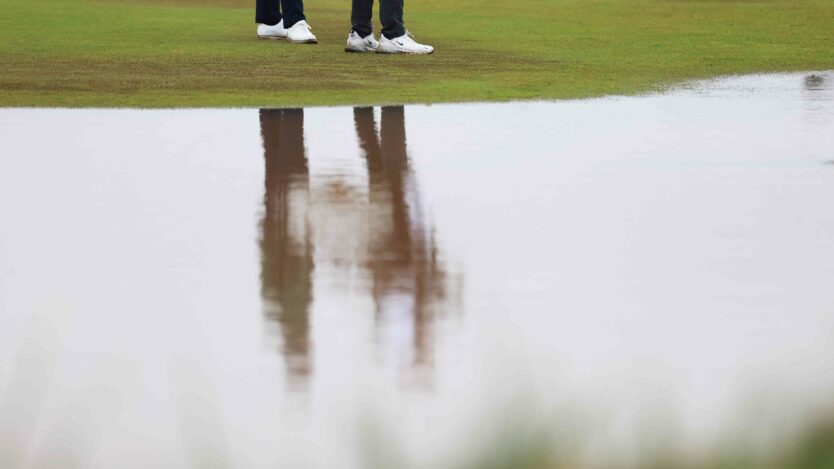
It felt like barely a day was passing without the heavens opening. But how much have our courses suffered? We take a look at the numbers…
This article is part of GCMA Insights – topical content for golf industry professionals, discussing the things that matter to those who work in golf clubs.
Storm Henk, Gerritt, Elin, Fergus – the names all seem to blend into one. But the devastation these weather spells have brought have been unforgettable.
Henk, which struck barely after Big Bell had stopped ringing in the New Year, left thousands without water in their homes and brought more than 500 flood warnings and alerts across the UK.
Since the end of September, there have been seven different storms, alongside exceptional rainfall in Scotland at the start of October that was the wettest two-day period on record in the country for 132 years.
While the effects have been demoralising, they’ve also had a significant impact on the outdoor leisure industry and, of course, golf courses.
With surrounding fields under water and rivers everywhere having burst their banks, some clubs have had the ‘closed’ signs out for weeks under the pressure of the continuing deluge.
But just how wet has it been, and what have clubs been coping with?
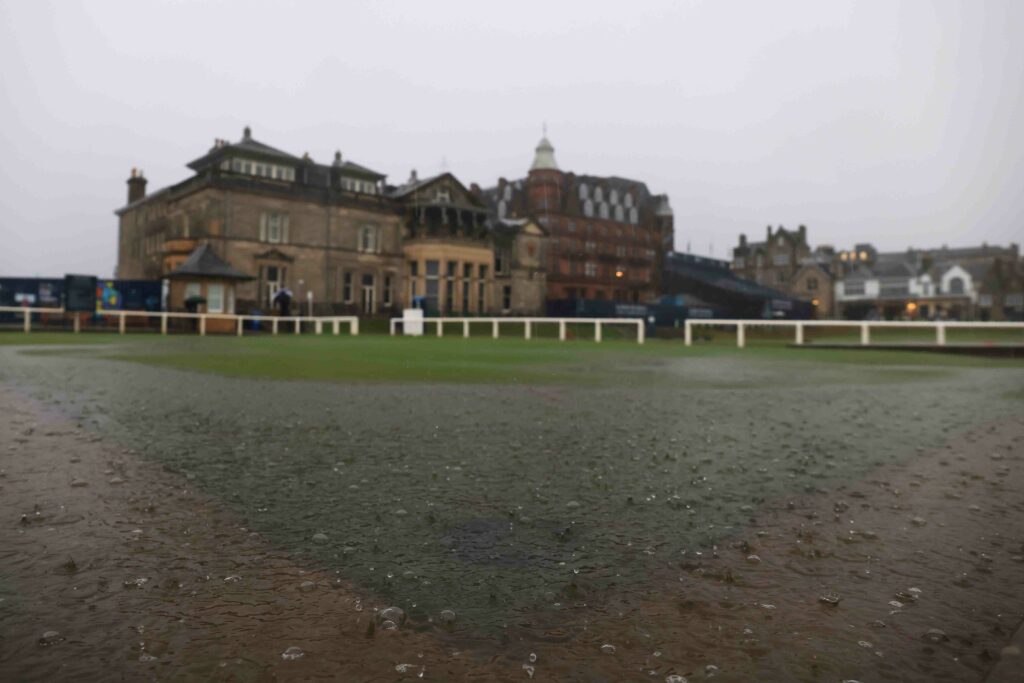
What has rainfall been like across the UK?
December was the equal eighth-wettest 12th month in the UK since 1836 and the fourth-wettest for Northern England, according to the Met Office. Parts of central and north-east England, as well as much of north-east Scotland recorded more than twice the normal rainfall. In all, there was 188.6mm of rain the UK (7 ½ inches in total) – but a huge 258mm in Wales and 246mm in Scotland.
And that was just further saturation on what had come before. The UK saw 118.9mm of rain in November and 171.5mm in October. In total, more than a foot and a half of rain has fallen in the UK across the last three months of 2023.
The start of 2024 has brought the same again, only the weather is now turning colder – which could transform any remaining standing water into ice.
It doesn’t move it off the golf course, and it makes some areas of the course potential health and safety hazards, that again asks a difficult question of clubs as to whether they can open.
Get involved in the debate.
To join the GCMA, click here, or to organise a call with a member of the GCMA team, just complete the form below.
How have golf courses fared?
Badly, as you would expect, but the basic numbers are still eye-opening. In Arbroath, members have reported 120mm, 150mm and 219mm of rain over the last three months.
Members also revealed Chesterfield was closed for 15 days in December and throughout the early part of this month. That followed 10 days’ of closure in October and November. In the week following Christmas, 112mm of rainfall fell.
At York, 2023 saw 35 inches of rainfall with 15 of those – or 43 per cent of the total – falling in the last three months.
In their regular email, members were told: “Unfortunately until the level of water in our ditches falls to a point where surface drainage can work, there will be little or no improvement – and that is not going to happen until the (River) Ouse and Foss both fall thus allowing our ditches to eventually empty into them.”
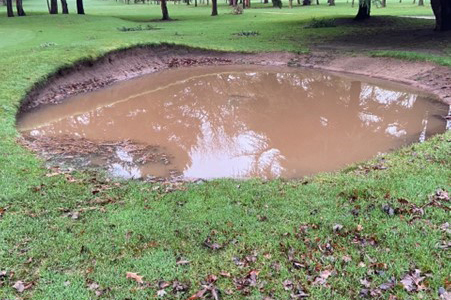
What’s the greenkeeper’s view?
Nottinghamshire club Beeston Fields, run by GCMA member and general manager George Conrad, saw 45mm in the first four days of January but an incredible 1,136mm over 2023. That’s 44.7 inches. Or more than 3 ½ feet.
September to December saw particularly depressing numbers, with 103mm, 198mm, 66mm, and 186mm closing out the last four months.
Course manager Ryun Holden outlined the reality of what the course had been asked to cope with in the club’s newsletter and it was sobering reading.
“Last winter was very wet and restricted play and maintenance of the course,” he wrote. “We had hoped this was an anomaly as no previous winter had been so wet for 60 years but this year is making the last look mild”.
WHY JOIN THE GCMA?
Membership of the GCMA unlocks a network of like-minded professionals, provides you with support in your professional and personal development, and provides you with a multitude of benefits. Whether that’s the tools that will help you to excel in your profession, or a wide range of services to support your wellbeing, signing up to the GCMA is joining a community.
He added: “Needless to say, the greenkeeping team are going to have a busy start to the year if and when we get improved conditions.
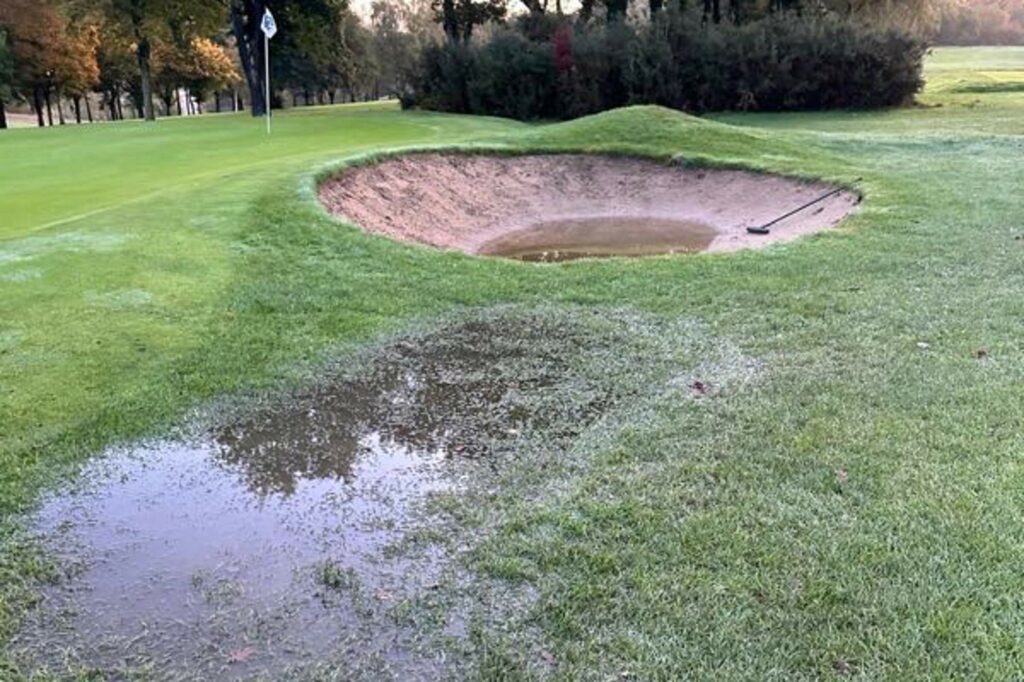
“Bunkers, paths, tree, leaf and debris clearance along with some improved drainage work will need to be done prior to the main season start.
“All work that we would normally would complete during the winter months but currently unable to. This will add pressure to our normal pre-season course preparation.”
What’s the club manager’s view?
It’s not just the course that’s affected. When the layout is closed, footfall, bar sales and pro shop sales all take a hit too.
Golf clubs are designed to be places of community, so what it’s like when clubhouses are empty for weeks at a time?
At Henley, in Oxfordshire, their weather station recorded the wettest year in 17 – the precipitation maxing out at 950mm.
This year began no better, with an inch in one day last week. An average January peaks at 64mm.
General manager, and GCMA member, James Brockington said around a quarter of days had been lost to the rain through November, December, and into January.
“When it’s closed the number of people we see in a day goes down by 90 to 95 per cent,” he explained. “We have a few members that still come up for lunch, which is great, and obviously helps to support the club.
“We installed a simulator a few years ago so members can rent that out at a low cost. Our driving range does stay open when we are shut so people can still come and use that. Obviously whenever the course is shut, it does become an empty and vacant place.
“The overheads of running the club don’t change. The staff are all still here and the greenkeepers do as much as they can – even though they know they struggle to get the machinery onto the golf course.
“And the members don’t see each other and, for a lot of people, it’s where they socialise and like to come down. Thankfully, although we’ve been shut a lot, we haven’t been closed for weeks back-to-back and the members have still been able to come down and see each other but we want to keep it open as much as we can and we want to see people using the club and happy to see each other. When it’s not open, it’s a quiet place.”
Brockington confirmed that winter budgets were smaller as clubs tried to prepare for shorter days and inclement conditions during the colder months.
“It’s not like you’re losing out on days and days, where you’re expecting people to be teeing off for 12 hours a day as you would in the summer, but it does affect budgets.
“Thankfully, for us we were open pretty much all throughout Christmas, which obviously was a busy time for members and members’ guests, and that certainly helped. The numbers for the year are quite healthy. The club is doing well but it does affect things.
“But if we have a wet January, February and March, we won’t have seen rain like this for a six month period ever.”
This article is part of GCMA Insights – topical content for golf industry professionals, discussing the things that matter to those who work in golf clubs.
Get involved in the debate. To join the GCMA, click here, or to organise a call with a member of the GCMA team, just complete this form and we’ll be in touch!
Enquiries
"*" indicates required fields