What does a competition committee need to know if they’re concerned about weather conditions out on the course?
This article is part of GCMA Insights – topical content for golf industry professionals, discussing the things that matter to those who work in golf clubs.
Golf is played in the great outdoors and the British weather can be unpredictable, to say the least. Rain, wind, fog, sunshine – sometimes we will see all of these in the space of a morning while out on the course.
In a previous article, we looked at when a round should be cancelled. But committees will only consider that option in the most extreme circumstances.
A little more likely, however, is the possibility of play being suspended because of weather conditions – and it might not always simply mean abandoning an event or putting out the “course closed” signs for the rest of the day.
The Committee Procedures, outlined in the Official Guide to the Rules of Golf and found on The R&A’s website, offer some guidance if competition organisers find themselves wondering whether they should interrupt the action.
They look at lightning, visibility, temporary water and wind and then offer thoughts on taking the decision to resume following a delay…

Get involved in the debate.
To join the GCMA, click here, or to organise a call with a call with a member of the GCMA team, just complete the form below.
Lightning
Players can stop on their own if they believe there is a threat of lightning and this is completely within the rules.
The guidance says committees should use “whatever means it has available” to determine the threat of lightning and “take what actions it believes are appropriate”.
While players can decide when to stop, when a committee believes there is “no further danger” from lightning and requires that play is resumed, golfers must comply.
Visibility
You might think fog, but this guidance can also cover darkness or any other conditions that might affect visibility. The guidance recommends play should be suspended “if landing areas are no longer visible to players” and if they can’t read the lines of putts on the green.

WHY JOIN THE GCMA?
Membership of the GCMA unlocks a network of like-minded professionals, provides you with support in your professional and personal development, and provides you with a multitude of benefits. Whether that’s the tools that will help you to excel in your profession, or a wide range of services to support your wellbeing, signing up to the GCMA is joining a community.
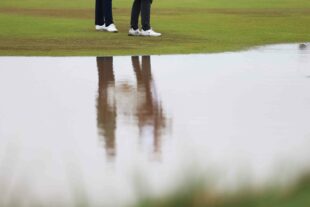
Temporary water
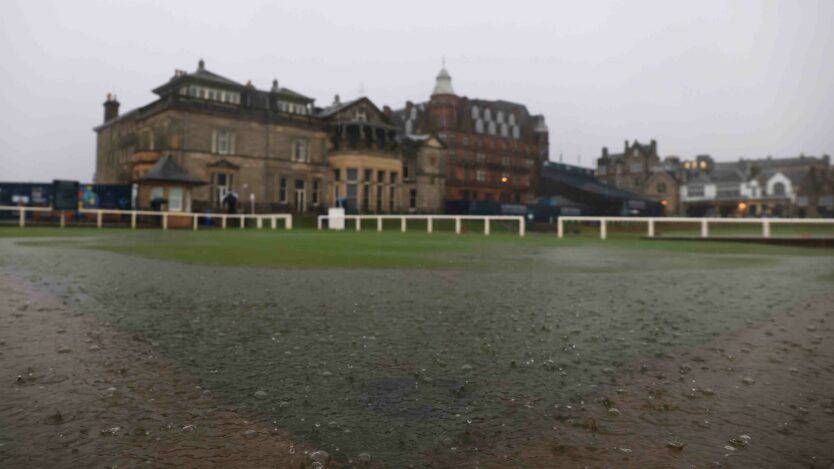
This can be a problem – particularly on putting surfaces – during periods of persistent rain and clubs often do not have the resources that can be employed in elite tournaments.
Play should be suspended in stroke play if “all the area around the hole is covered in temporary water” as the course is considered unplayable.
In match play, though, there are alternatives. If the water around the hole can’t be removed, play can either be suspended or the hole can be relocated.
Wind
One or two balls might be moving on a green, but only “several balls being moved by the wind” is a reason to suspend play, according to the guidance.
“The committee should consider suspending play due to wind only if there are several instances of balls moving and players are having problems with replacing the ball on the spot from which it is blown”.
When should a committee consider allowing play to resume?
Players will normally resume from the place where they originally stopped and committees need to think about how players will get back to their positions back on the course and how they will make sure that has occurred before play resumes.
Depending on the nature of the event, clubs might also want to consider reopening practice facilities, or allowing players sufficient time to warm up before play is resumed.
This article is part of GCMA Insights – topical content for golf industry professionals, discussing the things that matter to those who work in golf clubs.
Insights Signup
"*" indicates required fields