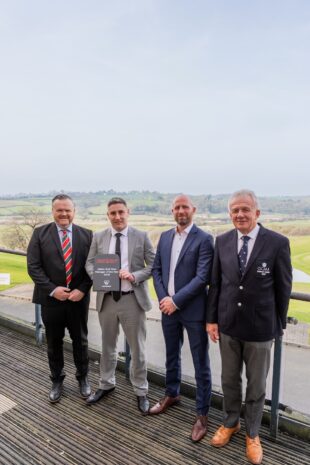
Drawing on over two decades of experience, David Holmes shares insights on the challenges of modern golf club management.
Managing a golf club today is more complex than ever. From long-term strategic planning to effective governance and investing in staff, the challenges can feel overwhelming, but the opportunities to make a real impact are just as significant.
David Holmes has experienced it all first-hand across a career spanning more than 20 years, in which he has managed three of England’s most prestigious private member clubs, taking in spells at Royal Ashdown Forest, Prestbury, and Hollinwell. He is soon to take the helm at Olton, having spent the past few months broadening his skill set with Club Benchmarking EMEA.
Drawing on that management experience and knowledge gleaned from his latest role, here David offers practical tips and insights for club managers.
What operational blind spots do you see most commonly at clubs?
Governance is key. You need the right structure and the right people. A lot of clubs don’t have a proper plan — whether it’s a five-year strategic plan or a longer-term capital plan. Too many clubs are focused on the present: this year’s profit and loss, the subscription increase coming up, or a single big project.
As I often say, clubs need to be looking 5, 10, even 20 years ahead. Many don’t. They operate almost hand to mouth. A lot of this stuff — capital replacements, machinery, irrigation — shouldn’t come as a surprise, but at many clubs it still does.
Is there a one-size-fits-all structure for governance?
Not exactly. Each club needs to work out its board size and composition. The data suggests seven to nine board members is ideal — you’ve got enough skills, but you avoid becoming unwieldy.
What we always emphasise is the value of an independent nominations committee. Without it, you end up with popularity contests rather than skills-based appointments. That’s how you find someone chairing a house committee with no hospitality or facilities background — and then the GM is firefighting.
The more this happens, the more the board is dragged into operational detail instead of focusing on the long-term strategic issues that the club actually needs to solve.
Are clubs sometimes resistant to the facts uncovered by a process like benchmarking?
Yes — more than you’d think. The whole idea of benchmarking is to elevate facts over opinions, but there are always those who go against that logic.
Some committee members can deny the data because it conflicts with their instincts or their long-held view of how the club operates. And when that happens, it can be very difficult to make progress.

What the process aims to do is get committees to think like owners, not customers. Owners prioritise investment in the club. Customers prioritise low fees. Clubs need committees who understand they’re custodians for future generations, not just protecting their own subscription for the next 12 months.
How much of the information gleaned be should be shared with members?
It will vary from club to club. Some may want to be very transparent, while others will prefer summaries. What we usually encourage is that clubs adopt asset evaluations as part of their strategic plan — tracking any asset over £3,000 and with a usable life of three or more years. It helps take emotion out of conversations about investment.
Communication is crucial. Members need to understand they’re effectively the owners. They have a responsibility to look after the facilities and make sure the club doesn’t store up problems for the next generation.
How important is it to invest in staff?
Staff are absolutely critical. Roughly half of a club’s expenditure is staffing. Recruiting and retaining greenkeeping and hospitality staff is challenging everywhere. The most important thing is to make staff feel valued, or you will risk losing them.
You have to invest in people — pay, training, development, engagement. You can’t expect high standards without it. Each club chooses its standards and sets its budget accordingly, but you can’t deliver a great member experience with under-resourced teams.
You’ve spent a brief spell out of club management — what have you missed?
Golf club management comes with real highs and lows. But I love working with people — colleagues, members, suppliers — and the shared experiences you get, whether at conferences or visiting top courses.
The people element keeps it rewarding. Yes, there are challenges — difficult members, occasional politics — but the positives outweigh those moments by a long way.
How optimistic are you about the industry’s future?
It’s a mixed picture. The strong clubs are getting stronger, particularly those benefiting from high green-fee revenues. But there are clubs at the other end of the spectrum who are struggling financially.
The key is making sure committees actually act on the data and the strategic advice they’re given. Clubs with well-educated professionals in post can be in a very strong position. But ultimately, success depends on whether committees and members are willing to make the right decisions based on the facts.
Key takeaways
- Prioritise governance and planning – Ensure your club has the right board structure and skilled people in key roles, supported by a long-term strategic and capital plan. Short-term thinking undermines sustainability.
- Use data to drive decisions – Committees should focus on facts, not assumptions, and plan for asset replacement and investment well in advance.
- Make staff feel valued – Staff are a club’s most important asset. Competitive pay, training, and engagement are essential for delivering a high-quality member experience and retaining talent.