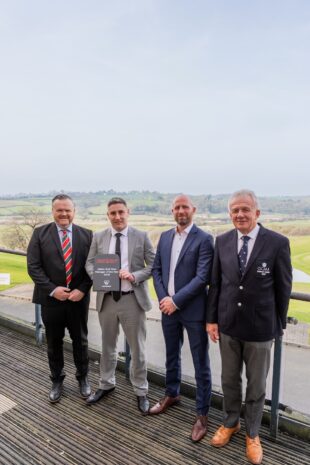
Long Ashton GM Reece Miller explains how accessibility, collective delivery and clear strategy transformed junior engagement.
Long Ashton has earned national recognition for its inclusive, forward-thinking approach to club management, with its ‘One Team’ ethos seeing the club shortlisted for GCMA Team of the Year. Central to that success has been a clear focus on people, participation and long-term sustainability, with junior golf playing a key role in shaping the club’s future.
Under the leadership of General Manager Reece Miller, Long Ashton has placed accessibility and engagement at the heart of its junior offering. Rather than chasing short-term numbers, the club has focused on creating an environment where young golfers feel welcome, supported and motivated to stay involved, supported by a clear pathway from beginner to competitive play.
That work has been delivered through a collective effort involving staff, professionals, volunteers and parents, reinforcing a whole-club approach to junior development. In this Q&A, Reece shares how the programme has evolved, the challenges faced along the way, and the practical lessons that can help other clubs grow junior participation in a sustainable way.
Can you outline the level of growth achieved in your junior membership and how long that took?
Over a relatively short period, our junior section has grown from just 46 members to a full-capacity programme of 125 juniors, which represents almost a three-fold increase in membership. It wasn’t the result of a single initiative, but the outcome of a clear strategy focused on accessibility, coaching and performance, and creating an environment where young people genuinely want to be at the club.
What specific steps did the club take to boost junior participation and how did you prioritise which initiatives to introduce first?
We focused first on removing some of the traditional barriers to entry and participation. That meant prioritising free or affordable access to golf through no restrictions on the course (as long as they have a registered handicap), free fortnightly coaching, junior nights, and direct financial investment into the junior section. Our £5 per member annual contribution into junior funding allowed us to immediately deliver value. This funded the free coaching, social events, and Junior Open support.
We are also extremely proud to be the home venue for Clifton College, working in partnership with the school to support and grow their golf programme while simultaneously strengthening our own junior pathway. This affiliation has created a structured link between education and sport. The relationship has been mutually beneficial, helping Clifton College develop its golf programme while bringing new juniors into Long Ashton, strengthening our talent pathway, and embedding the club more deeply into the local community.
Who has been involved in delivering the junior programme on the ground, and how important has that collective approach been?
This programme has been delivered through a collective effort involving the entire club, mainly the junior organiser, four on-site professionals, parents and volunteers, and wider clubhouse staff. The success of the junior section is not down to one person, it’s a shared responsibility.
When did this work begin, and how has the junior offering evolved over time?
The work has been in place for several years and, since the impact COVID-19 had on golf and the recent engagement from 15–17-year-old golfers in 2024/2025, the reputation of our club has continued to grow through word of mouth about what we offer. Simple initiatives were initially focused on junior member engagement rather than growth targets for the section. Over time, this evolved into a structured programme with regular junior nights, organised coaching groups, competitions, team matches, and social activities. We’ve adapted continuously based on attendance, feedback from both participants and coaches, and responses from families. The programme has matured naturally into a clear pathway model, from beginner engagement through to competitive junior golf.
From a management perspective, what challenges did you face and what impact has growth had on the wider club?
The case for investing in junior golf has always been about long-term goals and future membership. Juniors represent future members and the future of our club’s culture. The main challenges have been keeping our membership informed of the progress of the junior section, as well as managing the impact on course availability caused by increased junior participation and rising membership numbers. Keeping members informed of progress is key to helping resolve tensions between reduced availability for full members and access for junior members.
What advice would you give to other clubs, and what’s next for junior golf at Long Ashton?
My advice to other clubs is to start simple, be consistent, and focus on access. You don’t need large budgets or big facilities; you need commitment, structure, and a supportive club culture. Make coaching affordable where possible, build volunteer networks, involve parents, and reinvest back into junior provision.
The future of junior golf at Long Ashton is about maintaining the quality we offer to our current section while carefully managing numbers. We want to sustain our current capacity and develop stronger performance pathways to create clear transition routes into adult membership.