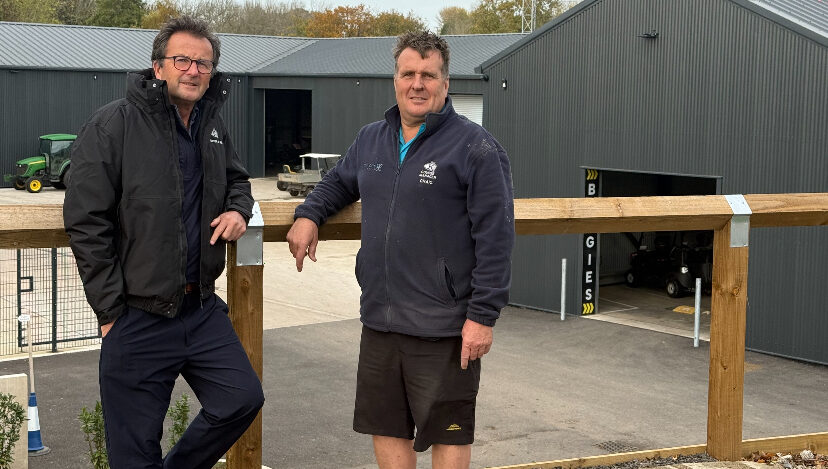
With a bond forged over three decades, Pat Murphy (pictured left) and his Course Manager (right) are fully aligned in their vision for The Kendleshire.
At The Kendleshire, Director of Golf Pat Murphy and Course Manager Craig Fudge have built a partnership that stands as a model for how clubs can thrive when management and greenkeeping teams are aligned.
With 30 years in post for Murphy and 29 for Fudge, theirs is a relationship defined by trust and understanding — qualities that become especially important as the demands of winter set in.
As daylight hours shorten and weather conditions worsen, keeping teams motivated, equipped and supported becomes a crucial part of sustaining course standards. The Kendleshire has made that a central priority, investing heavily in welfare, machinery and facilities to ensure its greenkeeping staff have the resources and working environment they need to perform through the toughest months of the year.
Murphy said that commitment reflects a long-held belief that looking after the team is fundamental to both performance and retention.
“They all have brand new uniforms every year, including proper outer coats and leggings to keep them warm,” he said. “We’ve just spent £1.25 million on a new greenkeeping facility, so it’s absolutely state of the art. It’s warm, and they don’t sit in cold, wet clothes. We’ve encouraged them to take all their outdoor gear off when they come in and use proper shoes inside. It’s about making sure they’re comfortable and looked after.
“If it’s pouring with rain, Craig finds jobs inside. He’s careful not to have them getting soaked and miserable. When it’s cold, they’ll do jobs like pulling out hedges and keep a fire going to stay warm. We make it as enjoyable as possible.”
That focus on welfare is underpinned by a clear philosophy of trust and delegation. Murphy and Fudge’s long partnership means decisions can be made quickly and confidently, with a shared understanding of what’s needed for the course and the people who maintain it.
“I’ve been here 30 years and Craig’s been here 29, so that does help,” Murphy said. “We’re more than just work colleagues. I highly respect him, and he’s a friend as well. He understands this place.
“The way I run things is I leave the experts to do what they’re very good at, and I don’t try to be a jack of all trades. I absolutely love the golf course and admire everything he does on it, but I don’t busy myself in his world.
“I just know how we want it to look and how healthy it is, and I trust him that if there’s a problem, he’ll come and tell me straight away so we can work it out. There’s mutual trust. Ultimately, he’s responsible for our biggest asset, and he’s bloody good at it.”
That same confidence extends to how investment decisions are made. With the club continuing to look ahead, Murphy values Fudge’s technical judgement when it comes to machinery and innovation.
“If Craig says he needs something, that’s good enough for me,” he said. “He’s a brilliant mechanic, and we’ve got a mechanic too, so between them they know when a machine’s time is up. We look at the cost of repair against replacement and act accordingly.
“We’re now looking at robotics and discussing how far to take that. He’s fully on board and says it’s a no-brainer — that’s the way things are going.”
Murphy’s management style, shaped over decades in golf operations, is built around trust and communication rather than control. He believes the key to a well-run club is creating an environment where staff can take ownership of their work.
“That’s been my approach all my business life,” he said. “I surround myself with better people and let them get on with it. Of course, things go wrong at times, but we deal with it. Too many people want to be involved in everything, and actually that causes problems.
“It’s like the old-fashioned committee member who plays golf every week and then decides to run the greens team. You think, what knowledge have you got to do that? These guys are highly skilled people with so much knowledge. They’ve also got access to every other head greenkeeper through WhatsApp groups. If there’s a problem, they’ll be on the phone straight away and get the answer they need.”
That open, informed culture also extends to communication with members. Weekly course updates keep everyone aware of ongoing work and help build understanding of what it takes to maintain playing conditions through winter.
“We write a newsletter every week, and Craig has the first section in it,” Murphy said. “We go out every Friday, take a trip around the golf course, talk about what’s happened that week and what’s happening next, then write that down and send it to every member.
“They’re always totally informed about what’s happening and why. I play here every week and I’m happy to stand in front of anyone and explain what’s going on. It’s just communication, and we’re pretty good at that.”
For Murphy, supporting and empowering the greenkeeping team is not only vital for performance but essential to the long-term future of the profession.
“Finding greenkeepers is not an easy task,” he said. “But those do do it have a passion for it. We took on an apprentice join in January, and I said, ‘If you can survive the first three months, you’ll survive forever’. He’s still with us and absolutely loving it.”
Even after three decades in his role, Murphy’s own passion remains strong.
“I still enjoy it,” he said. “Every day is different, and that’s the beauty of it. You’re dealing with people, and that keeps it interesting.”
Key takeaways
- Invest in staff welfare: Modern facilities, proper clothing, and year-round support keep teams motivated and performance consistent.
- Trust your experts: Empower greenkeepers to lead in their areas — mutual respect and autonomy drive better results.
- Communicate openly: Keep staff and members informed through regular updates to build understanding and engagement.