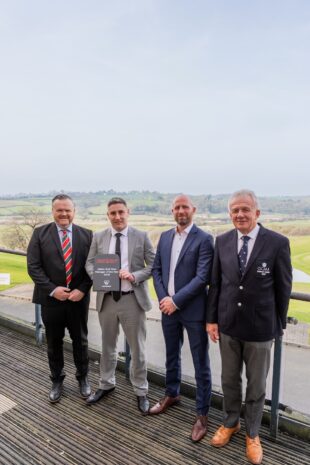
The European Golf Design architect, the man behind the Ryder Cup course at Celtic Manor in 2010, shares his principles and thoughts.
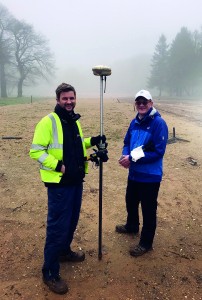 What makes a good golf course?
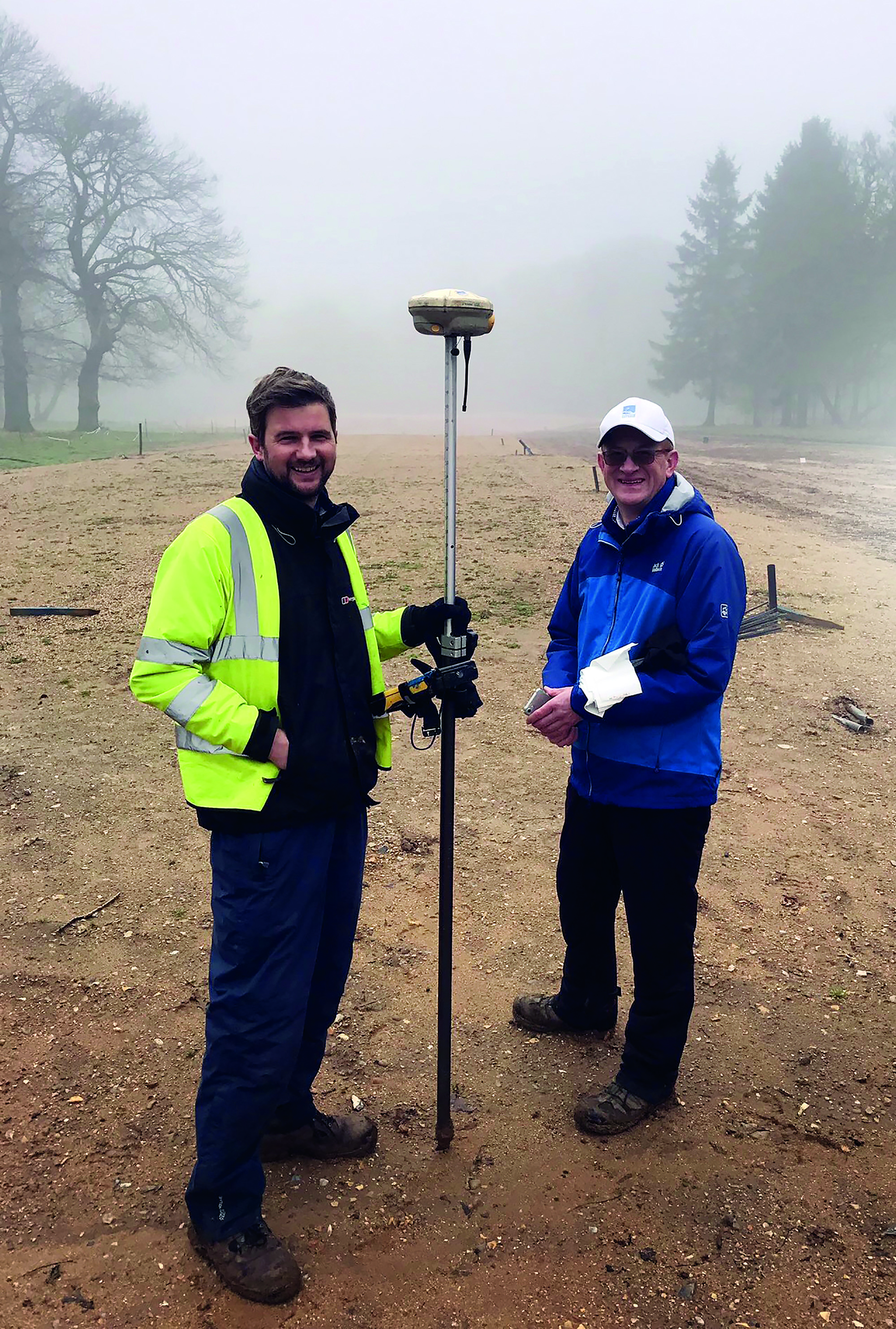
It needs to be strategically strong. I am less influenced by aspects such as the setting. If you look at the top ranked courses in the world, in Europe, or the UK, many of them will be in some sort of spectacular setting. They are very often ocean or seaside courses with magnificent views. That’s great and I absolutely understand why that’s the case.
They are lovely places to play golf. But one of my favourite courses is Royal Lytham & St Annes. It’s really strong but, visually, no one is ever going to say it’s the most attractive golf course in the world. But it’s still a great golf course and I think it suffers in the rankings because of its setting. I get a bit frustrated sometimes that modern golf courses don’t quite get the attention and rankings they deserve.
I’m convinced that modern golf courses can be as good – or better – than anything that has gone before. But, as a general rule, they don’t get ranked as highly. Maybe that’s because the sites aren’t so good and there is too much emphasis on aesthetics and setting. But I think there are an awful lot of top new courses out there that probably deserve to be ranked higher.
How important is a strong start and finish in the work you do?
We always read about classic courses that had a gentle introduction… I don’t think there is a right or wrong. Again, you need that variety. If every golf course had a nice easy start it would get pretty boring, but generally, you want to create a first hole that isn’t going to be one of the toughest on the golf course.
The first hole on Royal Norwich’s new course will be a nice, medium length par 4 that plays between 280 and 370 yards. The fairway is generously wide and there is nothing much to trouble you in terms of hazards, but it’s still a great strategic hole which rewards a well-positioned drive because of a fantastic copper beech tree at the corner of the dogleg. It worked out really well. It was the best hole that could be designed in that area and that was the length that fitted the space.
Occasionally you might have to start with a 460-yard par 4 because that’s what works best on the site and, whatever you do, a hole of that length is not going to make for the easiest start. You need to be aware of that and think carefully about how the hole should be designed in terms of the challenge you are setting the golfer at the beginning of the round.
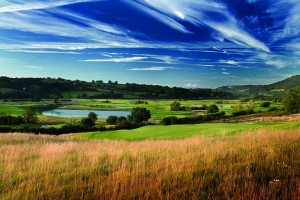 Is there pressure to create a standout first hole when you are creating a new design?
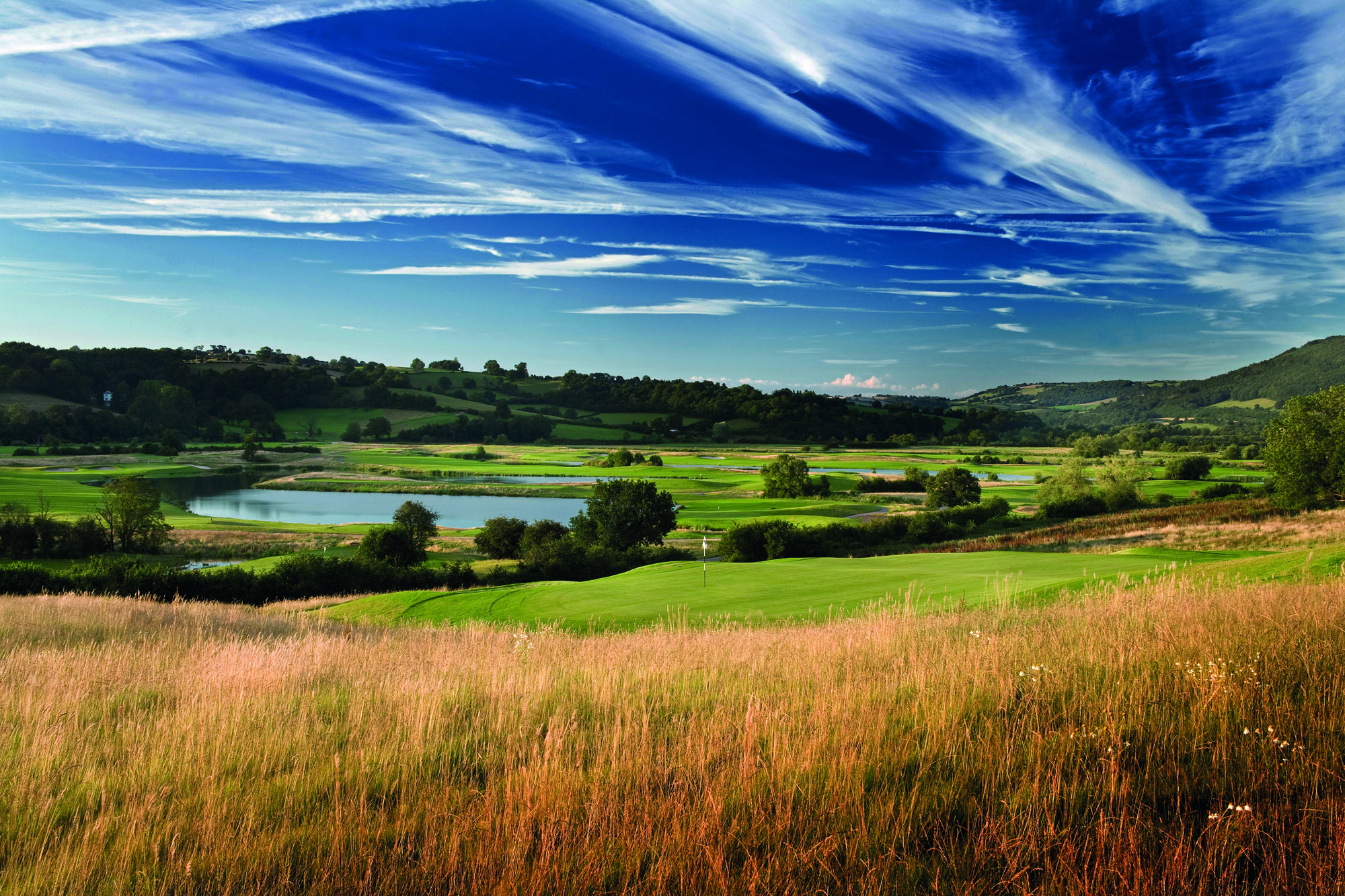
I’ve never felt that at all. The first hole needs to set the scene for what is coming, give a sense of the course’s character and identity but without being overly demanding. In terms of operation it’s certainly helpful if golfers can get away easily and not have to reload too many times.
Golf club owners and managers are more aware than ever of the amount of time it takes to play a round of golf and the impact of that on revenues and they want groups to move along the first hole without too much delay. It’s important that golf course architects, managers and greenstaff all work together to ensure that the operational needs are met.
Sometimes you can be hamstrung by the terrain you are working with or other aspects of the site. You do the best you can. It’s not always easy to create the ideal but we should also recognise that some of the most memorable opening holes don’t follow the ideal anyway.
Do you bring a general set of design principles to each course?
You always bring design principles but you need to adapt them to make sure the golf course you produce actually fits the landscape with which you are provided. There are a huge number of impacts, which may not always be obvious to begin with. Very often you will produce a design and think ‘that’s great’ but then, as you learn more about the site and its opportunities and constraints you realise things aren’t going to work as you initially thought.
For instance, at Norwich, there’s a tree preservation order on the whole site which makes it very difficult to remove trees without detailed consultation. Maybe there’s archaeology on the site, which nobody knows about at the start, and subsequently you can’t build in that area. That happened at Celtic Manor. I had to make major changes, after the golf course construction had started, because the archaeologists were finding all sorts of Roman artefacts and graves on the site. There were substantial changes to the last three holes to fit around what they discovered. There are always things that throw a curve ball at you. You might start with the ideal but, often, things change and you have to adapt.
Using Celtic Manor as the example, how difficult was it to adapt because, presumably, your design across the 18 was very balanced. When you have to alter that, how difficult is it to keep that balance?
It can be very difficult. It might only be one hole that you’ve changed but that might impact on every other hole on the golf course. For instance, if you had a par 3 and had to change it to a par 4, you are probably going to want to find a par 3 somewhere else to replace it. To get a par 3 in might mean the hole before has to become a par 5, which means the par 5 before that will need to change because you don’t want back-to-back par 5s. It’s a bit like knocking over a line of dominoes, it just has this knock on effect all the way down the line.
At Celtic Manor, we changed the design of the last three holes. We were originally finishing on a par 4 but I had to make the 17th – which was a par 4 – into a par 3 to avoid some Roman graves. The only other thing I could do was stretch the 18th tee back and make that into a par 5. That considerably increased the amount of excavation work we had to do but, arguably, I look and think it actually came out better. It is a nice finish, with a good long par-4 16th, a par-3 17th and a par-5 18th. It’s funny how these things happen. It wasn’t how it was originally planned and probably wasn’t the most efficient way to fit the holes into the landscape, but we were forced to make the change and I was delighted with the result.
What are those design principles you would take into a project?
It varies. The most important thing you need to do, right at the start, is get a clear brief from the client. We need to understand what they want to build and how is it going to be operated. Quite often, the client’s first thought is that they want ‘a championship golf course’ but is that really what is required?
Ideally, detailed feasibility reports and business plans will guide the client as to their needs and the kind of golfer to whom they are trying to appeal. Who are they attracting? What’s the market? What is the potential membership structure? Are there going to be a lot of women and juniors?
Royal Norwich is a case in point. There are probably going to be quite a lot of senior golfers and the club also want to encourage more ladies and juniors to play as well. You immediately know you have to provide a way for people who aren’t going to hit the ball particularly far to play the golf course. You’re probably looking at a course of around 5,000 yards at its shortest but Norwich also want to play high-quality amateur tournaments there – and possibly professional events. The distances the better players are hitting the ball nowadays means you are certainly thinking about increasing the length to over 7,000 yards. That’s what we have done. We’ve got a golf course that plays between 5,200 and 7,200 yards. The challenges for a high handicap and elite golfer are very different.
How do you cater for that many people?
It’s a tricky balance and it comes with experience. Obviously having lots of tees helps. Beyond that, you have got to think about how the average player is going to get round the course. What I have done at Norwich is try to make the landing areas generally pretty wide. You can get the ball out there but then the hazards are strategically placed in positions where a better player is going to say ‘I’ve got to think about what I am doing here’. The 6th hole is very interesting and one of my favourite holes on the course. The landing area is probably 70 yards wide. But if you want to hit the right part of the fairway it brings two bunkers on the right into play for the better player. There are miles of fairway on the left. I’m saying to the average player ‘hit it out there and don’t worry about those bunkers’. The next shot, you will play it up and you might not reach the green – you might be just short – and then you can chip it on. The better player is going to think ‘what’s the best line?’ It’s down the right as it gives them the best approach into the green. The green is quite tricky, sits at an angle, and is covered by a bunker on the left and a deep depression and another bunker on the right.
There are some very tricky pin positions. They are going to have to really think about the position on the drive to make sure they can get to the pin position on the green from the right angle. It’s a hole where it’s easy to make 5. But making is a 4 is going to be quite tricky because you’ve got to hit two decent shots to get onto the green in a decent place where you are not going to three putt.
That’s a lot to think about for one hole and yet you’re going through that process for all 18…
That’s the fun part. That hole has worked out particularly well but not every hole is going to be perfect. Actually, you don’t want every hole to work out the same because it’s all about variety. You don’t want every hole to have a 70-yard wide landing area. Some are going to be narrow. One of the other things at Norwich is, because of the preservation order, trees will come into play on that golf course. I’ve tried to use them to make the better players shape shots. I think that’s one thing that’s actually going out of the game.
It’s nice to angle fairways so a player has to hit a little fade or draw. There is a tree on the right side of the 7th hole and, unless you hit high, you are going to want to hit a cut around it. If you don’t hit that cut, you are going to go into the trees on the left.
One of the things we are trying to do as architects is increase the importance of shaping shots. I don’t know what the answer is about the distance players are hitting the ball. I think it is much less of a problem at the general club golf level and being able to hit the ball further does make the game more enjoyable for most of us.
But it does seem bizarre to me that I am suddenly hitting a 5-iron 180 yards. I’ve always hit a 5-iron 150 yards but now I can hit my driver getting up to 270. For decades I always thought I’d hit it well if my drive went 240 yards. Modern equipment makes a big difference and on a personal level you won’t find me complaining, but I do worry professionally about the impact of players hitting shots so far.
But it does mean the test designed for the average golfer is different?
That’s one of the big problems. There’s a tremendous amount of renovation work and remodelling going on and architects are looking at repositioning hazards. It’s always been the case, though. The same arguments happened 100 years ago and 50 years ago. I do think there’s a problem now when you see some of the older courses struggling to find space to lengthen and combat the distance issue. I do worry about whether they are going to be able to have tournaments at some of these traditional golf courses.
That’s a shame but I’ve always been a fan of the fact that pros and amateurs generally play with the same equipment and the ball is the same. That’s one of the great attractions of the game – anybody can play anybody else with a handicap. If the pros start using different equipment because they are worried about the distances they are hitting it, is that right?
Yet holes like the Postage Stamp at Royal Troon caused carnage during The Open. Is it about getting more creative?
You have to find new answers. Traditionally the answer has been ‘narrow up the fairways and make it more penal when you miss them’ but where’s the fun in that? That takes a huge amount of strategy out of the game. I have concerns about the way the golf courses are rated. I think a lot of clubs have received a slope rating and think they need to narrow up their fairways. Well, no.
The course was probably never originally designed to have 20-yard wide fairways. It was designed to give you the opportunity to be rewarded if you position your drive on the correct side of the fairway to give you the best approach into the green.
If you narrow the fairway, you’re just rewarding the guy that can hit it down the middle and not making it fun for anybody else. I suspect we’ll go on talking about these things but I do worry, with the length that people are hitting the ball, whether it is sustainable. Courses will get longer, the amount of space required will get larger, there will be more safety problems and courses will require more maintained grass and irrigation, all at a time when we’re trying to reduce maintenance costs, make courses more sustainable, speed up the game and make it more enjoyable. It’s a problem which is going to get worse until something is eventually done about it.
Of all your projects, which are you most proud?
Very often it’s the last golf course you did. I am really proud to have designed a golf course for the Ryder Cup. How many golf course architects get to do that? I loved working at Celtic Manor. I go back there a lot and the people are great. That would be a major highlight. I really enjoyed the Marquess course at Woburn. I was very lucky to have worked on a site like that and, again, we still have a close relationship with the people there. Perhaps the course I hope people will get a chance to see most is one I finished in St Petersburg last year called Mill Creek. It was a huge project, built on sand and I was delighted with the way that turned out. It’s got a real linksy feel and lots of variety and playing options.
About Ross McMurray
Ross McMurray started playing golf at 10 and his grandfather was secretary at Elie. He studied landscape design at Heriot-Watt University, in Edinburgh, and joined golf course architecture firm Cotton, Pennink and Partners in 1988.
He would then join IMG Design in 1990, which became European Golf Design two years later. McMurray was responsible for the Twenty Ten Course at Celtic Manor and was lead designer on The Marquess course at Woburn. He is currently president of the European Institute of Golf Course Architects.