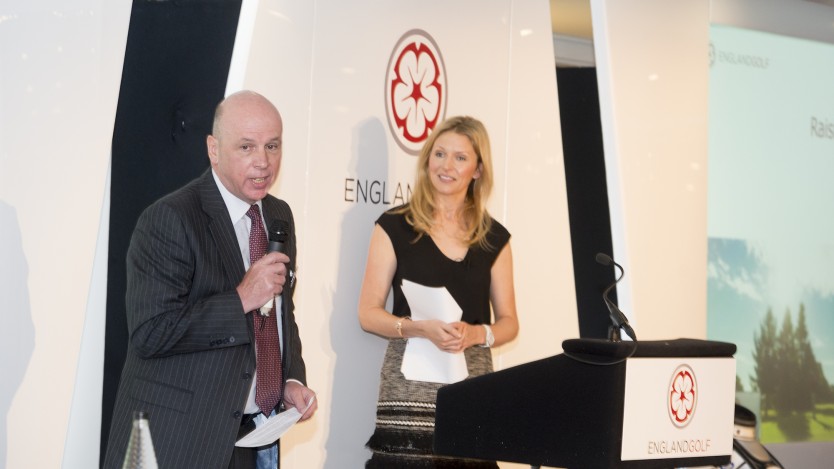
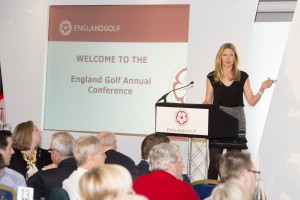
Last week England Golf held its first national conference at Hinckley Island Hotel. Designed to bring together all of England Golf’s decision makers, alongside representatives from all its partners, the conference offered the chance to look at the progress made since the launch of the organisation’s Raising Our Game strategy, back in July 2014. Mike Hyde attended, and spoke to England Golf’s Chief Executive David Joy about the conference and how the delivery of the strategy is beginning to gain momentum.
What was the thinking behind your first National Conference?
We previously had several separate events within a couple of months of each other. Last year, we decided to bring them all together – to bring all of the key decision makers within England Golf to the same place for two days. It has allowed us to review progress, and to celebrate 2014 and take an hour or two to just pat ourselves on the back and recognise all of the really great work that golf clubs and counties are doing, alongside the rest of England Golf’s work.
 We’ve also taken some time to look ahead and see where we are going with our strategy. It’s still really key – we’re on track with the targets that we set – and we’re going to continue with that direction through to 2017.
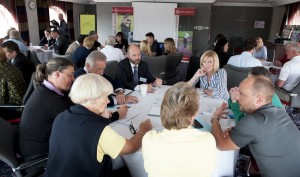
We’ve shared a lot of case studies this week – and we believe a lot of development can be done by looking at what other people are doing. We’ve held 11 different, and really well attended, workshops sharing a great deal of good practice.
Then in the middle of everything we had our AGM, during which we elected new board members, and a general meeting where we made some good decisions around further investment in the County Golf Development network.
So it has been a very productive two days, with 280 guests and visitors here, who have all enjoyed working together, and making the most of the chance to spend quality time discussing golf development.
Does the overwhelmingly positive atmosphere of the conference reflect the progress England Golf is making?
The strategy has been really key. We launched it in July last year, and we’re now very clear where England Golf is trying to move to.
 More members of golf clubs, more people playing golf more often, supporting talent pathways, and also being connected with our partners, with strong governance and great communications, and this conference has really reinforced all of that.
So we’re now getting a sense that the strategy is not being perceived as just idle words of a few people at the centre of England Golf. We’re seeing counties who are embracing those concepts and developing plans that reflect them. National partners are understanding where they can connect with the strategy, so that when we come together at an event like this, everyone is of the same view as to where we are heading.
So we get a sense of buzz and excitement, because its now clear where we’re headed.
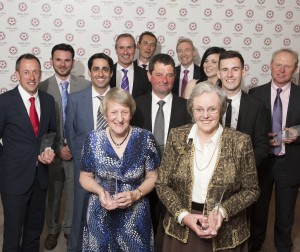
The England Golf Awards rewarded some hugely inspiring activities…
We added few more categories this year, with open applications, and we got a huge level of interest. We had a number of panels working out who the winners should be, and there were many deserving cases that unfortunately weren’t recognised last night, but we made short films about all the winners, which will all be available through the counties so people can begin to share information.
What is really clear is that there are so many people at club and county level working hard to develop golf in line with the strategy and I think the awards captured that, and we can see people really doing different things to get people into golf clubs. It was also a chance to recognise those who have been doing great work for a longtime.
You mentioned in your closing speech that England Golf is reviewing its governance…
The review of the governance of England Golf was a target within the strategy, so we began that process last October, and should be concluded by December 3 this year. We’re about a quarter of the way through the process, and we’re now exploring with counties and clubs some potentially important changes. We’re looking at how we appoint our board, how we engage with individual golfers, whether we have a database of golfers, and what services do we provide to our members? Because the members of golf clubs are also members of England Golf, but we don’t currently treat them as such, and we’re not able to communicate with them as members, so that whole communication process with golfers is really quite key.
The benefits associated with that, how we collect the fees, how we work with golf clubs in that process is also being reviewed. Whilst it may be that we determine that what we’re doing now is perfect, and it doesn’t need changing, we acknowledged that we at least needed to review it.
A whole series of meetings around the country in May will complete the second phase of consultation, with a third phase in October, ahead of a decision in December.
How are golf’s governing bodies going to work together in the future?
There was a piece of work commissioned by Sport England last year to answer whether or not there was still growth potential for golf in England, because they are investing for growth, not maintenance. So they wanted to be pretty sure after ten years of declining membership, and a few years of declining participation, that there is still growth potential in golf, and the answer was a definitive yes.
However, one of the challenges of releasing that growth potential was managing the leadership of golf in England, and people were asking the question – who is leading golf in England? One of golf’s strengths is that we’ve got a lot of great organisations, all very focussed in their own areas of work, but it became pretty clear that we need to create a leadership group.
So Sandy Jones (PGA Chief Executive) and I, as members of the England Golf Partnership, have decided that we would like to broaden that partnership. So we’ll be contacting the Chief Executives of the key delivery bodies in golf in England to invite them to join a leadership forum. The purpose being to explore how we can work even better together to get more people playing golf and joining golf clubs, and we think there will be enormous benefits in that. It’s not about trying to merge organisations, but just about trying to join up our efforts. If we agree the direction we would like to move in, then we will all be responsible for driving that through our various organisations. The group is due to meet for the first time on June 3.
How do you plan to work with golf club managers to help the delivery of Raising Our Game?
What has emerged throughout the conference is that there are some fantastic projects in golf clubs being delivered by golf club managers, golf professionals or volunteers, and there are a number of golf clubs where membership is growing and there are really innovative programmes. However, what our statistics tell us is that there are around 50% of clubs whose membership continues to decline year on year, albeit slower than before.
So our challenge, and I think our leadership group is the perfect place to do this, is to explore how do we work together to support golf clubs that want more members, through collaboration between the GCMA, Golf Foundation, England Golf, PGA and others so that the people in the clubs – the manager, the professionals, the committees or the owners, have the right plans, have the right support to really address that membership programme.
I think a key part of that is sharing good practice, sharing what’s already been done, and people taking that knowledge on board. In some cases, it might be that clubs could do with some additional support, and we’re going to explore with our partners how we get that support to clubs to help them to grow, so it’s not England Golf trying to do it, it’s about us trying to work together to find out how we get support into the clubs.
Find out more about the England Golf Raising Our Game strategy here.
Images: England Golf/Leaderboard Photography
By Mike Hyde