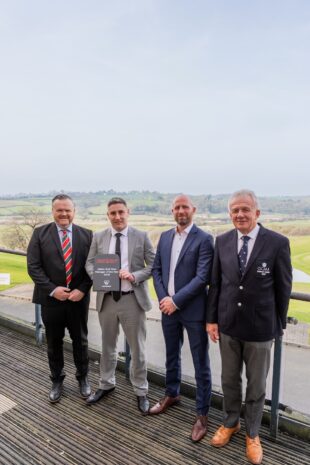
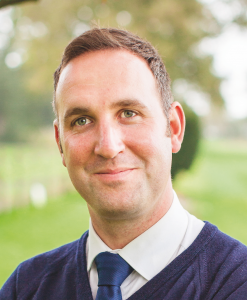
 It is sometimes overlooked, but the most important part of a golf club is the course. So where do you turn if you have an issue you can’t solve? The STRI can help, we spoke to senior turfgrass agronomist Adam Newton
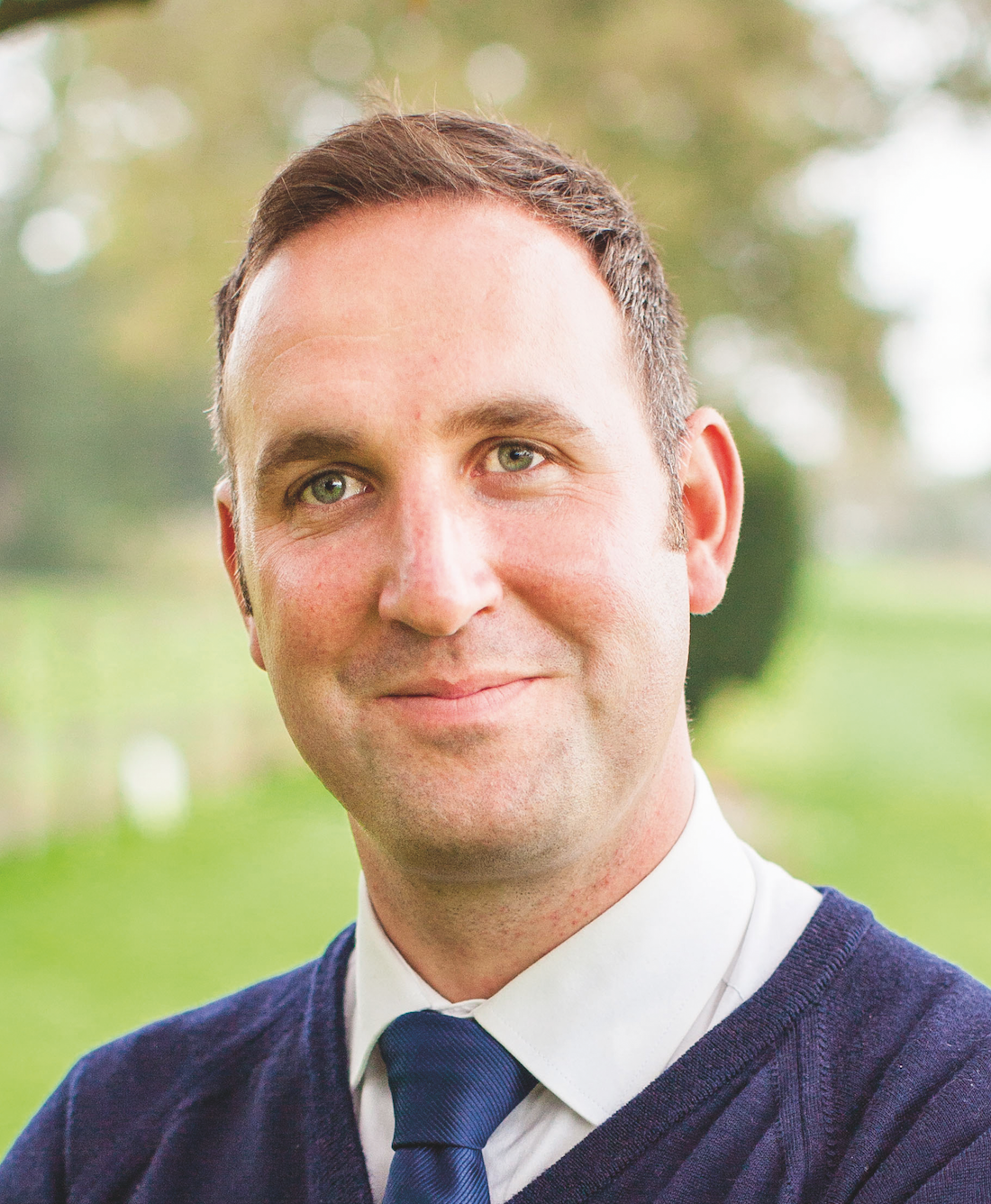
There aren’t many people who understand grass better than the Sports Turf Research Institute. The company, established in 1929, has helped produce some of the world’s most famous surfaces – from Wembley to Wimbledon. Adam Newton is one of the STRI’s senior turfgrass agronomists. His job is to provide agronomic support to clubs, advise them on how to get the best out of their playing surfaces, and help safeguard the future of courses through sustainable management. He also provides support to The R&A at host venues for the Open and will be part of the team at Carnoustie this year.
But the STRI also work with lots of clubs throughout the UK, helping and advising on turf matters. So we asked him how the STRI work with GCMA members and what benefits that could bring…
 Our club have decided they want some turf advice. I’m thinking about calling the STRI. What kind of services are you going to provide? Our services cover all aspects of the golf course and so we can tailor the visit to the club’s needs. Quite often the focus is the greens and we will assess their current condition, benchmark their performance and provide recommendations for future improvement. We can then track progress moving forward through objective measuring. But, equally, we may be looking at bunkers, fairways, rough, tees and provide advice on getting the best out of these areas.
If I know that I’ve got a thatch problem in my greens – and I’ve tried conventional means to deal with it – is that the time to call the STRI?
What could you do about it? If you’ve got an organic matter, or a thatch issue, the first thing you’ve got to find out is where you are at. We can do laboratory testing now to identify exactly the current levels of organic matter beneath your greens and compare those to our ideals. From there, you can make an informed decision on how best to tackle it. That might be a series of hollow coring, scarification and sand injection depending on your situation or it may be as simple as adjusting your sand topdressing programme.
Organic matter is basically an accumulation of dead or decaying parts of the grass plant which build up at the base of the turf through the growing season as the plant goes through its life cycle or different physiological processes. This is a constant battle and requires our ongoing attention.
Overfeeding and overwatering your greens will produce rapid growth and cause organic matter to build up quicker, it is therefore essential that these inputs are carefully balanced. It is also important that aeration and topdressing inputs are sufficient.
Sand topdressing will dilute organic matter as it accumulates and aeration will help aerate the soils to ensure there is enough oxygen for soil microbes to naturally breakdown organic matter.
Greenkeeping is becoming quite difficult these days with products being removed. Is there where the STRI can come into its own?
Yes, it certainly is becoming more challenging and with chemical controls becoming less available for pest and disease control, it is ever more important that our cultural practices are well balanced to create a less favourable environment for these disorders. This is something we provide advice on during agronomy visits and our research team are constantly looking at future control options.
We now have no chemical control for leatherjackets, chafer grubs or worm casting and this presents our greatest challenge as grub populations are far more difficult to control culturally, when compared to disease and other turf disorders. The secondary damage caused by badgers or birds searching for grubs is what a golfer is most likely to notice and in many cases the level of damage caused can be quite alarming.
How involved would you be with a club? Are you bringing people in to do it, or working with the club’s teams?
Our level of involvement is suited to what the club requires in terms of support. This may vary from an annual agronomy visit, to perhaps four or five visits per year. Initially, it is important to review the course and identify the key objectives to take the course forward over the coming years. From here, a plan can be put in place and we then provide support to the greenstaff and club and monitor and assist progress moving forward.
So do you work with architects as well? If a club is having a redesign, could you be called in to work alongside them?
Absolutely. We work alongside golf course architects on many new builds or redesigns across the world and provide agronomic advice to support the architectural designs. We also have our own design team at STRI who provide solutions for all aspects of course developments from the initial planning stages, to architectural design, irrigation and drainage design and project monitoring.
Looking at recent projects, Royal Portrush and Turnberry are a couple of great examples of where we have been involved. In terms of the agronomy element of such projects, we provide advice on many factors but getting the construction materials and methods right and grass mix on the surface correct are of fundamental importance.
This inevitably involves a lot of soil analysis in our laboratory to ensure the material used will deliver the correct drainage and chemical properties. Following construction we then advise on the ‘grow-in’ of the turf to get the surfaces ready for play. Apart from the agronomy, our ecology team also provide advice on the ecological side of golf course developments to minimise the impact on wildlife habitats and ideally help the project enhance the biodiversity of the course.
So if you are club embarking on a redesign project, the two really go hand in hand?
It’s crucial. You can have the best designs in the world but if the agronomy isn’t considered and implemented correctly then the surfaces won’t perform and complement that design. So they very much go hand in hand.
Do you think that’s an area clubs think about when they are going through this process?
It depends on the scale of the project. On large scale projects, most places would consider the agronomy and bring in an agronomist to advise on that. In terms of smaller scale projects – a bunker redevelopment, for example – perhaps the agronomy could be explored better.
You obviously carry out some very high profile projects. But will you work with any clubs?
Absolutely. We work with anybody. We are involved with clubs of all sizes and budgets, working with courses ranging from municipals to Open Championship venues. Some of the most rewarding visits and relationships are with clubs that have not got great budgets or staffing levels but still want to achieve high standards of course performance to attract more visitors or members to the club. In these cases we must focus course inputs to where they are needed most and create a sustainable maintenance model to safeguard for the future.
Who is Adam Newton?
Adam Newton is one of the STRI’s senior turfgrass agronomists. Interested in golf since he was nine, he began his career as an assistant professional before becoming a greenkeeper at Fulford, in York. Studying turfgrass science, he was awarded a first class degree, gained a scholarship from The R&A and, after qualifying, joined the STRI in 2012. Newton specialises in golf and advises clubs in the north of England and south east of Scotland, along with performing advisory work with The R&A. He also provided pitch consultancy at the World Cup in Brazil in 2014 and the 2013 Women’s European Championships.
Who are the STRI?
The STRI was established in 1929 by The R&A and home unions and was originally known as The Board of Greenkeeping Research. Conceived to understand more about turf management and improving turf quality, other sports including football, tennis, cricket and rugby became similarly interested and The Sports Turf Research Institute, commonly referred to as the STRI, was born. It is now the largest sportsturf research and consultancy company worldwide, covering a range of sports, but golf remains at the core. Consultancy services to golf clubs include agronomy, ecology and design, as well as project managing larger construction schemes. The STRI’s list of clients includes The R&A, Wimbledon, Sport England and the RFU. They have installed pitches for the World Cup and the Olympic Games and also assist greenkeeping teams at Open Championship venues.