Content provided by The R&A
When golfers discuss course conditions, the conversation often turns to green speed – how fast or slow the ball rolls. But in the world of greenkeeping, speed is just one piece of a much larger puzzle. Behind every smooth putt and firm bounce is a complex web of data-driven decision making that blends science with art.
Over the last decade and a half, golf courses have transformed how they evaluate putting surfaces. No longer relying solely on golfer feedback – which varies wildly between individuals and handicaps. Clubs are increasingly turning to performance metrics that provide objective, reliable insight into green quality.
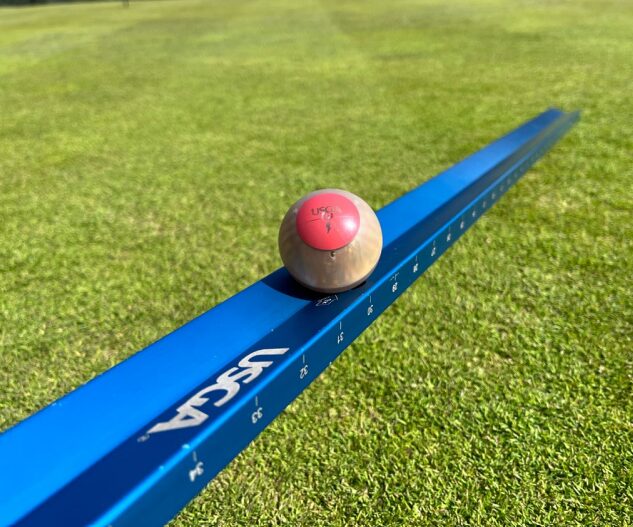
One of the most widely known tools is the Stimpmeter, designed to measure green speed. An innovation developed in the late 1970s and refined by the USGA, the Stimpmeter offers a standardised way to evaluate ball roll. However, relying on speed alone as a mark of quality can be misleading. Pushing for perceived “tournament speed” year-round may impress members but can severely harm turf health and grass species composition
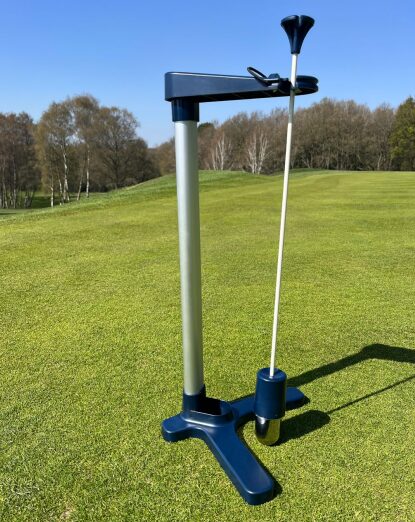
In reality, green performance depends on multiple interwoven characteristics, including firmness, smoothness, and trueness. Firmness, for example, was not widely measured until tools like the Clegg Impact Hammer introduced much-needed data, revealing that surface firmness plays a critical role in supporting consistent speed and durable playability. As it turns out, you cannot have fast greens on soft turf – not for long, anyway.
Smoothness and trueness describe how predictably the ball rolls, which directly affects player experience. Yet until the recent introduction of the GS3 ball – developed by the USGA – there were no accurate and reliable commercially available researched devices to measure ball roll quality. The GS3 ball now allows course managers to capture all four performance metrics, integrating seamlessly with the Deacon app to provide actionable insights.
Smoothness and trueness describe how predictably the ball rolls, which directly affects player experience. Yet until the recent introduction of the GS3 ball – developed by the USGA – there were no accurate and reliable commercially available researched devices to measure ball roll quality. The GS3 ball now allows course managers to capture all four performance metrics, integrating seamlessly with the Deacon app to provide actionable insights.
Interestingly, research shows that player perception often does not match the data. A study comparing
actual measurements of green speed, firmness, and smoothness with player feedback revealed major discrepancies. Lower handicap players were more sensitive to subtle speed changes, while higher handicaps emphasized smoothness. The takeaway? Maintenance decisions should be supported by an accurate understanding of data, not dictated by the clubhouse grapevine.
But greenkeeping is not just about gadgets and graphs. It is also about environmental awareness. From tracking soil moisture and organic matter, to monitoring growth rates via clip yield (the grass volume collected during mowing), today’s greenkeepers are managing ecosystems. Advances in weather stations and AI-driven modelling help guide when to water, fertilise, or apply plant growth regulators – all in the name of sustainable turf health.
The real win lies in balancing performance with sustainability. That means collecting year-round data, not just in peak season. It means setting realistic, site-specific targets – not copying the neighbour’s club. And it means knowing when to push the greens for a competition and when to hold back to protect long-term health.
As technology continues to evolve, the message is clear: better data leads to better decisions. But it is not just about collecting numbers. It is about interpreting them with the experience of a seasoned greenkeeper and expert agronomic support. Because ultimately, performance is more than just speed – it is about consistency, health, and playability over time.
Top Tips:
- Data is for the greenkeepers and clubs management – not for the members.
- Measuring / checking soil moisture is one of the most important aspects of managing greens health.
- Consistency is the game and work within researched targets adapted to your site conditions and
situation. - It is vitally important that you differentiate between routine plans vs competition play when small
regiments may be applied to increase green speed. - Maintain performance within target ranges and not to exceed target.
- Do not consistently push the boundaries on minimum or maximum targets. Exceeding the limits will
induce turfgrass stress and increase the level of disturbance which will favour annual meadow-grass. - Don’t just limit data to the main season months. Intermittent data such as green firmness and
moisture content collected during winter months is equally valuable (green speed is not).
Read the full R&A Report here
By Mark Shanley