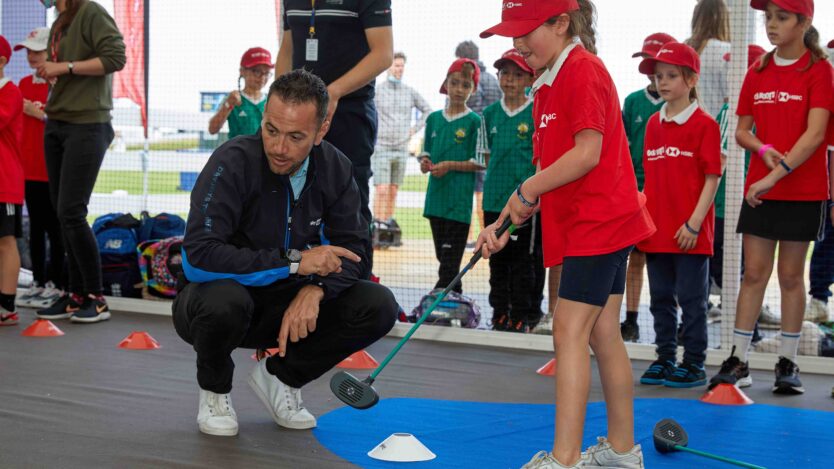
The Golf Foundation played a pivotal role in Nick Dougherty’s rise to European Tour glory. Now, as the charity’s President, the Sky Sports Golf presenter wants to bring the game to millions of schoolchildren
This article is part of GCMA Insights – topical content for golf industry professionals, discussing the things that matter to those who work in golf clubs.
As Nick Dougherty took his tentative steps in the game, there was always a helping hand. There was his father, who sacrificed to give his son the very best chance of climbing the golfing ladder.
There was Sir Nick Faldo, who spotted the prodigy at a Faldo Junior Series event and took ‘little Nick’ under his wing.
And there was The Golf Foundation. “They were there at the earliest steps,” says the 40-year-old, who has recently become President of the charity.
He remembers a pivotal moment in his development coming when he was a teenager. He was handed an Outstanding Achievement award from the organisation by former Ryder Cup captain Bernard Gallacher at Wentworth – the club where he is now proud to be a member.
“One of the things that is great about The Golf Foundation is that they are there from the very get-go – inspiring kids to get involved and keeping their interest alive. To have an experience like that, to meet someone like Bernard Gallacher, to go to Wentworth, and to win something that was UK-wide was an incredible inspiration to me and had a huge impact on what I did going forward.”
The Golf Foundation’s programmes, as Nick says, have already had a significant influence in bringing young people into the game – whether that’s through Tri-Golf or the equally successful GolfSixes.
But Nick wants to go much further. He believes the way golf interacts with schools is piecemeal, often depending upon ties with a club or the availability of a pro.
Get involved in the debate.
To join the GCMA, click here, or to organise a call with a member of the GCMA team, just complete the form below.
And so the three-time European Tour winner, who is beamed into our homes as the main presenter for Sky Sports Golf, is pulling together an incredibly ambitious project.
It won’t just require the resources of The Golf Foundation. It will need every stakeholder in the game – whether that’s governing bodies, brands, and even government – to play their part.
What is Nick’s idea? To put golf onto the school curriculum. To give youngsters in every one of the UK’s 32,000 schools the chance to fall in love with the game.
Here, he explains why he’s determined to see it through and the legacy it could leave…
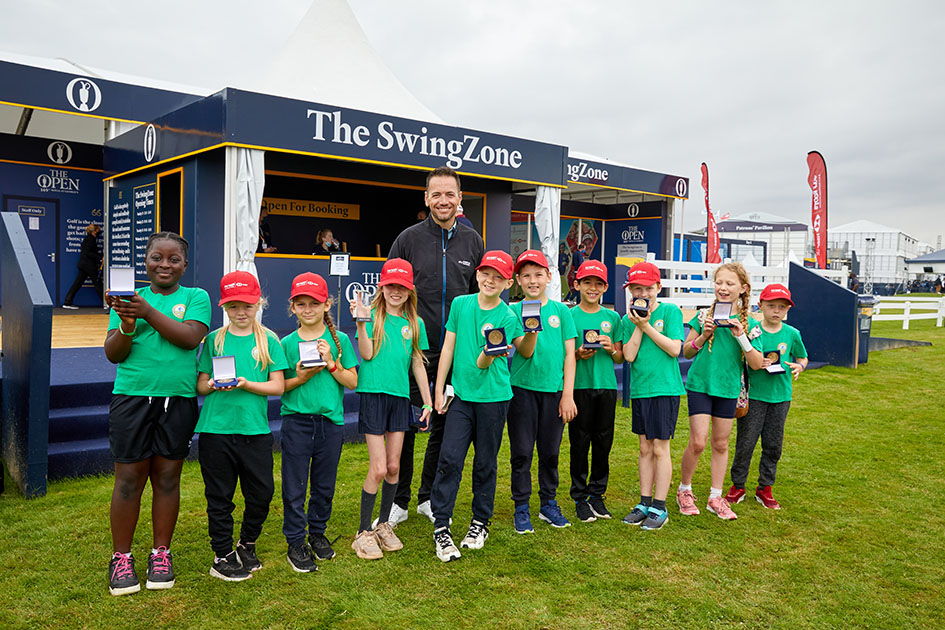
What’s your vision? Every school has a football pitch, an athletics track, a basketball hoop. But it’s a bit more difficult for golf…
We’ve put together a team that’s driving to put golf into all schools. That’s a grandiose ambition. It might seem quite unrealistic, and it’s certainly very expensive. It would cost about £15 million, if we were starting from scratch, just to provide the equipment.
It’s about changing the mentality in schools and getting across the message of what golf does better than other sports. I struggle to be convinced there is any other sport that does a better job of teaching some key life skills.
If you can show the benefits of the sport, golf will be the by-product because we know when you play the game people just generally fall in love with it. Covid was a great demonstrator for how that helped people through a time where mental health really did plummet.
WHY JOIN THE GCMA?
Membership of the GCMA unlocks a network of like-minded professionals, provides you with support in your professional and personal development, and provides you with a multitude of benefits. Whether that’s the tools that will help you to excel in your profession, or a wide range of services to support your wellbeing, signing up to the GCMA is joining a community.
Golf can help kids. It can be like the well-being classes which are in a lot of schools now and are part of the curriculum.
Even if children try it for a term, and decide they don’t want to do it anymore, they will have had a term’s worth of some of those lessons and life skills: whether it be integrity, discipline, work ethic, or the camaraderie.
I want to create a programme which is run by teachers. The PGA do a wonderful job and that should be an option for schools to take up. They should always have the opportunity to bring in a PGA instructor.
If we’re going to be serious about getting golf into all schools, though, that’s a huge cost. But we can create a programme, whether it’s run by the science teacher who just loves golf or the PE teacher, that they can go through step by step.
Does golf understand how big a deal it can be for a young person to go to a club? Is a key part of your idea about giving children access to golf in an environment where they’re comfortable?
It is challenging. It is overwhelming. Even if golf clubs are friendly, they’re huge facilities, with people you’ve never met doing something you’ve never seen before.
It would help massively if we could put golf into schools and they are introduced to the sport there. I also think there is a huge part for driving ranges to play and there are always going to be clubs that do it brilliantly.
I’d like to think the one thing you take from playing this game is that you’re going to help pass it on and make sure you’re allowing future generations to come into it. That’s our duty and what The Golf Foundation have been doing for a long time.
But that starts in schools. Sure, some of these children will never play it again. At least they will have tried. It’s like trying to get my kids to eat broccoli. The only thing I demand is that you try it. If you then say to me, ‘I don’t want to do it’, I’m cool with that.
We need to be like that with golf – to give them the canvas. Let them decide. We’re not jamming it down their throats. Just go and play the game and it will do its thing.
That’s a part of what we have to do with the messaging and it’s a huge operation. But being in schools is incredibly important because you’re exposing children to what the game is. I think the game is good enough. It’s a sport that has no negative effects and only benefits.
This is going to require a very unified approach from the many agencies involved in golf…
One of the things we’re going to have to rely on is everybody working together and that’s been one of my takes from sitting in board meetings with The Golf Foundation.
They really do have all the most important people in the UK and Ireland in the room. They have the people who can move mountains in golf.
I know it’s difficult. I know there is always politics in sport and people have objectives and pull in different directions because that’s their job. They have to protect their members or their people who are involved with their company or corporation. For this to work, we all have to pull the same way at the same time.
I want to go back to the coaching briefly because, previously, campaigns of this sort might have been delivered by PGA pros but that comes with huge time consequences. Is the idea of teachers being able to deliver this programme the gamechanger?
It’s about how to hold a club, how to stand to it, what the feeling should be, how to make the club move away – real basics. We can give those tools to a PE instructor.
I want it to be an online learning platform for instructors and for the delivery of the classes: how it should look in week one, week two, the games to play – it’s all in one place and super simple. It’s like a lesson plan and it’s about ‘click and follow’.
The last thing I want to do is harm the PGA and I think a lot of this has to be driven by the PGA. There still needs to be oversight of the programme. But oversight isn’t the cost.
The cost is going to be a real stumbling block…
The big thing we’re going to come up against is, ‘oh, the cost’. Let’s assume none of the schools are going to pay – even though lots already do – and no one wants to spend any money. We’ve got to generate the ballpark figure of £15 million that it will cost to deliver the equipment.
That’s without rolling out the system, so we do need to make this watertight. It’s got to be self-sustainable. It’s got to be something that’s super easy to apply – where there isn’t really an excuse not to do it.
I’d like to think once we started to see the effects, and we started to hit some really big numbers across the first year and the second year, it will become self-sustaining.
Going into every school is not going to happen in six months. It’s going to take a few years for us to get there and do it well. Imagine if we put golf into the 32,000 schools across the UK and Ireland? If we managed to do that, think about how it would change the way the Government looks at it.
Perhaps they would then want to, or be forced to, get behind something that helps mental health, helps children get the most out of their education and gives them skills to help them go forward in their life. Isn’t that the whole ethos of what school is supposed to do? We have a sport that does that.

If your ambition is to bring more young golfers into the game, then golf clubs have got to step up too…
They’ve got to help themselves a little bit. That means looking forward to realise they are their new members. Without going into detail, my plan will involve golf clubs playing a huge part. That will require the golfing nations to speak to them independently to express what we’re trying to achieve and help make the future brighter.
There will inevitably be clubs that push back and aren’t really interested but that is a mentality that’s changing. Whether the pace is [quick enough], I’m not so sure and that’s the bit I find just a little bit disappointing.
I’m not sure we’ve done enough yet. There are still plenty of examples of things we’d get embarrassed about.
We talk about the great things in our sport. You see the wonderful things that people and organisations like The Golf Foundation are doing. You go to The Open and see how that feels for kids. We’re doing it right. So many clubs are endeavouring to do it right and get better at what they do. It’s a slow burner.
But some clubs aren’t really doing anything because they think the members won’t like it. We have to change that. They have to want to change that.
I’d like to feel if we can really get some momentum with this then there would be an element of feeling embarrassed at being on the outside looking in.
I really hope we get to a tipping point where people feel they should really be a part of this and would feel bad if they weren’t doing their bit for the future of the game.
This is a very ambitious programme. It will require huge commitment. But you seem very optimistic?
There’s so much to say but if you look through the various golf and health reports from The R&A, and so on, how much more do you need? That’s why you should be playing golf – whether you are an old man or a young girl.
Golf gave me an opportunity. It doesn’t care if you’re stick thin, overweight, small, tall, and nor should it care where you come from. We have to put clubs into the hands of kids who wouldn’t have that opportunity.
I look back. What if my dad hadn’t managed to achieve what he did in his life, being from the wrong side of the tracks in Liverpool, to use the money he was earning to give me a chance to play golf?
We could have used that for so many other things in our lives. But he said, ‘No. Golf’. He put me in that position. He gave his hard-earned money for me to go and have lessons from a good PGA coach in Richard Bradbeer at Royal Birkdale.
I’ve gone on and made a career in this sport. Golf gave me that, but dad gave that commitment. What we want to do is stop mums and dads from having to make that kind of decision.
It’s a no-brainer to try. It’s a huge idea. I know it will be met with resistance in some places. But if we can create the right messaging and get schools understanding what it does, then it makes it very hard for a school to say no.
We’re not asking for anything. We’re just giving the opportunity. Getting the numbers will be the hard bit, as will getting it off the ground and making real headway.
But when it’s got momentum, I think it will fly and it will just become what we do. If we could just realise that dream then golf in the UK would change completely.
Information on The Golf Foundation
We introduce children to golf • from all backgrounds • creating golfers
We do this because golf can change lives
www.golf-foundation.org | Make a donation online | See how the Golf Foundation changes lives
This article is part of GCMA Insights – topical content for golf industry professionals, discussing the things that matter to those who work in golf clubs.
Get involved in the debate. To join the GCMA, click here, or to organise a call with a member of the GCMA team, just complete this form and we’ll be in touch!
Enquiries
"*" indicates required fields