Gareth Morgan shares his insight on the importance of staff wellbeing and tips on how to look after your team
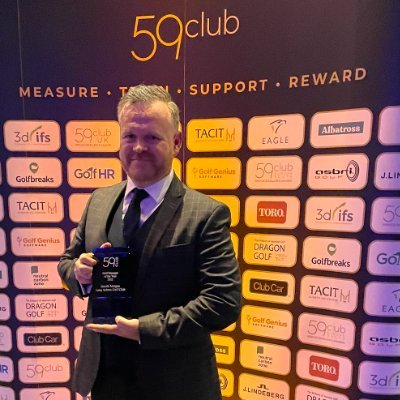
Gareth Morgan is an experienced leisure industry General Manager, with nearly two decades spent as a Golf Club General Manager in both England and Wales.
He is Director and Chairman of the GCMA and a Former National Golf Union Councilor.
As a public speaker, he has delivered talks on staff wellbeing to audiences across the country.
Why should the wellbeing of your team members matter to you as a leader?
For me, there are two primary reasons for this being such a crucial topic for any leader.
Firstly is the human side of managing a team of any kind – treating those who work for you in a way that you would want and expect to be treated yourself. To have your team respond to you and work with you because of the relationships you build with them and mutual trust and respect you have for each other, rather than the now outdated “do it because I say so” approach.
However, this subject has become absolutely crucial on a business level since the time I first entered the leisure industry:
- 31% of people suffer from mental health problems at some point.
- 54% of people who suffer from mental health problems consider that their employer fails to support them well.
- Only 43% of people suffering from a mental health challenge disclose it to their employer.
The corporate cost of poor mental health provision is calculated as follows (2021 figures):
- £1,400 per employee
- 10 = £14,000
- 100 = £140,000
Why else should it matter to a business?
Experimental work shows that improving wellbeing can boost productivity by as much as 15%.
Impaired wellbeing often manifests as mental ill health, which is now the main cause of sickness absence in much of the world.
Presenteeism – turning up to work and being present, but doing the bare minimum – is even more common with reduced wellbeing and is estimated to cost to businesses at least one and a half times their absenteeism bill.
Customer experience is also strongly aligned with the wellbeing of the employee with whom they interact.
What is, at times, disappointing is that the measures we as leaders can put in place in policy and in our own actions to dramatically reduce these negative business effects are relatively simple and straightforward. Here are my ‘9 Holes of Team Wellbeing’…
1) Do not allow team members to use work e-mail on days/evenings off and do not allow them to have it on their phones
No actual emergency has ever been reported to a senior team member by email. Your team members need time away from the stresses of their jobs and it can be hugely damaging to an individual suffering with stress, anxiety or depression to receive a critical or disappointing email while they are supposed to be relaxing away from the workplace. Can it possibly be a good thing for a Course Manager who is sat in a pub with friends to receive that angry email on a Saturday night from a disgruntled member who shot nett 85 that day because “the greens were awful”?
2) Ensure employees take the time off/days off that they are due or need
We often think of those staff who will work extra, stay on at busy times and come in on their day off at short notice to help us out at difficult times as our best staff. To a degree I would share that view, because in the leisure industry our businesses would struggle without such individuals.
However, if we do not give those staff members the time back or refrain from always going to them every time there is a short-term crisis, we run the risk of burning those staff out or pushing them to the point where they feel taken for granted – not to mention becoming run down and mentally and physically tired. When this happens, we run the risk of losing the very people we feel hold our Club operations together.
3) Urge sick employees to stay at home
COVID brought this point to the fore for obvious reasons, but anyone who experienced an outbreak that swept through entire departmental teams, as I did, will now have a greater understanding of how that staff member “soldiering on” because they “can’t miss this Open Competition or Club Dinner” can have even greater consequences for the Club down the line.
And what about the wellbeing of that individual who battled through illness to deliver on their targets? What about the wellbeing of their fellow team members who did not ask to be exposed to this illness and probably felt they couldn’t refuse to work alongside the sick employee?
4) Avoid contacting team members on their periods of Annual Leave, Days Off or outside their working hours on workdays
Ask yourself the question – is this REALLY an emergency? Does my question that cannot possibly wait really have to be answered right now?
Even an innocuous query by telephone or WhatsApp that gives you the answer you wanted in the short term can leave the employee who is sat at home or by the side of a pool worried and anxious about what is going on in their absence. Is that really conducive to them recuperating and coming back to work at their best? Is that really the best thing for them as an individual and their family?
5) Do not share full negative emails with line managers or staff
We’ve all done it. An angry or frustrated member emails in with their complaint about the course or the clubhouse that day. There seem to be some valid points that require investigation, so we forward the email to the relevant line manager and ask for comment.
DON’T DO IT!
The line manager concerned doesn’t need to read the vitriol and emotive things contained within that email. Pick out the main points that need to be investigated and either speak to the line manager concerned or send them a separate email of your own outlining these points.
6) Ensure that ALL staff take breaks during their shifts – and do it yourself!
Lead by example here. Don’t be that manager who eats a sandwich at their desk while reading and replying to emails. Take an actual break away from your workstation and let the team see that you do it.
Ensure that staff get their breaks. If you need to muck in yourself or get people from other departments to help out, that is preferable to the negative effect of leading employees to believe their wellbeing doesn’t matter by making them work all day with no break. What will the customer experience be like if a member encounters a tired and annoyed employee in hour seven of their shift with no break? For those of you who have mystery shoppers, what would your score be for F&B if a mystery shopper encountered this employee?
7) Ask employees for regular feedback via anonymous surveys, staff forums, in person and meetings
We ask our members what they think of us as Clubs. We ask our visitors and society organisers what they think of us. Why don’t many Clubs ask the team members what they think of us as employers?
This should be done anonymously and questions asked that allow for data collection to enable trends to be identified but also allow enough room for them to make more in-depth or personal comment.
This process should be used to make things better for the staff as a whole moving forward – NEVER to go back to the staff justifying things they have raised as being problematic and if you can work out which employee has written a certain comment, NEVER use it as a stick to beat them with.
8) Organise regular team social events
In Clubs we can sometimes become cocooned within our various departmental teams. All of the top-performing Club teams in the UK operate as one big team.
There is nothing wrong with departmental specific socials, but running quarterly ‘whole team’ events brings everyone together and gives each a better understanding of the challenges each of them face every day.
These events shouldn’t be compulsory, but you shouldn’t make your staff pay for their own team social either. It need not be big expensive events all the time – a simple quiz night with some food and drink while mixing up the teams from each department can be a great team bonding evening!
9) TAKE EMAIL OFF OF YOUR PHONE AND TELL YOUR STAFF TO DO THE SAME!
Yes, this is a duplicate point – but it is, in my opinion, the single greatest problem in our industry in terms of managing your own wellbeing and that of your team members.
If you can’t quite bring yourself to do this just yet, remove notifications. That way, at least you only read them at a time of your choice and you don’t have them popping up on your screen at all times of the day and night or at times when the last thing you should be doing is replying emotionally to an email that has upset you.
Do it today!