An increasing number of clubs are moving away from the traditional pro shop model and partnering with retail organisations. So what’s in it for your club? Elliot Fleming at American Golf, explains…
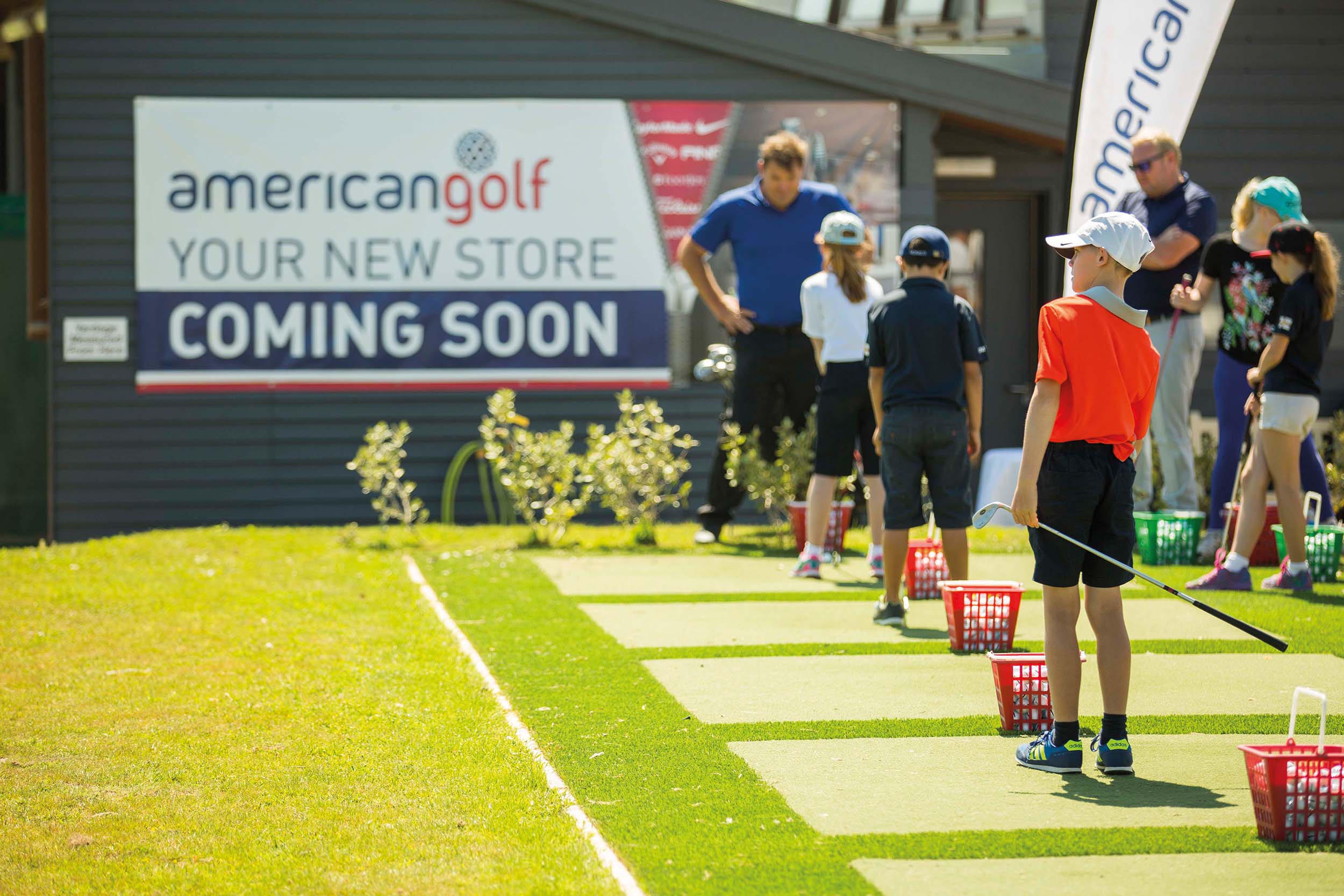 It’s always been the way. The golf club professional runs the retail side of the business in their shop. But times seem to be changing.
More and more clubs are starting to look at a different model, and considering partnering with specialist businesses to run their retail offering. On the face of it, there are obvious benefits. Clubs and professionals lose the stress of having to be stocktakers, potentially giving them more time to invest in other areas of the business, and members can spend their competition vouchers knowing they’ve got the catalogue of a big retail arm from which to choose.
But is it as simple as that? What happens to existing staff if clubs decide to take this path and how does the process work? We asked Elliot Fleming at American Golf, to explain…
A lot of clubs are now looking at different ways of providing their retail offering. How can American Golf help?
We are finding that a number of golf facilities are evaluating how they build their business for the future. One of the things that is paramount to that is having the right retail offering. As clubs look at what they are doing, they might be finding that retail can be quite difficult, time consuming and there isn’t enough expertise.
They might look to contact the likes of ourselves to see if we are interested in partnering with them to run the retail part of their business – using our industry expertise – to make that proposition stronger than it might have been.
There is also the opportunity to have a larger reach and bring more people to their location, which can help their other endeavours.
How does the partnership agreement with clubs work?
Traditionally, if you think of American Golf, you might think of an A-road or a retail park, with 3,000 to 5,000sq ft, and a model that fits within that. The interesting thing with golf club partnerships is that they are all more individual. We’ve found solutions to suit all manner of sizes and shape and operations. We have a principle that we don’t rule anything out and we investigate.
Principally, though, if a partnership is reached American Golf would take over the retail space – or perhaps expand that – and TUPE over any existing staff and start to run the retail business completely. That is done in partnership with the overall site as it’s important that we fit into the environment that we take on.
What are the benefits for a club in partnering with American Golf? What can they expect to get out of it?
I think there are quite a lot of benefits. Principally, we’re bringing expertise in retail to their location and some great people along to the facility.
Talking to people, there are two main reasons they do it.
The first is to get great awareness for their site and to get more reach through marketing and through our brand.
Secondly, it allows them to focus their management time on other aspects of their business. That can probably help them derive more profit and assist them in future proofing their club. That freeing up of management time and focus, whether it is at a proprietary or private members’ club, is a big thing for clubs. They are not worrying about stock, administration and it can also ease the financial burden on golf clubs substantially.
Is there a profit share for the clubs that participate?
Yes. We’ve got various models because, at each individual partner, there are issues that are unique to them.
There are occasions where we can pay a base rent, which can be appropriate, and other times where we share part of the revenue and it means everyone is striving for the same goals – the more revenue that is taken, the more beneficial it is for us and the partner.
We have got the ability to be flexible but, principally, sharing the revenue is one of the biggest things we can do.
For members, would the usual competition pay out structures still apply? Would they have a much wider choice on which to spend their vouchers?
I’ve been right up and down the country and visited hundreds of golf clubs and, while everyone is trying to do a good job, what we find in most is one – or possibly two – major brand names and supplemented by some of the smaller brands. That’s understandable because the stores simply cannot afford to stock all the major brands with the minimum buys that are attached to them. You can understand why people don’t want to expose themselves to that risk.
We can offer a far more comprehensive range to the members of that club and their customers. That then means the club are more likely to retain these people. What you start to get is a ‘don’t need to go anywhere else’ environment where the members can get what they need at their own club. They can practise and play there and they can buy their golf equipment there. The reasons to go somewhere else are lessened. The access to the brands and to our extensive inventory has been important for members and customers at the facilities with which we have partnered.
Have you found a potential knock on effect for visitor numbers – with customers looking for the nearest American Golf store and then visiting the club because that’s the closest outlet?
Hugely. Our online site grows massively every year and the most visited page is our store locator. As soon as clubs partner with us, and start to appear on our store locator, it gives people more reason to visit. Something that is hugely popular with visitors to our site is reserving and collecting, as well as delivering to a store to collect. The convenience is huge in that so as soon as that new venue appears on the American Golf store locator customers become informed and it gives them a reason to visit.
They may never have visited before, even though they may live very close. That gives the club a chance to expose themselves to a new audience.
For clubs that are wavering, this is not necessarily an unusual situation. Many professionals, for example, are tied to a buying chain…
The biggest reservation golf clubs have when they approach us is their concerns about the people who already work for them.
That’s one of the reasons we always take the time to visit and meet as many people as we can.
We are massively invested in making sure we retain as many of the people already in place as wish to remain so.
We’re very interested in retaining the services of the PGA professionals, or having representation of PGA pros, because we believe in that and we want that to be part of it.
Usually, one of the first questions people ask is ‘what’s going to happen to the people who work here already?’
Once we assure that, if anything, their life is going to get better – in terms of their working environment, their conditions, the education programmes to which they will be exposed, the promotion opportunities they may not have previously had – that reassures people.
Golf is a small industry, people care about people, and we want to play our part in that. We always offer to bring people across on, at least, their existing terms. I believe we are the biggest employer of PGA professionals in the UK and it is a huge part of our offering at a golf club. This is not to the detriment of a PGA professional. I think that it enhances them.
What we’ve found, and we’re looking to build on massively, is that where PGA professionals are relieved of the huge administration and stress of retail, they are then able to concentrate on helping to grow the game at their club. They are able to help grow the membership, the ladies’ section, and juniors and become entrenched more in the golfing side of the club as opposed to the retail.
Retail isn’t a simple operation either…
There are numerous examples up and down the country of people doing an exceptionally good job. But, for a lot of people, it is taking up too much of their time.
Conversations I have had with PGA professionals, owners and operators and clubs is that they were spending 80 per cent of their time dealing with something that returned far less than the 20 per cent of their actual profit at the end of the year.
So by being able to focus on the things that are actually going to make a difference to them, their profits increased.
If I’m at a club that’s interested in partnering with American Golf for retail, what’s the process?
It’s not an intimidating process. Typically, there’s an expression of interest that would come through to our team here.
I would then make contact and we would have a discussion. We would ask for some figures, which would help educate ourselves about the usage of the venue – so how many rounds are played, how many members there are, what facilities are on site, and we have a pretty sophisticated model which will take that information and gives us an idea of the size of the potential retail revenue that we could return from a partnership.
We are interested in all shapes and sizes and that doesn’t rule anyone out. What it does is help educate us on what type of proposition might be right. If we can agree there is the appetite for a discussion, I would come along and have a very informal chat and a very discreet one as well. After that point, we mutually decide whether we wish to take it any further and, if we do, that’s when we can progress things.
CASE STUDY – High Legh
Gavin Beddow, General Manager of High Legh in Cheshire, explains why they teamed up with American Golf
The vision I had for the Academy at High Legh was to create a specialist offer that would give golfers access to the very best coaches for every aspect of the game. To complete the offer I needed to find a retail partner who could deliver
a customer service that would support this. After researching the market, it became clear to me American Golf not only had the right expertise, but more importantly the right ethos. They want the customer to have the best experience and to get the right product for their game.
American Golf took over the retail aspect of the Academy three years ago. Immediately we could see the benefits. My team had more time to invest in developing our core business and the members loved the new shop because they had access to all the latest technology and products. It gave us a professional edge. What we didn’t anticipate was the effect that our association with the brand would have.
When golfers and non-golfers see the American Golf logo they identify with it and it makes them feel more welcome to come in. It’s given us a public persona and has made us and the club much more approachable.