Ponteland’s borehole project highlights how strategic investment can protect course quality, control costs and futureproof operations.
Sustainable resource management is quickly becoming one of the most pressing challenges facing golf clubs, particularly as climate pressures and rising costs intensify.
At Ponteland Golf Club, General Manager Candi Watkins has taken decisive action, leading a borehole project designed to secure an independent and reliable water supply while strengthening the club’s long-term financial position.
The project, alongside investment in a new Trackman Studio, reflects a broader strategy to modernise operations, enhance member experience and build resilience into the club’s core asset – the golf course itself.
Here, 2025 GCMA Newcomer of the Year finalist Candi shares the thinking, challenges and lessons behind the project, and why solutions like this are becoming increasingly essential across the industry.
What were the key pressures or challenges that made the borehole project a priority for Ponteland?
Securing a sustainable water source was something I identified very quickly after taking on the role, particularly after seeing the impact of a dry summer reflected in our water bills.
After researching sustainable options and prompted in part by a timely podcast from Leighton Walker on Golf Club Talk UK, I began exploring the feasibility of a borehole. Once we priced the project and compared it against projected increases in water costs over the coming years, it became clear that the return on investment would be relatively short. In many ways, it was a straightforward decision.
Beyond the financial case, there is also a clear operational need. With increasingly dry summers and the likelihood of restrictions such as hosepipe bans, having a secure, independent water source is critical to protecting the golf course – which is ultimately our most important asset.
What was the club’s previous water supply situation, and how sustainable or secure did that feel in the short and long term?
Previously, the club relied entirely on mains water. This created a number of challenges, particularly during peak irrigation periods. When the system was running at full capacity, water pressure in the clubhouse dropped significantly, even to the point where residents in our on site accommodation struggled to run a shower.
Moving the golf course irrigation onto a dedicated borehole supply will resolve these issues, ensuring consistent pressure across the site while also providing a more secure and sustainable long-term solution.
How significant are the cost implications around water for a club like yours, and how will the borehole help protect against future volatility?
The cost implications are substantial. My initial calculations, based on water usage over the past five years, indicated that the savings generated by switching to a borehole would effectively cover the cost of the project within approximately three years.
In addition, the borehole protects the club from future volatility in water pricing, which is expected to rise significantly. It gives us a level of cost certainty and control that simply isn’t possible when relying solely on mains supply.
From a course management perspective, what impact do you expect this to have on conditioning and consistency throughout the year?

The impact should be significant. The borehole will give our Head Greenkeeper far greater flexibility, allowing him to irrigate tees and greens as required, rather than having to prioritise one over the other due to supply limitations.
As summers become drier, this increased control will be crucial in maintaining and ultimately improving course conditioning and consistency throughout the year.
Sustainability is a growing focus across the industry – how does this project fit into Ponteland’s wider environmental and operational strategy?
When I took on the role, my initial focus was to stabilise the club’s finances and modernise an operation that had been relatively static for a number of years. The borehole project plays a key role in both areas.
Financially, it strengthens our position by reducing a major ongoing cost. Operationally, it ensures that we can maintain high course standards without being at the mercy of external factors such as water restrictions or rising utility prices.
From an environmental perspective, it aligns with my ambition to operate more sustainably and reduce our overall impact. We have communicated this and other investments clearly to members, and the response has been very positive.
In fact, we now have a full membership and a waiting list, with many new members citing the club’s forward-thinking approach as a key reason for joining.
What have been the biggest learnings so far from getting a project like this off the ground, particularly in terms of planning, investment and stakeholder buy-in?
One of the biggest learnings has been the importance of having a clear, well-researched business case. I am fortunate to work with a forward-thinking Board of Directors, and presenting a robust financial projection alongside the operational benefits made it much easier to secure their full support.
Thorough planning and clear communication have also been critical in ensuring the project progressed smoothly.
What challenges have you faced during the project so far, and how have you worked through them?
We’ve encountered a few challenges along the way, although I suppose that’s what keeps the project interesting.
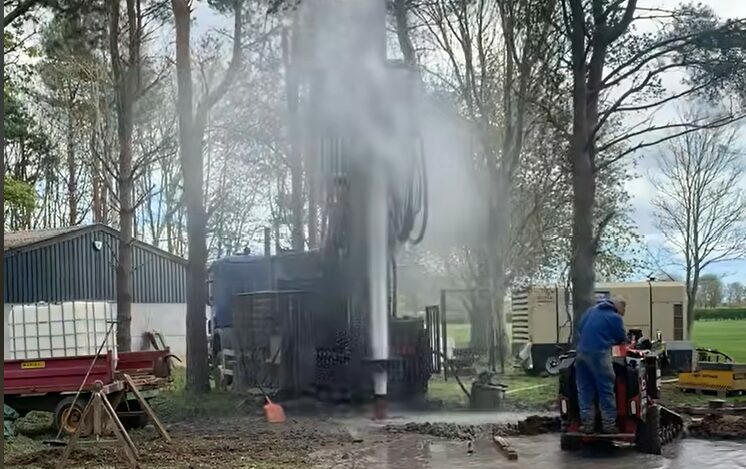
We began drilling but after reaching a depth of around two metres, there was a strong smell of fuel. The driller suspected contamination in the area, so we had to abandon that site near the irrigation tanks in the car park.
They returned four days later and we decided to try again near the green sheds, roughly halfway down the 18th fairway. This was about 200 metres from the original site, as the driller wanted to be well away from the issue. This meant we needed to route the pipe either around, beneath at considerable cost, or through the 1st and 18th fairways, and we opted for the latter.
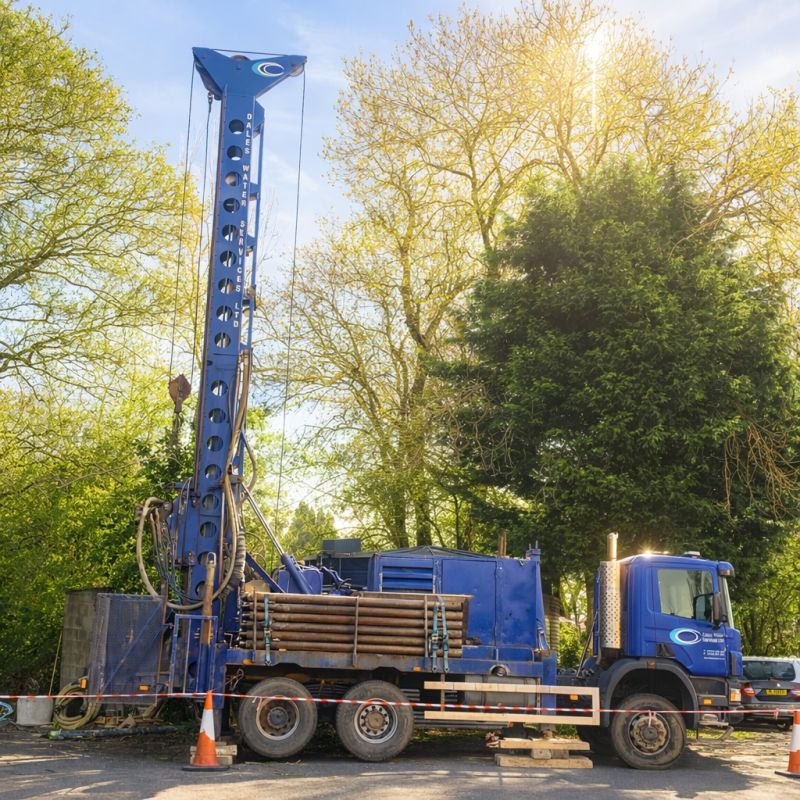
Drilling reached 37 metres before hitting rock. At that point, the casing was inserted and allowed to set before drilling continued into the rock. We had the first water strike at 40 metres, followed by further strikes at 47 metres and 58 metres. The driller was satisfied with a final depth of 60 metres. The next step was connect the pipework and pump.
How have the board and membership responded to the project – was there a need to educate or bring people on the journey?
Both the board and the membership have been very supportive overall. We communicated the project at the AGM ahead of starting work, which helped bring members on the journey and explain the long-term benefits.
There were a few light-hearted complaints when the drilling rig arrived on a busy competition day and temporarily reduced parking, but in general the response has been overwhelmingly positive. Members are pleased to see the club investing and moving forward.
Looking more broadly, do you see solutions like this becoming essential for clubs across the UK given climate pressures and rising costs?
Yes, I believe this type of solution will become increasingly essential. When you look at projected water cost increases alongside the impact of climate change – particularly the likelihood of more frequent dry periods and restrictions – it’s clear that clubs need to act proactively.

The golf course is the core asset of any club, and protecting its condition must be a priority. Investing in sustainable and reliable water sources is, in my view, no longer optional but a necessary step for the future.
Alongside that, the Trackman Studio is a very different type of investment – what role does that play in your overall vision for member experience and engagement?
The Trackman Studio is part of a broader strategy to modernise the club and engage a younger demographic. I’m pleased to say that we’ve already seen a significant shift, with around 30% of our full membership now aged between 21 and 30, which is far higher than the national average of around 13%.
Investing in technology enhances the overall member experience and helps us remain competitive. It also supports our professional team – particularly in retaining high-quality PGA Professional like Chris McDonnell – which is vital for long-term engagement and membership development within the club.
When you step back and look at both projects together, what do they say about where Ponteland is heading as a club?
Taken together, these projects reflect a club that is moving forward with purpose and clarity. In a relatively short space of time, we’ve been able to change the mood and momentum within the club.
Membership is now full, and for the first time in over 20 years we have a waiting list. That is a direct result of the investment we are making and the clear strategy we are following.
The future of Ponteland is very positive, and these projects are just the beginning of that journey.
Key Takeaways
- A clear, data-backed business case is critical to securing board buy-in for major infrastructure investment
- Sustainable water solutions are rapidly becoming essential to protect course quality and control long-term costs
- Strategic investment across both operations and experience can shift club momentum and drive meaningful membership growth