Jim Croxton, chief executive of BIGGA, looks at how club and course managers can strive together for the benefit of the whole business
 The following is an abridged version of the session Jim presented at the GCMA National Conference in November
What is best practice? How does it apply to your course management team? I recall a study, I think by Harvard Business School, that identified three things that all good and successful businesses do:
1.Have a well-defined, clearly communicated strategy.
2.Consistently meet customers’ expectations by superior operational execution.
3.Enable a structure that simplifies working in and with the organisation.
How do these apply to a golf club, particularly with regard to the course and its management? Well clearly the course itself is, or should be, the centrepiece of a golf club’s strategy. But is it ‘well-defined and clearly communicated’? Not always to the customers and, fatally, not always to the staff that are employed to manage it.
I’m mindful of the classic (though mythological) Henry Ford quote: “If I asked my customers what they wanted, they’d say faster horses.”
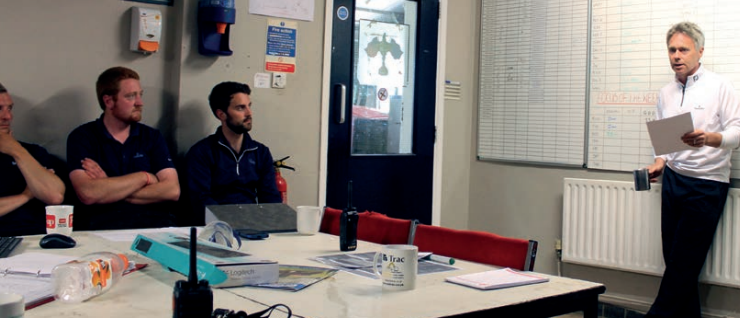 Golf club managers absolutely have a major role to play in setting out a golf club’s offering, but there are so many factors that can influence this. I often use the analogy of a menu in a clubhouse. How do we go about setting a menu as a golf club? Do club managers write down what they want to serve, how much to charge for it and just say to the chef “there it is, cook that”? No. Or should they say to the chef, “write me a menu, price it up and get on with it”? No, because the chef may not be in tune with the customer and business needs. Instead, we work together by looking at who our customers are, what they expect, what they will enjoy, what’s achievable with the budget we have, and we try and do something that’s specific to our facility.
Funnily enough, the same should be true of the golf course. We must, as leaders, pick the appropriate path for the business taking into account all the professional advice at hand. For example, what can we actually achieve with this golf course?
Assess the quality of land and the course design, look at the potential customer base in terms of their ability and expectation and identify the offering that is most appropriate. Then consider what it will cost to achieve this, is it affordable? Once we have worked out what we are going to aim for, we have got to put it into writing.
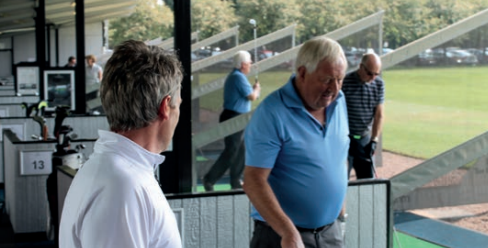 This will become the strategy that the entire team is working towards, and the best way to communicate that is with a Course Policy Document (available through BIGGA). The policy document is important because it brings accountability to the course management team, enabling their performance to be managed.
It also informs them about what they’re doing, why, and the resources they will be given to achieve the aims. It brings resilience, so that a change of captain or chairman for example doesn’t suddenly mean the golf course has to change.
How do we then get the best out of the course management team?
If you are going to manage your team, you need to be able to measure their performance. A set of criteria needs to be discussed as a team, agreed upon, and regularly referred back to. Then, if we are not achieving our aims, we can ask why not? Are there enough resources, or are our working habits or equipment perhaps not good enough?
The greenkeeping team should be empowered to manage their own activities to clearly defined goals – after all, you’re a club manager and you have other responsibilities. A big part of getting the best out of a course management team is to ensure they are very much a part of the overall golf club offering and team.
Have staff development plans in place, talk to them about career progression, and be honest about where they fit in the whole team. Too often, greenkeepers are out of sight, feeling forgotten about, and it doesn’t make for a good team dynamic.
“At every golf club that’s doing well, we see a greenkeeping team that is valued, regularly communicated with, and is seen as an important part of the overall organisation.”
When communicating with your course manager, it’s important to understand their capabilities, their experience, and their strengths and weaknesses.
With such incredible education opportunities available to the industry, the modern course manager is a highly-skilled professional and I’m still amazed by how much they know about their craft, from the technical; agronomy, irrigation systems, machinery etc to things away from the course, such as budgeting, communications and staff management.
Course managers are extremely passionate about their role in the golf course and invest so much effort that a sense of personal ownership is inevitable. The golf course isn’t theirs and they know one day they will pass it on to someone else, but you can’t get away from the fact they always talk about ‘my course’, it feels personal.
This can have a huge impact when they receive feedback, and that’s something I’d ask you to consider carefully. A course manager, being a passionate individual, will be more affected by one piece of criticism than they will by 99 compliments. Even the most experienced managers, at the biggest clubs, are still affected by a negative comment. You, as a club manager, need to recognise this, and bear it in mind when giving feedback about the course.
It is perhaps uncomfortable in my role to highlight weaknesses and I hate to generalise but there are some skills, shall we say, that are typically less prevalent in my industry. Political skill is one. The very best course managers understand and manage the politics of a golf club extremely well, but often this isn’t something that comes naturally.
Similarly, communication doesn’t always come easily. Their mentors may not have been communicators, so good communication is something that must be learnt to suit the modern workplace, and so patience is required.
You may also find that your greenkeepers aren’t great team players. Sure, they’re a tight unit among themselves, but that physical difference between the clubhouse and the maintenance shed can cause a sense of isolation. To combat this, do whatever you can to bridge the gap.
To get the best out of your course manager and his team, you must have an awareness of what the club’s desired goals and objectives are, and what are the resources available to achieve them. If your ambitions exceed your resources, you must reassess what your goals and objectives are, or reassess what resources are made available.
Most importantly, work with the experts you employ to choose the golf course that’s right for your business. Then give your team the resources and the appropriate structure that will allow them to achieve those standards. Don’t ask them for something that can’t be achieved. And invest your time into working with your team.
Give your own time as club manager to the team to make sure they feel appreciated, as you would any department within the business. To conclude, if there is one single message I could give you, it would be to apply good business practice. Don’t think that the golf course and its maintenance are outside your business. The course is your business.
 Case Study: Gaudet Luce
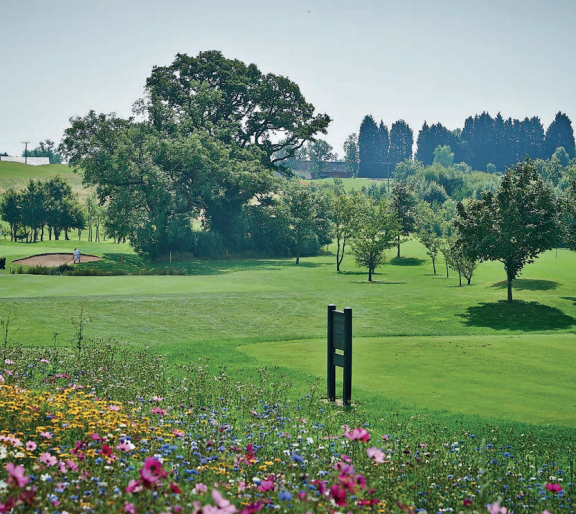
A good example is Gaudet Luce Golf Club in the Midlands. Andrew Laing is the course manager there – a first class operator. Andrew went in to his budget meeting with the club director saying that if he had a little bit more money, some additional resources, perhaps a couple of extra members of staff, he’d be able to take the course to the next level. The reply was that he didn’t want the course at the next level, and that took Andrew aback somewhat.
Alec (Fernihough) explained how Gaudet Luce sits perfectly within a specific market and at a well-defined price point that suits their business requirements. An increased budget would have to be matched by increasing prices and this would move them into a different market.
Rather, Andrew’s job is to produce the best condition possible with the resources he has got, and the club’s management structure understands that there’s only going to be so much he can achieve. For an ambitious guy like Andrew, that can be a difficult thing to hear but it’s also really empowering because rather than being dismissed out of hand, he understands the situation and the business model and can pass this message on to the rest of the team.