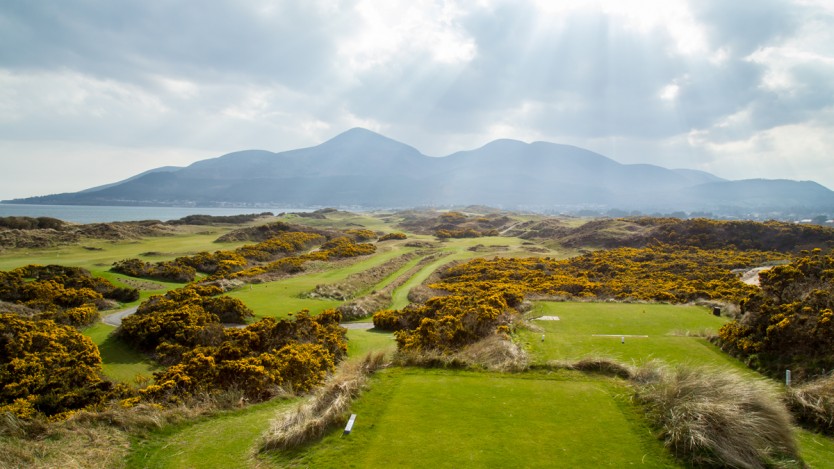
We spoke to Royal County Down Golf Club Secretary David Wilson ahead of the Irish Open, which was held on the renowned Northern Ireland links last week. We discussed the tournament, how the historic club is run, David’s background and the current status of Northern Irish golf.
What is your background?
I’m originally from Belfast – I was schooled there, and then went to Queens University in Belfast, before joining the Royal Air Force, where I spent 25 years as a Personnel Officer.
I left the RAF in 1996, and got into golf management at West Essex. I was Secretary there for 10 years, and then I moved to Malvern and was Secretary of the Worcestershire Golf Club for a couple of years and then the opportunity arose in 2009 to come to Royal County Down, so I’ve been here since then.
How is Royal County Down run?
RCD is run as a traditional members’ club but the main difference would be that because of the way we are seen in world golf, which is something we don’t take for granted, the members are very keen to share the course with visitors from around the world. We have 10,000 visitors a year, of which 75% come from North America.
Traditionally the members would come from Belfast and there was a train that would come down on a Saturday, called the Golfers’ Express. The golfers would gather in Belfast around 10am and get on a special carriage, which was originally designed to be a royal carriage, and it would come down to Newcastle. The members would have a hat on the table, and they would all put their names in the hat, and one of them would draw the names out. They’d then go off and play in their foursomes, have some tea in the clubhouse, and then go back to Belfast on the train.
Traditionally, we don’t have many local members of RCD – and we still operate the same hat system, but these days we do it by telephone. So on Wednesday and Saturday, which are the two members’ days, members phone up before 11.30am to put their name in the hat and then one of the local members comes in and sorts all the matches out for people coming up. The tradition is the same but the method has changed.
My prime responsibility is to look after our members, and we actually have three clubs here at RCD. We were formed in 1889, and five years later the RCD Ladies GC started, and they have a separate clubhouse, and then in 1946 the Mourne GC, which is a club for local people (who live within five miles of the course) was started. All three clubs operate and play on the two courses here. We have around 1000 members across the three golf clubs – the majority of whom do play at one time or another.
We also have a second 18 hole course at Royal County Down – the Annesley Links. At 4,500 yards it is much shorter than the Championship Links but is popular with many of the local members and visiting societies. The Ladies Club play most of their competitions on the Annesley Links on a Saturday morning.
I’m very fortunate – I actually have two jobs here. I manage the members of Royal County Down and I manage the commercial aspects. It is a big business but because the members are only here two days a week, we’re able to manage visitors in a way most other clubs would envy. Members understand that the visitor revenue is important to the club. So in terms of the typical golf club – it is different.
How do you manage the balance between member and visitor play?
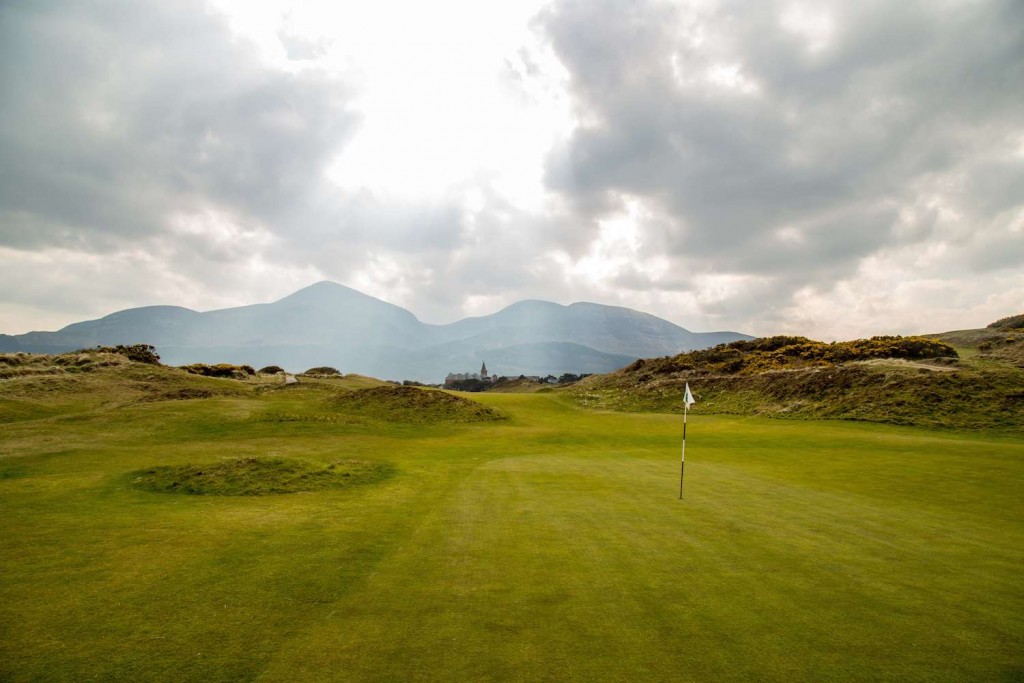
I know most other clubs have greater member play so there might be a little more tension on that front but the members here accept that they have their allocated tee times and the rest of the time from May to October is for visitors. What I’ve found really great here, is that when the members are around, they will make a point of talking to the visitors – welcoming them, asking about their experience and so on, so again it’s not something I’ve seen elsewhere. Even though it’s a simple thing – it makes a huge difference to the club.
How did the hosting of the Irish Open come about?
The process of getting the tournament was interesting. We were approached by the European Tour and Northern Ireland Executive more than two years ago. The club was not looking to host the Irish Open. We’re very fortunate to be highly regarded in world golf and we are a members club with as many visitors as we can manage. However, we realised that hosting it would be of huge benefit for Newcastle, County Down and Northern Ireland, so on that basis we have agreed to host the event this year, and we are very much looking forward to it.
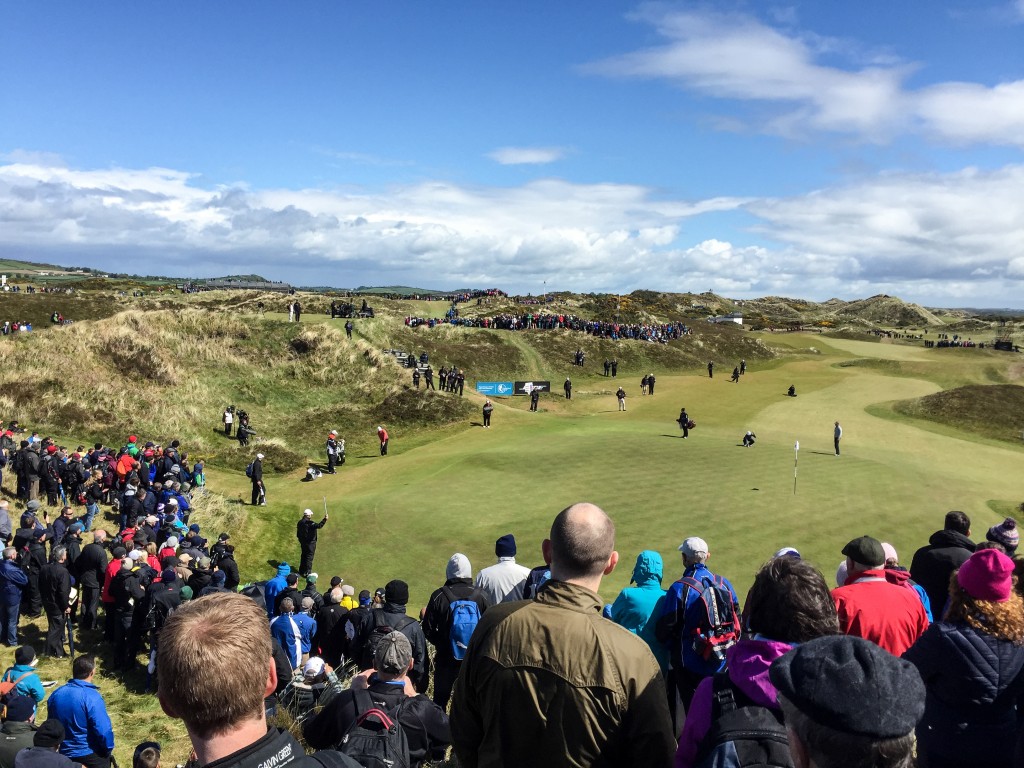
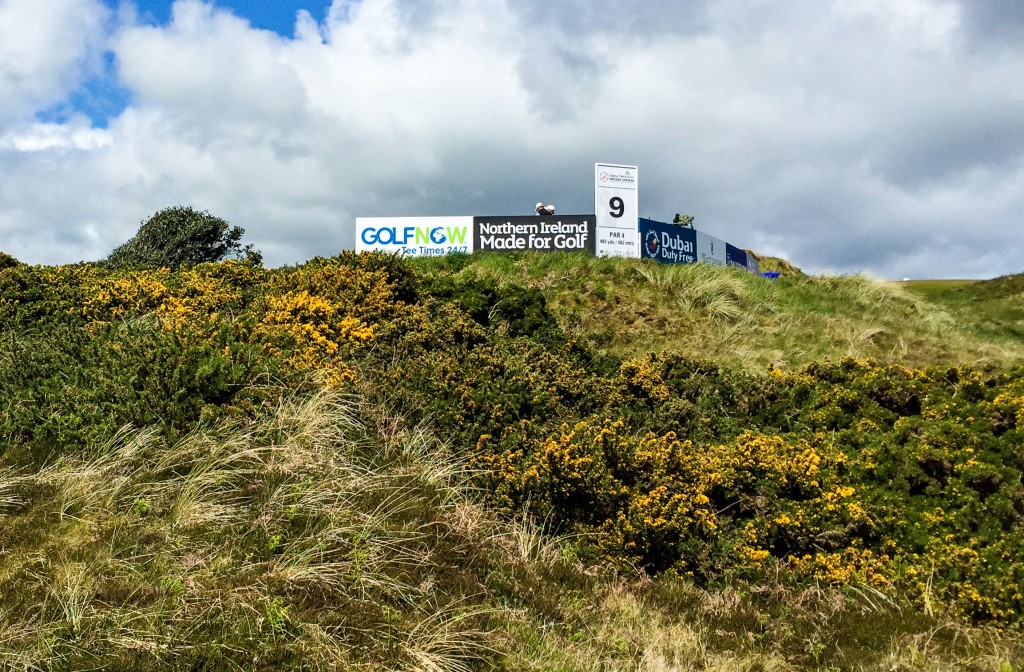
I think with the involvement of Rory McIlroy and the Rory Foundation, and now the title sponsor Dubai Duty Free, it’s going to be a massive event. It will probably be the biggest in the history of the Irish Open – certainly in recent memory – so it should be fantastic, and we can’t wait.
Will Royal County Down be likely to host it again?
I think from the club’s point of view we see it as a one off. We are a members golf club first and foremost, so I think the members would take a view that there has been, and will be, considerable disruption, and therefore it’s likely not to be something we hold again in the near future. But never say never!
What are the practicalities of organising the tournament?
The Club Officers and Council decided that hosting it was the right thing to do, and so the members were advised that we would be hosting the event. The members put their trust in Council to make the right decision, and everyone in the club is very keen. We’ve got over 100 members volunteering for marshalling and other duties, so there is a lot of enthusiasm in the club for the event.
One of the practical difficulties is that we are an SSSI (Site of Specific Scientific Interest) and a SAC (Special Area of Conservation), which causes all sorts of limitations to what we can do with the land. We’ve got the Northern Ireland Environment Agency constantly checking what we’re doing and using the land for large crowds walking about is not their preferred option. So that’s a limitation and that’s one of the reasons why the crowd numbers are limited to 20,000 a day this year.
What are the practicalities of running the event?
We have agreed that the European Tour will come here and will run the Irish Open, and whilst we have a role to play in facilitating that they actually make all the arrangements which is obviously quite handy from my point of view!
As part of the agreement with the ET we agreed that we would close the links for 10 days before the event and then the event itself, so we’ll actually be closed for about 17 days in total. Because the event is so early in the year, we opted to use mats for play on the fairways from October last year through until the tournament and therefore as you can imagine the course is in great condition at the moment. It’s just too early in the year to have risked not using mats because there might not have been enough growth to allow the fairways to recover to the standard we’d like. As it happens this was a good decision as we have had a very late spring this year.
How will you staff the course during the Irish Open?
We’ll have an additional 25 green staff during the Open and those are volunteers from around Ireland and the UK, in the same way most tournaments work. A lot of these guys will regularly go and support tournament venues – The Open venues in particular.
How do you maintain the standard of the course and club?
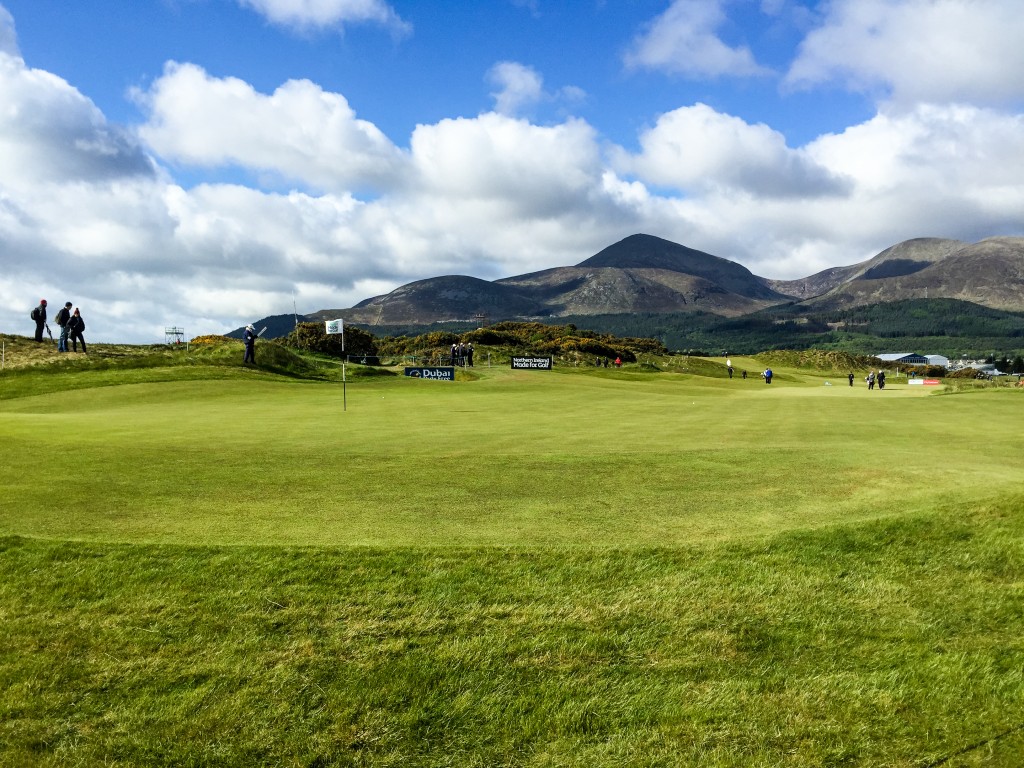
That’s something that we work hard at, and we employ 22 greens staff in the summer, and 12 in the winter, which allows us to present the golf course to a really high standard. We reckon that you can go out and play the golf course any day of the year, and it’ll be almost perfect condition. We’ve had a number of top players come and play, and they say “just put the stands up today, and you can hold the Irish Open here tomorrow”. So we do work very hard at it, and that’s why we have the staff – presentation is very important to us.
In terms of the clubhouse, we like to think that the level of service is very good. Again, we employ more staff in the summer when we might have up to 140 visitors in a day, from 7.30am to the last tee around 3.30pm, so it can get quite busy.
We also employ people to meet and greet our visitors, we have starters and links marshals as well, so we work very hard to ensure that the visitor experience is good. As a result we’re able to have these wonderful rankings from the influential golf magazines. That appears to attract in particular the North American market to come and want to play one of the great links courses of the world.
Do you pay particular attention to course rankings?
We pay more attention to the rankings in the markets we’re working in – and therefore the American media is particularly important. The Golf Digest ranking of being the best course outside America is actually very important, and will attract a lot of people. But one shouldn’t underestimate the power of Rory, Graeme and Darren in bringing people to NI, because there’s no doubt that in the recent years NI has become a destination in its own right for people travelling to play golf from overseas, so that’s almost as important to us.
But of course the rankings are important, because that is what drives people to come and want to play the top courses. There is no doubt that most of the American players, who generally will be good golfers, want to play the best golf courses, and if we’re seen to be one of them, they will come and visit, so we are very privileged to be seen in that light.
How can professionals support golf clubs?
Historically I think professionals have supported the game – Lee Westwood supported English golf over many years with the Golf Foundation and other projects – and Rory makes quite an effort locally. It is interesting how many people visit RCD but also still want to go up to Holywood Golf Club to see where Rory learned his golf and still has close connections, so I think their input does make a difference.
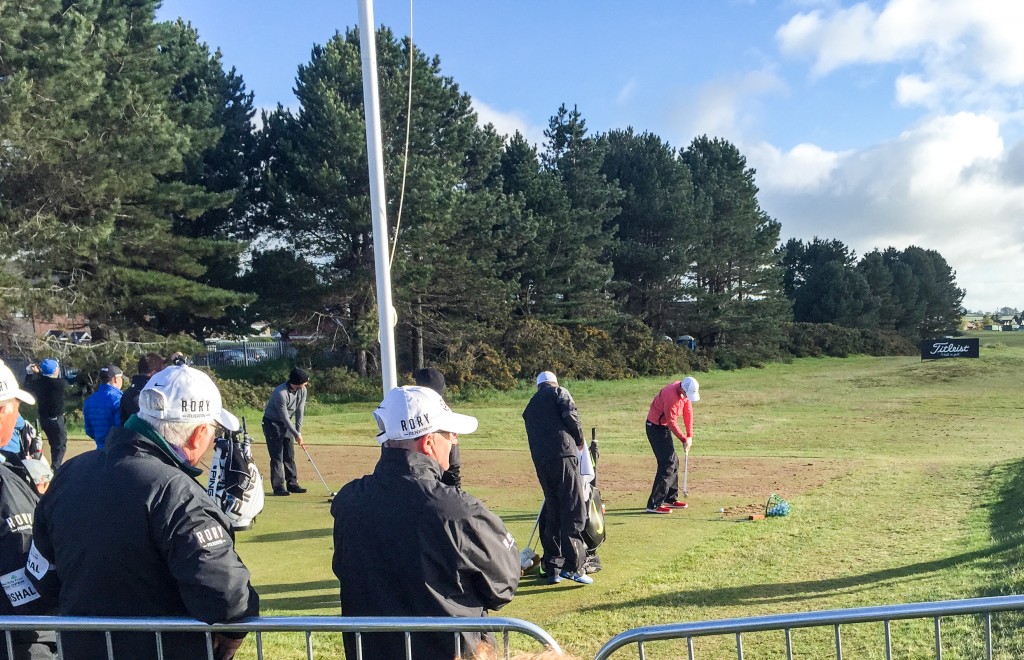
We’re very lucky that Rory, Graeme and Darren are all great ambassadors for Northern Ireland and for Irish golf. They do work hard at it, and Rory’s input into the Irish Open should not be underestimated. Alongside the European Tour he played a key role in attracting the title sponsor – Dubai Duty Free – and he’s been instrumental in assembling the great field that we’re going to have next week.
Is there a tangible buzz around Irish golf at the moment?
Without a doubt – there is a great feeling of bonhomie around Ireland that we’ve got these great champions who we love to support.
If the logistical issues could be overcome, would Royal County Down like to host The Open?
I’m not sure hosting The Open is something we’d be looking to do. Everyone here is delighted that it’s going to Royal Portrush and that will have huge benefits for the area and Northern Ireland, so we’re really supportive of that but hosting The Open is not something we would seek.
We have traditionally hosted major amateur golf events. We hosted the Walker Cup here in 2007, and we’re hosting the British Seniors Amateur Championship in August this year and will host the Irish Amateur Open Championship in 2017.
Does it feel like you’re running a typical golf club?
I’m very lucky as I don’t have to seek out members – membership is by invitation only. We have whatever membership level the Club wishes so we don’t have the challenges that many golf courses have of seeking and maintaining members. The prestige of Royal County Down and the level of visitor revenue does makes life simpler, but it is a wide-ranging appointment. I’ve certainly got a lot more staff and probably more responsibility than most secretaries, but I certainly feel very privileged to be here and to be in the job.
We face many of the same challenges as other golf clubs such as the issue of VAT on green fees. All of the legal issues such as health and safety and so on apply here just as much as elsewhere. The job is essentially the same.
Do you have any career advice for young managers?
Like many before, I came into the business slightly later in life, but I suppose if I’d started younger – and I’m intrigued by your Young Manager’s Group – then I suppose the key would probably be to gain as much experience as you can. When I started work quite a few years ago the thinking was that you had one job for life. I’ve actually ended up with four which surprises me looking back. I think these days you’ve got to move around and gain a breadth of experience, and in that way you’re going to build up a reputation and a CV and then you may become attractive to bigger clubs.
There’s a balance in how long you stay in any job. I’d be intrigued to know if there is a career pattern for a golf club secretary – in many ways I think the biggest change may be the movement into management of other people in the golf business. The PGA, for instance, have been forward looking in offering Professionals education and training in the wider golf business. The Director of Golf role is one we are seeing more, and I don’t think it’s unhealthy if it helps to improve professionalism in the industry.
Royal County Down hosted the Irish Open from 28-31 May 2015, which was won by Soren Kjeldsen.
By Mike Hyde