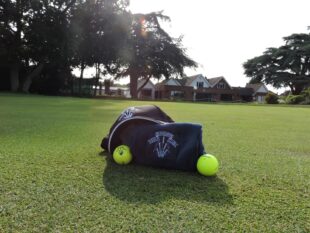
At Cosby Golf Club, challenging conventional thinking is allowing the club to modernise.
For many golf clubs, navigating change while respecting tradition remains one of the most difficult leadership challenges. General managers are often balancing long-established customs with the realities of modern club management, evolving member expectations and the need for sustainable business practices.
At Cosby Golf Club, general manager Will Bevan believes meaningful progress starts with a willingness to question assumptions that have shaped the way clubs have traditionally operated.
“Golf clubs generally operate in very logical and rational ways,” he said. “But in terms of human nature, we humans often don’t operate very rationally at all. Anyone with a fear of buttons or someone who overspends on clothes will know that.
“If clubs always operate in the same way, the status quo will never be innovated. Golf clubs have, to a certain extent, operated in the same way for a century and over that time many have ‘survived’ rather than ‘thrived’.
“We’re not trying to scrap all recognised forms of operation or offering, but rather tweak traditional mindsets. I’m trying to instil curiosity in our management team – not always assuming the status quo is the optimum approach. Some things will work and some will not, but we’ll never know unless we try.”
Bevan arrived at Cosby with a clear understanding that the club needed to evolve structurally in order to secure its long-term future. The brief was to modernise how the club operated and ensure its sustainability while maintaining the character and culture that had defined Cosby for generations.
“I took this role knowing there was an opportunity to modernise how things operated,” he said. “Like many golf clubs, Cosby had relied heavily on volunteers for much of its history, which had worked well for a long time, but the aim was to evolve that into a more sustainable business model for the future.
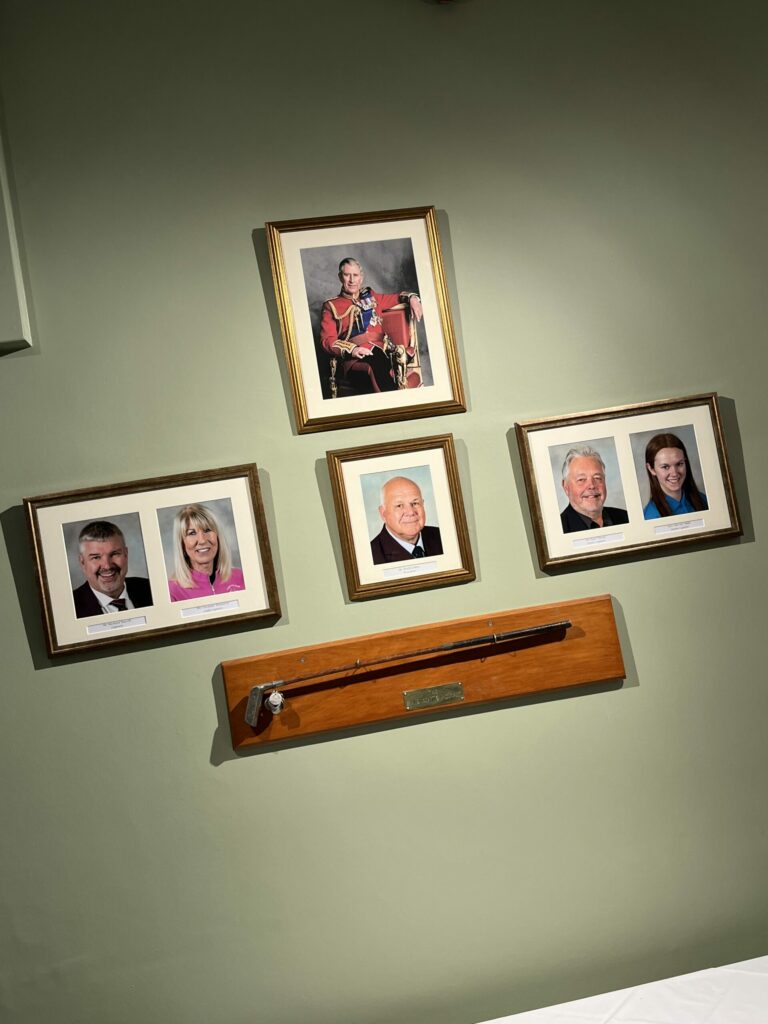
“I was brought in by our former chairman, Mike Hamilton – who sadly passed away about six months after I arrived – and he was really the driving force behind that vision of making the club more sustainable.
“Alongside that, over the last three years we’ve gradually taken on some of the executive responsibilities that had traditionally sat with volunteers. At the same time, it’s clear there will always be areas where volunteers and non-executives play an important role, particularly in things like promoting women’s golf or junior golf, where that passion and commitment is so valuable.”
The shift towards a more sustainable operating model did not mean removing volunteers from club life. Instead, it meant redefining where their contributions were most valuable and ensuring the club’s governance structure was equipped to support long-term planning.
At Cosby, that structure is underpinned by strong board support and a shared strategic direction across the club. The board, staff and members have agreed a long-term vision for the club, built around four core values: Uphold integrity. Champion excellence. Model sportsmanship. Steward sustainability.
Bevan says that alignment has been critical in giving the leadership team clarity about the club’s direction.
“I’m hugely appreciative of the support the board has given us,” he said. “Together with the staff and members we’ve agreed a strategic vision and those core values really lay the roadmap for our future.
“A mandate has been set for my team and I to execute that vision, and regardless of personnel changes — whether that’s staff or board directors — the trajectory of the club remains constant.”
That governance framework also ensures the club continues to evolve in a way that reflects the community around it. For Bevan, a healthy golf club should feel open, welcoming and representative of the people who live nearby rather than operating separately from its surroundings.
“I’m a firm believer in trying to build a community within a golf club,” he said. “Our aim is to have our Saturday morning tee sheet representative of our local community – men, women and children.”
Progress towards that vision is already evident. Cosby has been nominated in the Women in Golf Charter Club Award category at the England Golf Awards and its membership profile reflects a demographic many clubs are striving to attract. The club currently has an average member age just under 51 and more than 200 members aged between 19 and 35.
Investment in facilities has also played a role in making the club more appealing to a broader membership. The driving range has recently been upgraded with TrackMan technology, giving members access to advanced ball-tracking data and interactive practice environments.
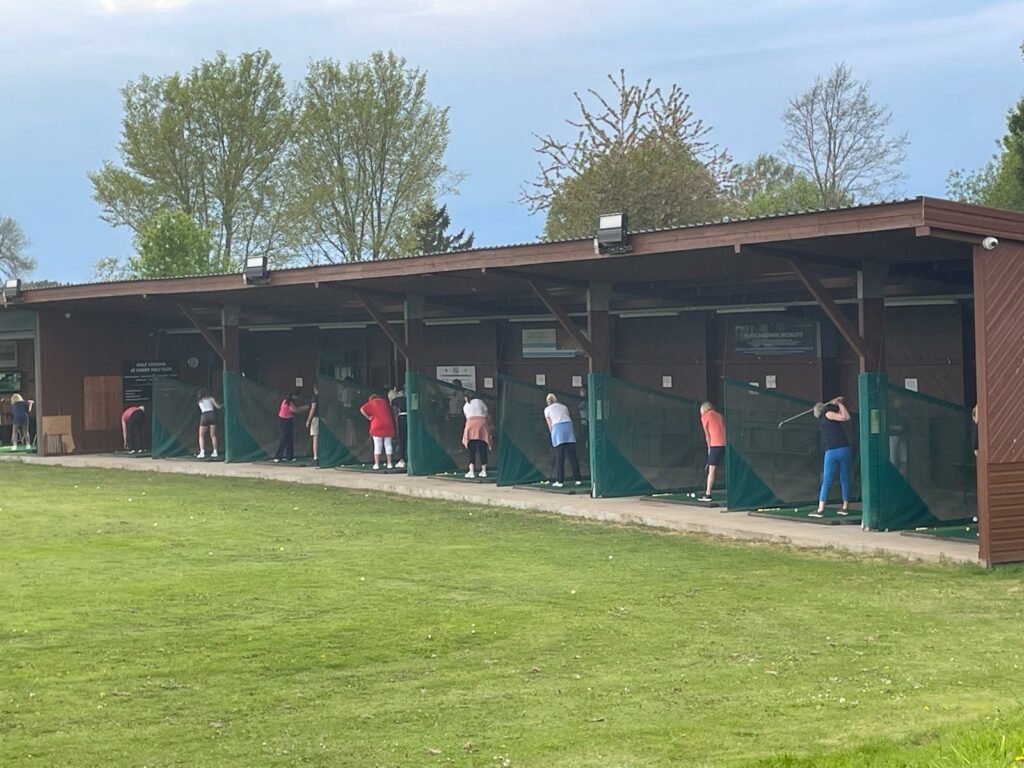
“Our members receive a 75% discount on the marketplace cost of a basket of balls on the TrackMan range,” Bevan said. “We’ve also installed a TrackMan simulator, again with around a 75% saving compared with commercial simulators.
“It’s about trying to give our members the very best value possible as part of their membership.”
Creating that experience has involved thinking carefully about how members interact with the club and with each other. Initiatives such as a Captain’s Order of Merit competition, which places members into mixed teams regardless of section or membership category, are designed to encourage engagement across the club.
Bevan also believes golf clubs need to think beyond the traditional boundaries of the sport if they are to remain relevant in the long term. At Cosby, that has meant positioning the clubhouse as a hub for the surrounding village and ensuring the club is embedded within the local community.
“We try to reiterate to our members and staff that we’re not just in the golf business,” he said. “We’re in the business of offering reasons for people to come to the golf club.
“Our clubhouse is open to the village. Cosby itself is a village of around 4,000 people and we want the club to be part of that community. People can come in for a drink, watch football or rugby, or use the clubhouse socially. If someone passes away, families might hold the wake here. If someone has a significant birthday, they might celebrate it here.”
The club is also exploring ways to support the village in practical terms. One proposed project involves working with the local community on flood alleviation, using land around the course to help manage water levels during periods of heavy rainfall.
“We’ve been looking at ways we can help the village with flood alleviation,” Bevan said. “There’s a brook that runs alongside several of our holes, and we’re exploring whether it could be expanded to hold water and release it gradually into the village, because flooding can happen three or four times a year.
“We’ve done consultations with the village and it’s another example of how a golf club can play a role beyond just golf.”
Cosby’s charitable activity is also becoming more focused on projects where the club can see a direct and tangible impact. This year the club is raising funds for Ward 27 at Leicester Royal Infirmary, helping to purchase a THOR PBM laser, which supports children undergoing chemotherapy by helping to reduce some of the side effects of treatment.
“Raising funds for a specific piece of equipment like that is incredibly powerful,” Bevan said. “You know exactly what the money is going towards and the difference it can make to families and young patients.”
While the early signs at Cosby are encouraging, Bevan remains conscious that meaningful cultural change within a golf club rarely happens quickly. Many of the initiatives introduced are designed to lay the groundwork for the future rather than deliver immediate transformation.
“None of this is going to happen overnight,” he said. “I see my role as trying to improve golf for when our junior captain is club captain. Lots of the seeds we’re planting now might not come to fruition for years – but you have to start somewhere.”