
Enhancing understanding and credibility through the Advanced Management Programme

David King explains how the Finance and Accounts Management course sharpened his strategic input, built credibility, and led to practical changes at Rushmere.


A sound understanding of finance is central to the modern manager’s role and critical to the performance of any golf club.

For Rushmere General Manager David King, the Finance and Accounts Management certificate within the Advanced Management Programme provided an opportunity to build on existing knowledge and translate it into greater strategic impact at his club.

Although David already had a solid grounding in the club’s day-to-day financial operations, he is not one to rest on his laurels when it comes to professional development, and the course allowed him to bolster his own credentials while delivering added value to Rushmere.
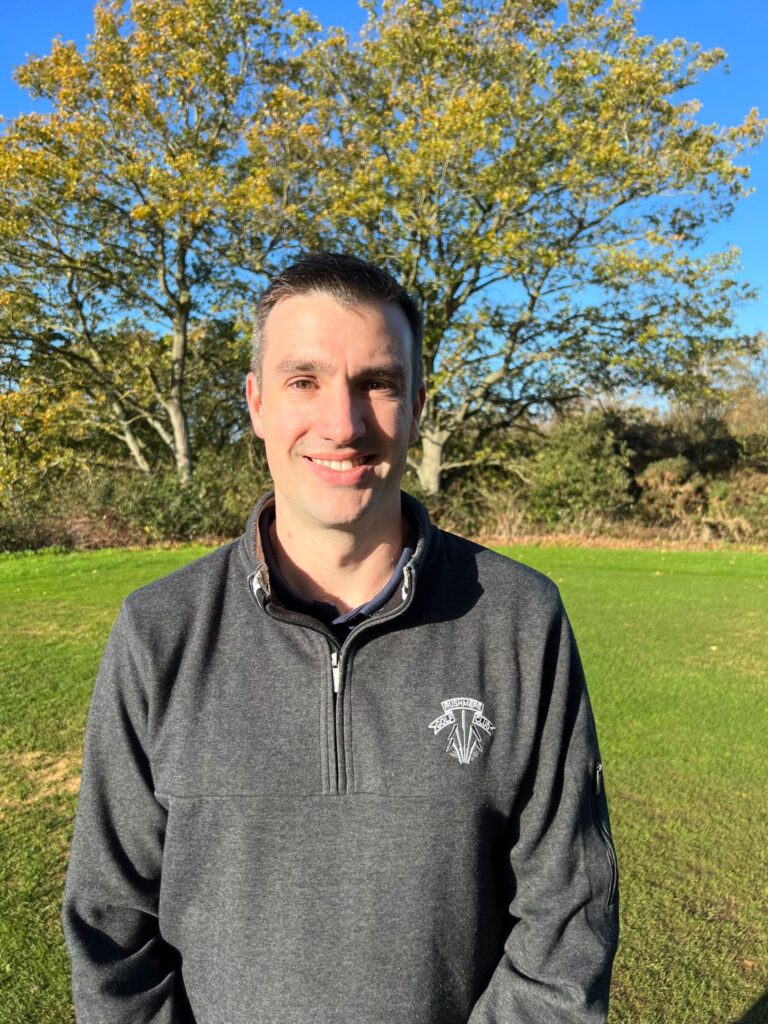
“It’s an area I’m interested in and one where I felt I could develop further, particularly to contribute more strategically at board level,” he explained.

“I act as a bookkeeper in many ways and deal with the day-to-day, but the course helped me step back and look at things like management reporting, budgeting and forecasting in a more structured way. I felt I had a grounding but wanted to build on it.”

That move from operational involvement to strategic contribution reflects the focus of the programme, which explores financial reporting, budgeting, cashflow management, and performance analysis through the lens of golf club operations. The relevance of that context was key, particularly when compared to more generic learning environments.

“Rather than a generic course, something specific to golf clubs is far more useful. You could go on an accounting course with people from all sorts of industries, but doing this alongside golf club managers makes it much more relevant because you’re dealing with real-life situations that you’re all facing. It’s more in-depth, more focused and ultimately more credible, both for me and for the people I’m reporting to.”

That credibility has translated directly into greater confidence and influence in conversations with stakeholders.

“Getting the official credential massively helps. It shows boards and committees that you have strength in that area, and as you build up more of these modules it becomes a clear sign that you’re developing in the right places. It gives people confidence in what you’re saying because they can see you’ve invested time in understanding it properly.”

Importantly, the learning has not remained theoretical. David has already applied elements of the course to refine financial processes within the club.

“We’ve changed the way we’re doing budgeting and forecasting based on some of the notes I took away. It’s helped us, and I’ve been able to take that back to the finance director and build on what we’re already doing. Things like understanding ratios for management reports have been particularly useful and have added another layer to how we look at performance.”

That implementation has been approached with care, recognising the realities of working with boards and volunteer committees.

“You can’t come back from a course with pages of notes and expect to overhaul everything immediately. Big changes too quickly can be unsettling. It’s about introducing small changes, highlighting key takeaways and showing how they strengthen what you’re already doing. That way people come with you rather than feeling like things are being changed for the sake of it.”

Alongside the formal content, the shared experience with other managers provided an additional layer of value, reinforcing common challenges and opening up new ideas.

“You quickly realise that a lot of managers are dealing with the same issues, which is really reassuring. If you engage with people, spend time together and have those conversations, you pick up ideas you can take back. Sometimes it’s something small, sometimes it’s a different way of thinking, but it all adds value.”

The course also challenged David to expand his understanding beyond his existing experience, despite already having a solid foundation.

“The first part gets everyone to a similar level, but by the second day we were definitely into things I hadn’t come across before. We had people at very different stages of their careers, from assistant managers to very experienced GMs, but it did a good job of bringing everyone along and then pushing things on.”

That continued progression is central to David’s broader view on professional development, with the Finance certificate forming part of a longer-term commitment to learning.

“I do find a lot of value in it. It keeps you current and relevant. There’s always something happening at your golf club, and if you can bring that knowledge into your role, it benefits both you and the club. It’s good for your career and ultimately helps you become a better manager.”

For clubs weighing up the investment, the expectation of tangible return is clear, but so too is the opportunity.

“You do have to demonstrate value. It’s not just about attending, it’s about bringing something back. If you can do that, they’ll see the benefit very quickly. It also helps when you show them the course content because they can see straight away how relevant it is and how it will strengthen what the club is doing.”

Click here for AMP course dates


Key Takeaways

  • Targeted financial development strengthens a GM’s ability to contribute strategically, not just operationally
  • Industry-recognised qualifications enhance credibility and influence at board level
  • Practical, incremental changes based on course learning can deliver immediate impact without disrupting existing structures


By GCMA Content Team

More from Your Community

Close

Allister Frost


A former Microsoft Digital Strategy leader who now inspires audiences to discover the life-enhancing benefits of having a Future Ready Mindset. As a tech pioneer, Allister gained unique insights into how to transform uncertainty into opportunity, and now loves giving others the positive mindset and simple habits needed to:

  • Stay resilient in the face of uncertainty and change
  • Spot quick win opportunities for improvement
  • And *create* a brilliant future!


With AI and robots coming for our jobs (hint from Allister: they won’t, if we know how…), many people are anxious about the future. But Allister asserts that we’ve nothing to fear when we leverage our human superpowers and ingenuity to thrive alongside emerging technologies. That’s why having a Future Ready Mindset is now a must-have skill to remain competitive and relevant to the people we serve, our golf club members and the local community. And the best bit: everyone can do it!

This will close in 0 seconds

John Steele


John Steele is a former professional athlete, sports coach, Olympic Leader and is the Executive Director of Sport at Loughborough University. He has been Chief Executive across a range of sectors. Drawing on leadership experience of nine different Olympic and Paralympic Games (including the amazing events at the Rio Games), John reflects on the lessons from this unique period in British sport and relays his fascinating views on creating high performing teams.

Indeed, inspired from PyeongChang 2018 Olympic Winter Games, by the most successful performance ever for Team GB, he has a whole host of new business and leadership insights into how this was brilliant performance was achieved and how it can translate back into your organisation.

John moved into the corporate world, before he enjoyed an outstanding career as a professional rugby player achieving international honours. After his playing career, he turned his hand to coaching and achieved the highest accolade for a British club coach by winning the European Cup with Northampton Saints. He then became Executive Director on the Saints Board during a period of unprecedented growth, and served on the England Rugby Board during the successful world cup campaign of 2003. It was no surprise that John’s talents were called upon to drive through a change and modernisation programme as CEO of the Rugby Football Union – a challenge that became controversial and ended in his departure from the post after only a year, but with his dignity and professional pride intact.

Headhunted by UK Sport, John took up post as CEO the day before London won the 2012 Olympic bid – and this promising start was sustained as he embarked on developing the UK’s high performance sport system, which he led for a six-year period of unprecedented success through the Beijing and London Olympic and Paralympic Games.

Post-London 2012, with the Olympic legacy in place and an obligation to continue inspiring a generation, John took up his post as Group Chief Executive of the Youth Sport Trust. He has also succeeded Steve Cram as Chairman of the English Institute of Sport, an organisation described as ‘the team behind the team’, which delivers a range of performance impacting solutions to over 40 Olympic and Paralympic sports and some non-Olympic sports.

This will close in 0 seconds

Dr Jo Salter MBE


Dr Jo Salter MBE is famed for becoming the first female fast jet pilot, having flown the Panavia Tornado ground attack aircraft during her services in the Royal Air Force. Joining the RAF aged 18, Jo has since taken Air Cadets into the skies as part of Air Experience Flights, become the Director of Global Transformative Leadership for PWC, and most recently become a Global Advisory of GenAI for PwC.

Jo has piloted flights in the Air Cadets Air Experience Flights and inspired countless budding armed service members to pioneer a male-dominated sector, having been the leader of an all-male squadron. Since leaving the military behind, Jo has established a strong business career working in roles such as Head of Technical Services for NetConnect, European Operations Manager for Automated Power Exchange and Managing Director of Saltin Ltd.

Having developed first-class expertise in leadership, analytical thinking and performing under pressure, Jo is now a highly sought-after public speaker to share stories from her time in the skies.

Jo is a passionate Trustee of The Royal Air Force Club and an Ambassador of the Global Angels charity, an organisation that gives communities around the world access to clean water, education, healthcare and encourages female and youth empowerment. Jo has also authored two books, titled Energy: 52 Ways to Fire Up Your Life and Become an Energy Angel and Energize: Spring Clean Your Mind and Body to Get Your Bounce Back Today and Every Day.

In recognition of her achievements throughout her career, Jo has also been named as one of the 50 Most Inspiring Women in the World by Harpers & Queen. She is now working as the Director of Global Transformation Leadership at PWC, after working in other roles such as Director of Risk Technology Strategy, Director Chief of Staff to Head of Technology & Investments and the Director of People & Organisations.

In 2022, Jo was invited personally by Tom Cruise to attend the premiere of Top Gun: Maverick. Most recently, Jo received an honorary doctorate of Arts from Bournemouth University.

This will close in 0 seconds

Colin MacLachlan


Colin Maclachlan, star of Channel Four's captivating reality TV drama SAS: Who Dares Wins and Channel 5’s ‘Secrets of the SAS’, is an operator with over 25 years of security and risk related experience who is a popular and frequent fixture on the speaking circuit.

Colin Maclachlan, celebrated for his roles on Channel Four's SAS: Who Dares Wins and Channel 5’s Secrets of the SAS, brings over three decades of expertise in security and risk management. Colin's military career began in 1989, and after serving nine years with the Royal Scots, he joined the elite 22 SAS at just 23. His time in the SAS saw him participating in numerous high-stakes operations, including the notable rescue of hostages from the West Side Boys in Sierra Leone—a mission so perilous it was dubbed Operation Certain Death.

Colin was also pivotal during the longest hostage siege on UK soil, when a hijacked Afghan plane landed in London in 2000. The standoff lasted four days with Colin as the first sniper on the scene.

After leaving the SAS, Colin exchanged insights with international forces such as Delta Force and Seal Team 6 and provided security consultancy to the Saudi Royal Family and various celebrities. His academic pursuits led him to earn a First Class MA (Hons.) in History from Edinburgh University and an M.Litt in Terrorism from St. Andrews University.

Today, Colin extends his expertise through television, books, radio, and video games. He supports numerous charities and has founded Who Dares Cares, which assists veterans and those experiencing stress. As a speaker, Colin excels in discussing Resilience, Teamwork and Leadership.

This will close in 0 seconds