 A former European Tour venue, Fulford hosted their first R&A event with the inaugural Girls Under-16 Open. We talk to the people – including former GCMA Manager of the Year Gary Pearce – who made it a success…
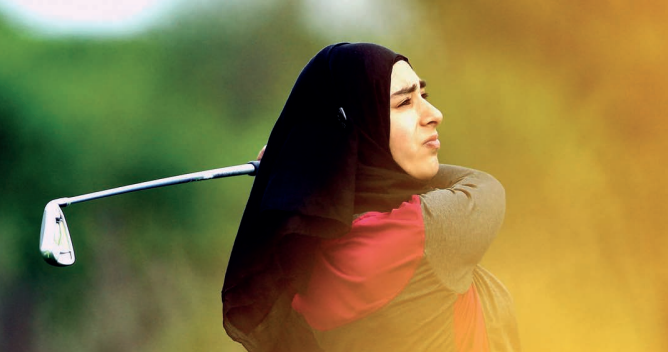
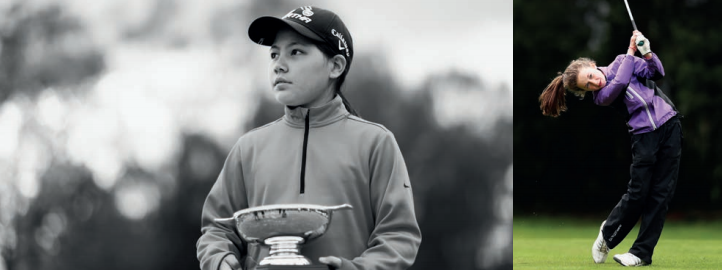
Barely reaching parity with the headcovers sticking out of her trolley, Fulford looked like it might swallow up 10-yearold Rosie Bee Kim.
But looks, as they say, can be deceiving. The youngest player in the field at the inaugural R&A Girls Under-16 Open, she amazed everyone in the second round by dominating a championship course renowned regionally for its difficulty.
“I was watching her play pushing her trolley with a bag,” said Fulford general manager Gary Pearce. “She was really small and knocked it round in 1-underpar gross. She had five birdies in a row.
“It was just incredible to see and she will be competing in this tournament for the next five years.”
If that is a story of achievement against the apparent odds then Fulford’s tale isn’t too far behind.
The York course was a fixture of the European Tour scene for 23 consecutive years from the 1970s to the ‘90s.
 Seve, Faldo, Trevino, Lyle, Woosnam, Norman – the list of golfing greats that strode Charles Mackenzie’s fairways during the Benson & Hedges International Open and Murphy’s Cup goes on and on.
It was a who’s who of the sport at the time, not to forget a certain Bernhard Langer scaling what is now a very famous tree in the early 1980s.
Fulford held the very first Women’s British Open, won by Jenny Lee Smith in 1976, a tournament that’s now a major on the LET and LPGA Tours. But technology moved on and so did the professional game.
The course continued to hold elite amateur tournaments, such as the European Ladies’ Team Championships in 2013.
But they had never held an R&A event – until a call late last summer set the pulses racing among club officials and members alike. Even so, there were no high expectations as they prepared for the first of a three-year run of this new early season competition.
“We hoped, between The R&A and ourselves, to have 60 to 80 players,” remembered Pearce. “We were completely unsure what the international field would be like – whether it would be more of a national field or not.
“In actual fact, even with the short notice, it was over-subscribed and the standard was a lot better than expected.”
 The lowest handicap was +3.5, courtesy of Switzerland’s Elena Moosmann who finished third, and there were plenty of scratch and plus handicaps to watch despite the tender ages of the competitors.
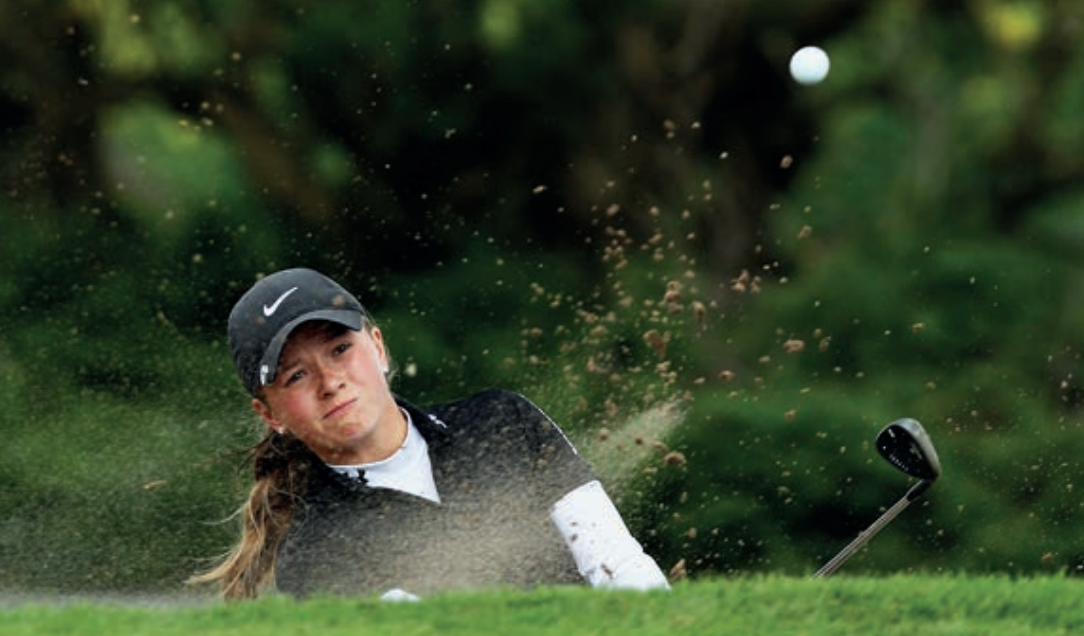
It was won in dramatic fashion by Scotland’s Hannah Darling, whose 40-foot putt at the last saw her pip Beth Coulter, who took a closing eight. She had to content herself with the Under-14s trophy, while Kim parred the last three to take Under-12 honours.
“The ladies course at Fulford is a par 74. They actually used all white tees and two of the yellow tees, so they played a longer course than normal.
“Our course record was 70 and we had a 14-year-old and a 15-year-old who shot five-under-par 69s on day one and day two. The standard was just incredible.”
If setting up an event from scratch was one obstacle, ensuring it could be played on a course of tournament standard was quite another – and would turn out to be a far more formidable challenge.
It’s difficult enough preparing a course in the north of England for elite competition in the early spring. Imagine how much more difficult that becomes when you’ve come off one of the wettest, and most relentless, winters of recent years.
 The Beast from the East, which dumped snow all over the country, took the headlines but was only part of the problem.
“There’s no doubt that, with about a month to go, things looked pretty grim out there,” explained Pearce.
“It was very much a winter course and there was no growth. It was wet like everywhere else. “The greenkeepers were probably about three weeks behind where they normally were in preparation for the season.
“But we were fortunate enough to have a dry spell. The sun came out for a good 10 days and the amount of effort and work that [head greenkeeper] Mark Mennell and his team put in over that really brought the course together.
“It went from being a winter course to a course that got really heavily praised by both The R&A and all the players as well, and looked almost as though it was the middle of the season.”
For Mennell, the build up was seven months of trouble.
“It was probably the toughest season we have had ahead of an early tournament,” he said. “We didn’t do any maintenance on the greens. All we tried to do was smooth them out but we were top dressing in between rain.
“On four of the greens, we did it physically by hand. We got our tractors and trailers as near to the green as we could and then we [wheel] barrowed it.
“We shovelled it and barrowed it from 20 yards away from the greens, onto the greens, and then physically did it by hand – instead of top dressing with the machine we did the others on.”
Mennell loved that, going back to the old school, but some parts of the course were so wet the team went out with hand mowers because they didn’t want to use the big machines in those areas.
The team spirit that brought them to the start line merely intensified once tournament week got under way.
“We worked on a morning and an evening during the tournament. We got here at 4.30am on the Monday right through to the Sunday.”
And if the greenkeepers put their heart and soul into the tournament, and bought into the new venture, so the members did as well.
“We had a waiting list of volunteers, which was incredible,” declared Pearce.
“We had 82 names down. We had to provide about 45 volunteers every day and it was a big ask. At first, I did wonder whether we would get that much interest from members but they fully supported it and enjoyed it.”
There are two further instalments of this competition to come but they are not the only events to which Fulford can look forward.
“We had already got a plan to develop our own junior golf and we secured the Carris Trophy for July this year and we thought that was going to be our junior activity this year. When the opportunity came to do a girls event at the same time, it has brought all that together and we are really proud to be pushing girls’ and boys’ golf this year. It’s a special year for Fulford.”
Pictures courtesy of Getty Images and Naomi Baker. Naomi is the first recipient of the Getty Images Sport Photographer Internship, developed in partnership with Women’s Sport Trust, Cerno Capital and Canon, to encourage women to pursue a career in sports photography.