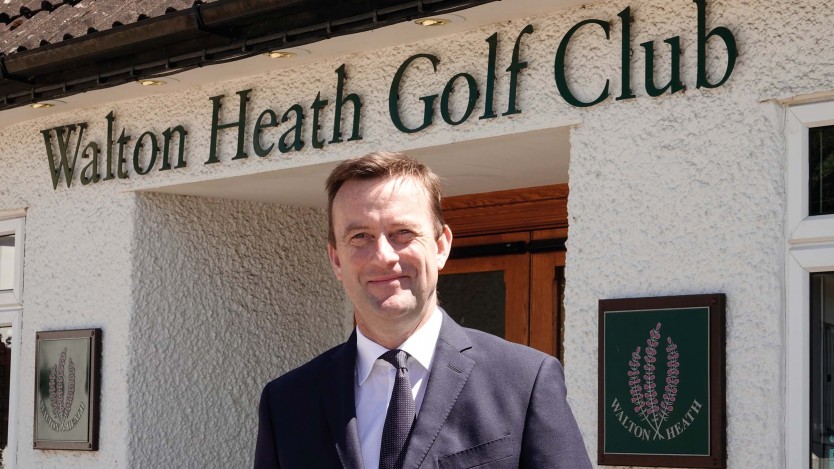
One of Britain’s most venerable courses, Walton Heath, hosts the British Masters next month. Golf club secretary Stuart Christie talked to Mark Townsend about the event, the club and the impact of the Ryder Cup…
How did the link come about with Justin Rose and how did you get the British Masters?
We’d had discussions with the European Tour over a number of years about the British Masters and when they rebranded it (the tournament) and had Ian Poulter, Luke Donald and Lee Westwood as the hosts, it rather fitted perfectly that Justin Rose wanted to come here.
 He has no great association with this club. He’s obviously a North Hants boy but North Hants, in itself, couldn’t host it. It isn’t big enough
and so on. I asked him (about Walton Heath). I said ‘why?’ and he said ‘I just love the place. I love the golf course’.
So it’s wonderful that he chose Walton Heath to host the British Masters and it is fantastic for us. We can’t wait, really. He has been down once and is coming down again to have a look at the course and give some ideas. His (previous) ideas were minimal – a few tee changes. Really, he is saying ‘look, I love it out there but do you mind thinking about this, this and this?’ They are, in the greater scheme of things, minor.
It’s ‘build a new tee here. Can you make that a little bit larger? Could we hit it off here?’ It’s not a lot else. So he clearly loves the place.
He’s got a good brain, hasn’t he? The way he talks about courses, such as when he’s at The Open…
He has. He’s very sensible and shrewd.
How big a job is this for you, logistics wise, compared with other years?
It’s ratcheting up now. Fortunately, I spent 11 years at Wentworth so I did over 30 Tour televised tournaments. This is not a breeze
but at least I know what’s coming and that’s the advantage. Am I worried about parking 5,000 or 6,000 cars? Yes I am but, equally, I have done it before and been involved. However, I am under no illusions.
There will be a lot of extra work and a lot of extra infrastructure. Yes, the European Tour are involved and dealing with most of it. We make sure the members are happy and make sure all the site stuff is correctly done. I have an advantage, having that history, but there is a lot more work.
How many members do you have?
We have around 950. Of the golfing members, 20 per cent are ladies, which is about the national average. We have about 80 juniors, which is a lot. We started a ladies’ academy a couple of years ago – because we recognise that we need to arrest any problems that are out there. We are pre-emptively doing that. We have changed our policy on entrance fees. Some two years ago, if you were under 30 you would have to pay x. You now have to pay y and it is a third less.
We’ve recognised that 30-year-olds are the next generation and that has been successful. It means the competitions are a bit busier.
How do competition days run? You’ve obviously got the two brilliant courses, but how would they operate?
The ladies have their competitions on a Monday, traditionally, and the men have theirs on a Saturday. In a normal club competition, you start at 7.30am and the last tee off time is around 3pm and it is rammed, which is great.
 Do you have to run separate competitions, concurrently, or does everyone play on the Old, for example?
Everybody plays the same golf course. The weekend ladies would play on a Sunday and then go, which is fairly standard within
golf, on a Monday but the men on a Saturday is full and really competitive.
We’ve got so many category 1 players here. It’s something frightening, like 80 or even more, so we are very competitive. But, equally as a club, you can’t just pander to the category 1. You’re a club and so it’s important that we care about everybody.
So if you just want a casual game on a Saturday you can get a game on the other course?
Absolutely. When there is a competition on then sometimes there is some pressure. But, basically, the pressure is off by 10am or 10.30am. With so many clubs, and I remember my time at Wentworth, Saturday and Sunday afternoons can be very quiet. It can be. It’s amazing, isn’t it?
The members must love watching their course on TV, and being talked about as a US Open qualifying venue. How hard is it to keep them happy, as a golf club with hundreds of people?
It’s a very good membership. You know when you go to some clubs, and you go in as a visitor, you get the eyes on you and the feeling of
being unwelcome. That is not the case here. As I have only been here nine years, I can still somewhat be an outsider. I remember when I
started, thinking ‘the members are genuinely welcoming’.
Some are more welcoming than others, of course they are, but they recognise that someone is coming to play on their course and they
want them to have a nice time. This is not a sound bite I’m giving you, that is the truth. They are genuinely warm. There is no
animosity – ‘this is our course, what are you doing here?’ – and, therefore, with that foundation, you are pretty strong.
Of course you are going to get complaints now and again but, really, it is a lovely club to work at with lovely members.
If someone said they hadn’t heard of Walton Heath, because it hasn’t been on TV for years, how would you like the club to be known?
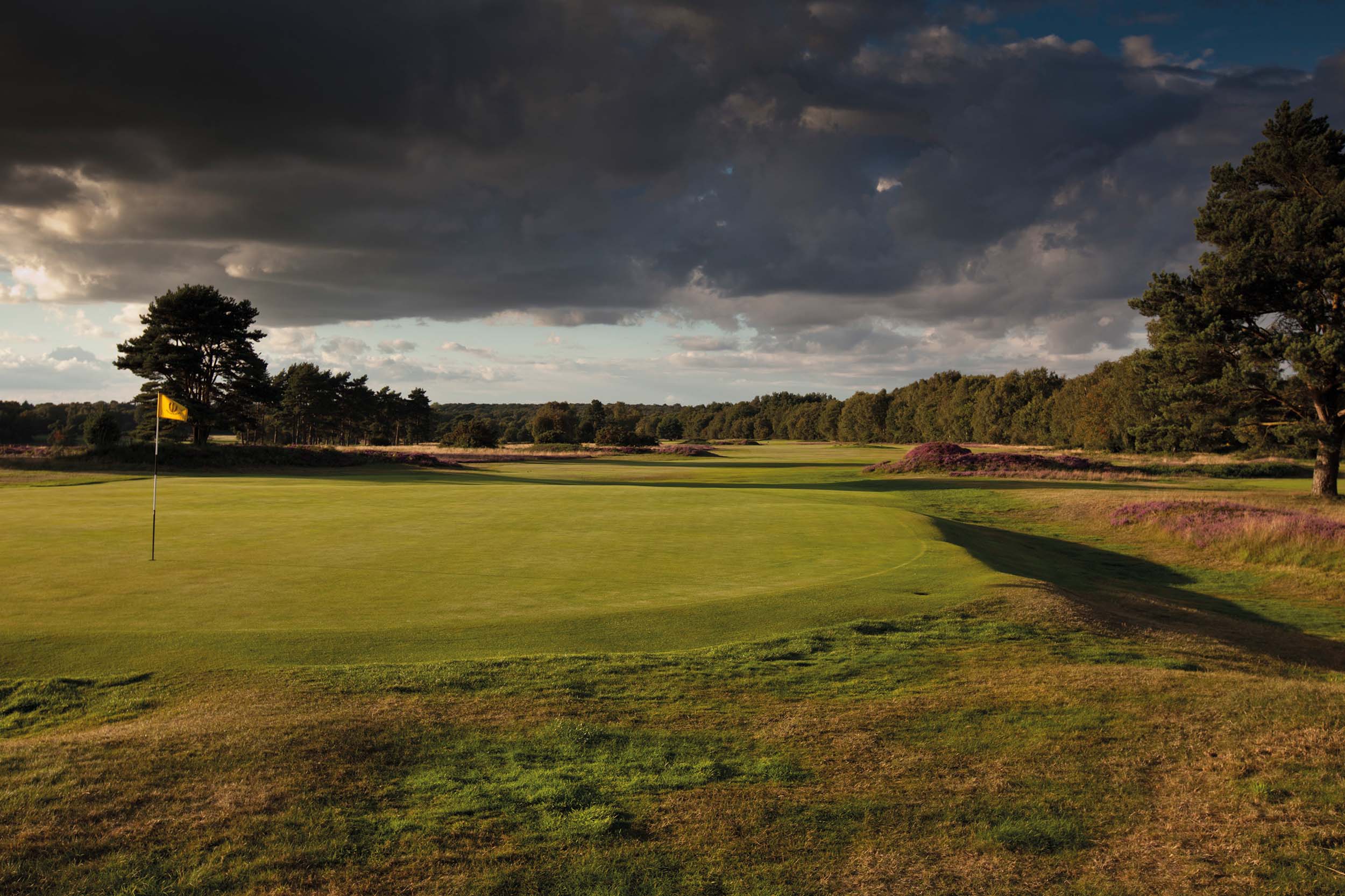
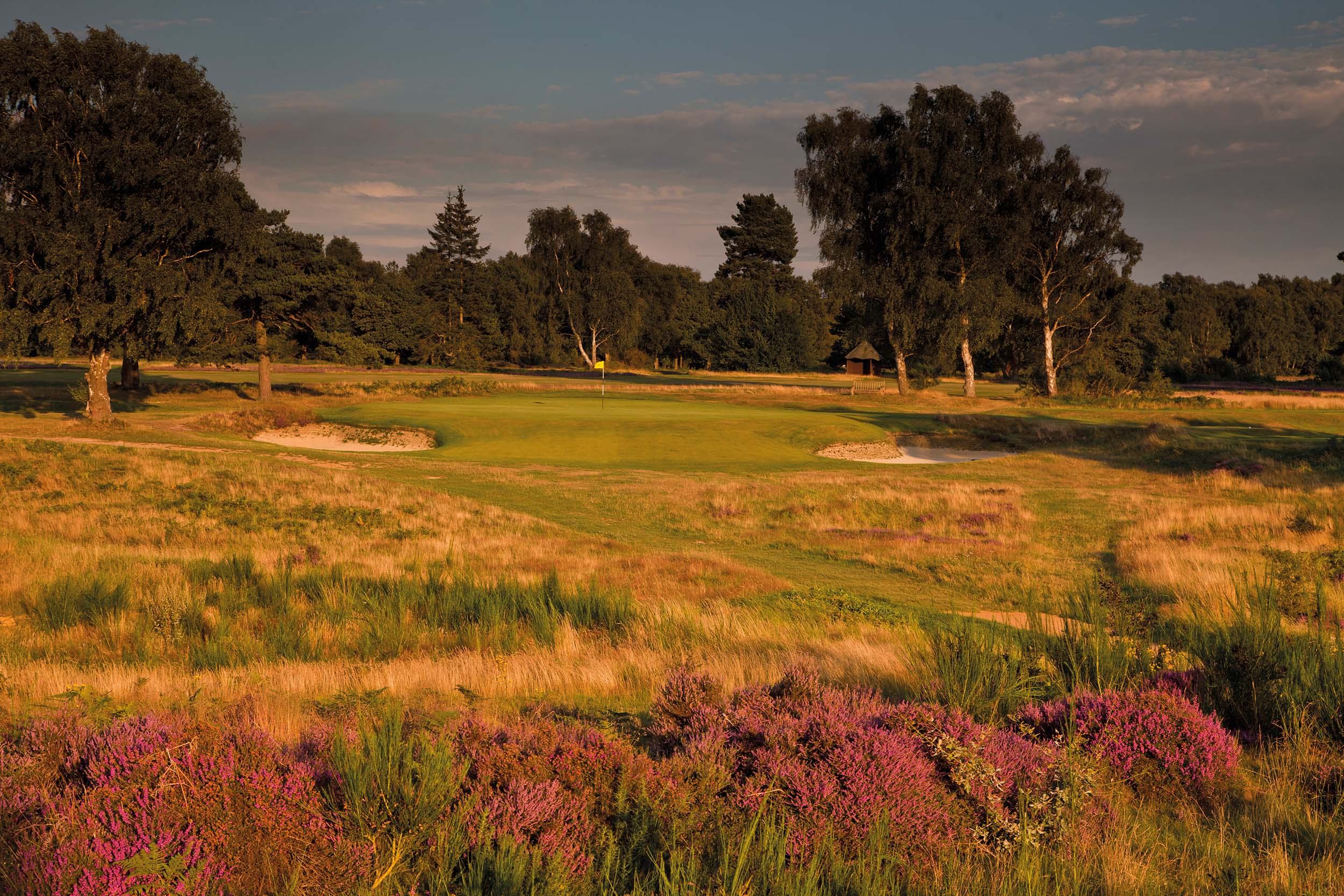
It’s a good question. Firstly, it has to be the quality of the golf courses We’re a top 100 in the world with the Old and a top 100 in UK and
Ireland with the New and without your golf courses you can give up. But as a club, (we want to be) one with tradition but that’s welcoming and also forward thinking. For instance, Sunday lunches, children under 12 come free. It is not a stuffy club. There might be a perception out there but it isn’t at all. There is no need for jacket and tie in the clubhouse, unless you are in the dining room after 12. It is a relaxed atmosphere but it maintains traditions.
There always have to be rules but the clubs that are going bust, going to the wall and struggling, are those who are hanging on to
some ridiculous archaic tradition.
You’ve been in golf a long time. To get away from the resort-type courses and play these old classic heathlands, how important is that for the Tour?
It’s very important. I worked for the PGA for eight years in the 90s and I always used to say that the pros would play down the M25 if the money was right and that’s not a criticism of them. That is true. For so many years, pros have gone to courses that perhaps weren’t the best but it was a financial decision for the Tour and I don’t blame them.
They said ‘we can go and play on x but you aren’t going to be playing for as much. We can go and play on y and you are going to be playing for more’. I understand the commercials I really do. But to come here must be wonderful for players. The players are playing a proper, traditional golf course and it’s testing them.
There was one pro, during the US Open qualifier that we had here a couple of years ago, who came up to the USGA official and said ‘thank you so much for continuing to play your qualifier on a course of this quality and tradition’.
They were grateful to the Tour and I think it’s fantastic for them to do it and to come here. The players, I am certain, will appreciate it.
How important is the Ryder Cup, staged here in 1981, in your marketing and selling of the club? How much would you play on that and the European Opens of the 80s?
The Ryder Cup came because The Belfry wasn’t ready. The Ryder Cup was 37 years ago. It is a wonderful thing to have hosted but it was another era of Ryder Cups.
Of course we play on the fact that we hosted it. The European Opens less so, but I think it’s two generations ago.
So how much do we play on it? It’s at the bottom of our letter heading but it was nearly four decades ago so this British Masters will give us a hell of a boost.
If the European Tour, and the Ryder Cup committee, said ‘we’re thinking about bringing it back to a venerable old heathland like yourselves. Could you host a Ryder Cup?’ What would you say?
I don’t think we could, for various reasons.
One: the finance wouldn’t work and that would stop it dead. I think you’d find any private members’ traditional club would be stopped dead on that. But let’s say, hypothetically, the finance did work. I’m not sure we’d get the crowd movement these days.
We expect 15 to 20,000 a day for the British Masters. The Ryder Cups are 30 and 40. I don’t think we could do it. I’m not a world expert, but I would say it would be very difficult to get the spectator movement.
We’ve got enough room to put in a big tented village and that sort of thing but I don’t think it would work.
Look at The Open and look at the disruption to the golf course.
I think it’s the same for the Ryder Cup. I don’t think the members would want it.
Obviously it’s not my decision.
It’s a board decision but, and this is completely hypothetical, I don’t know if they would want six months of disruption. There are so many reasons why not. That’s not saying it’s not a wonderful event. It will be fantastic at Le Golf National.
Are you hopeful the British Masters field, through Justin, and US Open qualifying, will be particularly strong?
I am hopeful. It’s a 120 start as opposed to, say, 156 at Wentworth. It’s two weeks after the Ryder Cup. The FedEx Cup has finished.
You could argue some might say ‘I don’t want to play, I want to rest’. But I think you’ve alluded to Justin Rose as the host and he will want to bring some good players, if he can. I understand that so I am hopeful.
I suspect what you mean is ‘will there be a couple of Americans?’ and I am hopeful. But I genuinely don’t know.
The course hasn’t changed much from 1981?
Not really. The odd bunker might have been reconfigured, and teeing grounds, but otherwise it is pretty much as it is. Is there anything material? Well, there’s the M25 but, even then, it wasn’t dramatic. The essence of your question is ‘is it a similar golf course to that played in the Ryder Cup?’ Yes, it is.
How did the Walton Heath Trophy, as it now known, come about?
It was known as the South of England Open Amateur Championship which, on reflection, is a long title. It started in 2005 and has been successful as an amateur event and it takes time to build things up.
But we thought ‘we’ll change the title’, for various reasons, and, obviously, the club’s name straight away is there. I think it’s probably a better title. Amateur golf is not well publicised. People aren’t interested in watching amateur golf and I do understand that. But when you see what comes out of amateur golf and Tyrrell Hatton and Danny Willett would be the obvious (previous participants), although there are countless others.
We held the Palmer Cup here in 2014, when Andrew Coltart won with the European team against the Americans, and at the time I remember not knowing a lot about the Palmer Cup. Jon Rahm played and, on the other side, Bryson DeChambeau. You also had Ollie Schneiderjans, Trey Mullinax and Paul Dunne, the defending British Masters champion.
The Trophy was the inception of two or three members and Michael Lunt, who died very soon after that. The trophy has his Eisenhower medal in the middle.
They wanted an amateur event and they thought Walton Heath had a duty to commit to golf and that’s what they’ve done. It’s now in its 14th or 15th year.
Walton Heath
Founded in 1903, Walton Heath has a rich and prestigious history. The first captain became King Edward VIII, while James Braid was the first professional – and stayed for some 45 years.
Their two courses, the Old and New, are regarded as among the finest in the UK and, in the case of the former, the world. The club staged the European Open from the 1970s to the 90s and witnessed one of the greatest American teams ever – an outfit packed with major champions – win the Ryder Cup in 1981.
Walton Heath host US Open qualifying every year, while the Walton Heath Trophy sees top class amateur talent descend on Tadworth.
They will host the British Masters next month.