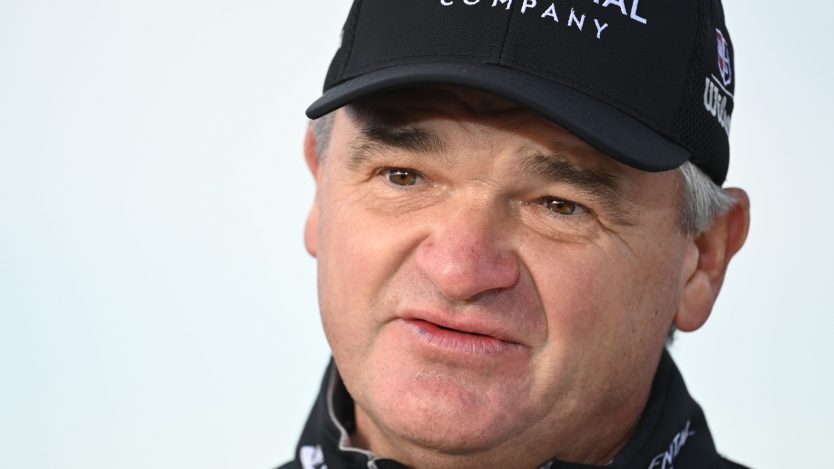
The European Tour and Ryder Cup legend opens up on independent golfers, the etiquette of the game and how he’s mentoring the next generation
He’s the major winner whose 4-iron for the ages brought him a Claret Jug, he was a key part of the European Ryder Cup team that pulled off what’s universally known as the Miracle of Medinah, and a veteran of more than 600 tour appearances in a career that’s spanned five decades.
What you may not know is that Paul Lawrie is also a golf club owner and – given how hands on he is – a manager.
His Paul Lawrie Golf Centre, in Aberdeen, boasts a 27-bay driving range and a 9-hole course that’s recently held the Scottish Junior Par 3 Championship.
Also heavily involved in the grassroots game through his Foundation, and his work with Scottish Golf, where he is a strong advocate of OpenPlay and a mentor to the nation’s elite men through the governing body’s national Performance Programme, Lawrie is well placed to look at the state of the game and what needs to be done to move it forward…
You own the Paul Lawrie Golf Centre. Tell us how that happened?
It was called Aspire Golf Centre before we bought it. We were members there when the boys were little, because it’s a beautiful 9-hole Par 3 course, that’s got a really nice driving range, and the boys used to love going there.
So we were members and I said to the owner one day ‘if you ever fancy thinking about selling this place, we’re looking for a home for our Foundation. We’re looking for a base for everybody to play and this would be ideal for us’.
A wee bit after that, he stopped me in the corridor one day, when I was walking through to hit balls with the boys, and he said, ‘the time has come for us to think about moving it on’. It came from that, really.
I went and got a couple of local business guys here, Stewart Spence and Martin Gilbert, to come on board with me and my wife and we set about buying it.
It’s very nice. We’ve spent quite a bit of money – upgrading it and making the facilities better.
The short game area is now out of this world. We’ve got Toptracer on most, if not all, of the bays. We’ve got a beautiful new big putting green and golf is in a big boom – so it’s doing really well at the moment.
It’s been a little bit of a struggle. Any business, obviously, is never easy. But, at the moment, it’s doing quite well.
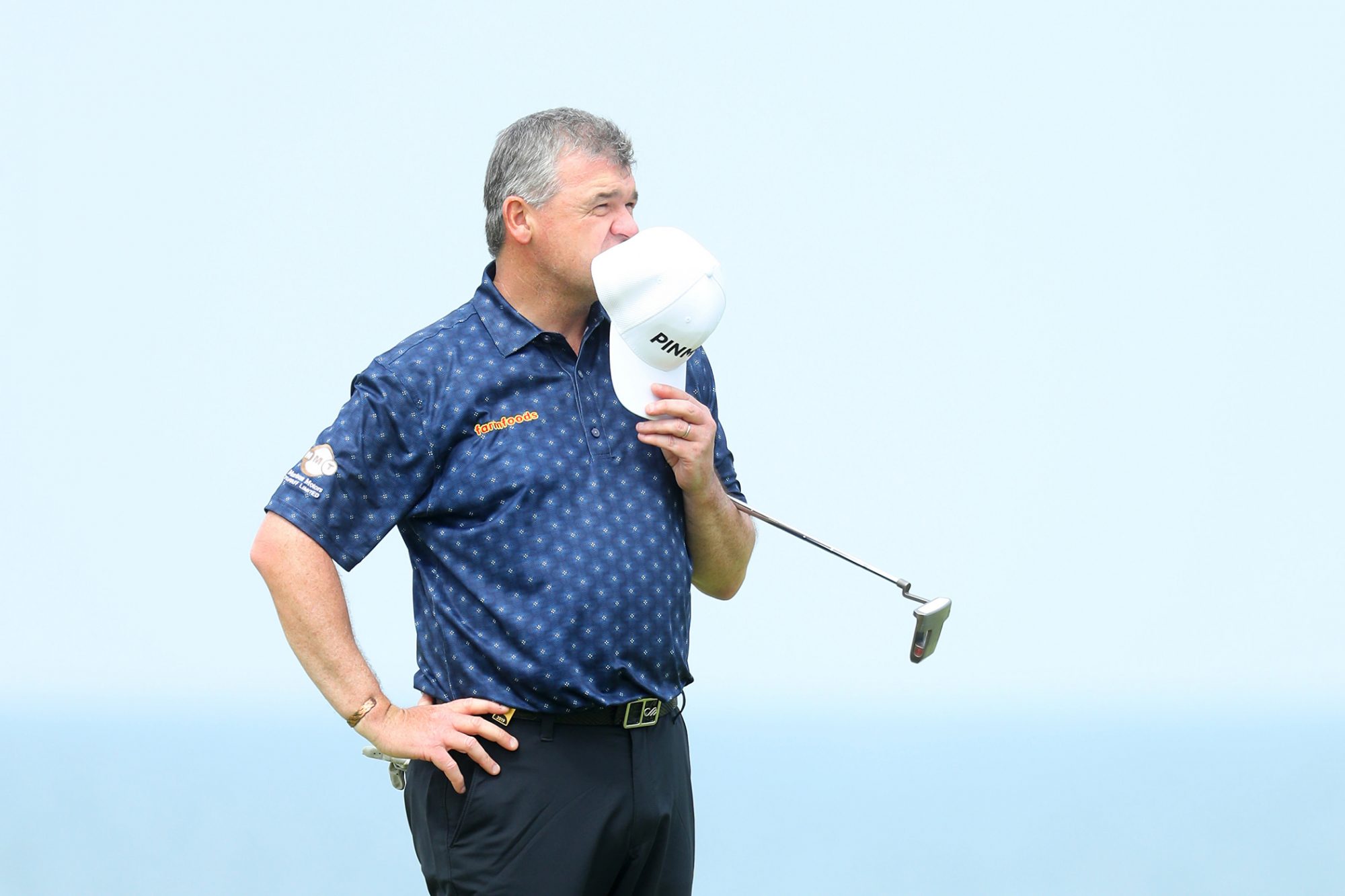
I imagine it’s a bit of a different scene, running a golf centre as opposed to being a professional golfer…
I’ve always had some really good advice from people who have helped me throughout my whole career, Martin Gilbert in particular, and more recently, Eric Herd from Farmfoods. They’re big business guys and they were always saying to me ‘look, you need to get some things in place. You’re not always going to be a golfer. You’re not always going to be travelling 35 weeks of the year playing top level golf. You need to have stuff that you can do when you stop playing – when you retire’.
We did that. In 2012, we bought the golf centre. We’ve had the Foundation for quite a while. We started our Tartan Pro Tour, last year. We now have a beer that is doing quite well. We put in place some bits and pieces that I could work at and spend a bit of time on when I retired. I’m kind of semi-retired now. I only play some Senior events, which are great fun on the Legends Tour.
The Golf Centre is a pretty special place…
Obviously we’re biased, but yes. My wife and I are there pretty much every day. We’ve got a fantastic staff. Craig Dempster is our director of golf, who does a phenomenal job for us, but I’m there every day.
We’re very pernickety about stuff that has our name attached to it. We feel as though we do things right. We don’t like it dirty; we like it clean. We like people to come away thinking ‘wow, that was a lovely place that I just hit balls at. How clean was it?’
That’s what we’re looking for. I came up through the PGA, so I worked in a shop for four years. I get exactly what members are looking for and what they’re not looking for.
It’s very important to us that the place is pristine, and it is. It’s absolutely gorgeous. We’re very proud of it. It’s a lot of hard work, but we get a lot of nice comments.
How did the centre come through the pandemic?
It was only a very short time it was shut really – compared to other businesses. If you’re in the golf business, I think you’ve actually came through this with flying colours, to be honest.
I understand there are a lot of businesses and a lot of people [who] have been really struggling. I feel dreadfully sorry for the people who have lost their loved ones.
But the business has been great. It’s unbelievable how it’s come through. We’ve had a pile of new members in the last eight months.
I don’t know the exact figure. But we’ve had a lot of people who have realised how cool golf is. You’re outside and it’s fresh air and the facility we’ve got is pretty nice and it’s not that expensive.
It’s only £330 a year to be a member and so a lot of people have cottoned on in the area that, while the course is in great condition, the staff are really nice and it’s maybe a fraction of what I’m paying at my own golf club.
The staff have all mucked in. They are a great bunch. That is important. Getting the right staff is very hard. But we’ve got a bunch now who work for each other, who are there for each other, who dig in, who get the job done and are proud to work there, which is very important to my wife and I.
You’ve been very vocal about making the game more accessible. How does the sport do that? What sort of things are you doing at the centre that’s helping bring juniors into the game and helping them get over some of these perceived barriers keeping people out?
I understand there’s a certain generation of golfers who were brought up differently with golf and golf rules. Wearing a shirt and tie to play golf isn’t that long ago, really, and I’m kind of the opposite.
I want kids to be able to wear what they want. I want them to have fun on the golf course. I don’t want to see the older generations scolding them, because they’ve got their trolley on a tee, or whatever.
Our golf centre is in immaculate condition. We don’t let people just do whatever they want. It’s not a free for all. There are some rules but, really, we’re not about that.
We’re about getting people in, getting fun, and wanting them to come back and play golf for the rest of their life. The Foundation has always been about getting people into the game. It’s not about major winners or golf professionals coming through from a junior.
It’s about club memberships for us. We want people to enjoy the game, to play it. We’re not bothered how good or how bad you are. We don’t care about your skill level.
We want you to come back. We want you to have a good time. We want you to tell people ‘That Paul Lawrie Golf Centre is a place I enjoy spending time at. I don’t get people telling me off when I’m doing something that I shouldn’t be doing’.
Unfortunately, we have rules and people at golf clubs that are still doing that to this day. We’ve got to go with the times. We’ve got to change. We’ve got to make it more accessible for people. It’s not [about] losing the whole values of the game.
For instance, If people want to play golf in jeans, that’s up to them. But I don’t understand how that can be comfortable – to play golf in jeans. I’m not a snob, as far as jeans are concerned, I just don’t see why you would want to play golf in jeans. If you want to: go ahead. If that’s what makes you comfortable, go ahead. But I don’t get why you want to.
So it’s not as though we just let them do whatever they want. But that’s what it’s got to be for us. It’s got to be fun. You’ve got to want to come back and you’ve got to want to play golf for the rest of your life. You don’t want some guy shouting at you and bawling at you because you’re doing something that really doesn’t matter if you’re doing it or not.
How does that change?
It’s been happening for a long time. Things are changing. Things are getting better. It’s just a matter of keeping on about it. [Recently] I played golf at Royal Troon [recently] with two sponsors of our Tartan Pro Tour and I took a video of me playing the Postage Stamp.
I was waiting for it happening, because I can see the trolley in the video behind me on the tee. And a guy put a comment back saying ‘trolleys shouldn’t be on the tee. That’s terrible etiquette’.
I don’t know about you but a trolley on a tee, it’s not something that’s going to change golf. It’s not something I would carp on to somebody about. My trolley is always on the tee when I play golf.
A trolley is not doing any damage on a tee. If some clubs don’t let you do that, that’s up to them. No problem.
But it’s that sort of mentality that we’ve got to get rid of, get out of the game, and it’s just so frustrating.
You’ve got to be careful how you go about it, and you’ve got to be careful how you say it – because everyone’s entitled to their opinion, everyone’s entitled to how they see it.
That guy is quite entitled to think you shouldn’t have a trolley on a tee, because that’s the way he was brought up with the game.
We just need to keep on about it. We need to keep making sure we get rid of the ones who see it the way they see it and try and let kids just make sure that they’re having fun. I think we’re getting there. It’s taking a bit of time, but I think we are getting there.
I’ve written about the insistence on certain dress codes and the point I’ve made, to some criticism, is that time will do the job in end. No one lives forever…
I’ve got a deal with Druids Golf apparel. I put a picture on of me wearing my hoodie the other day and the number of comments from people about my hoodie…
Why can’t you wear a hoodie to play golf? I don’t get it. It drives me absolutely crackers. I’ve got to be careful because I don’t want to be coming over as someone who is preaching to people and if people don’t think I should be wearing a hoodie, they’re entitled to their opinion.
But, believe me, if I want to wear a hoodie, I’m going to wear a hoodie playing golf – because kids wear hoodies and I want to make them comfortable.
Now, I’m not saying that – at 52-years-old – I particularly want to wear a hoodie. But if kids see me wearing a hoodie, and they think ‘if he can do it, I can do it’ and they’re more comfortable, that’s what I want. I want kids to feel as though they can wear what they want. That’s what that is about.

Accessibility to the game is one of the reasons you publicly backed OpenPlay – Scottish Golf’s independent golfer scheme. Give me a sense of why you’re so keen on the scheme and why you called it a ‘game changer’?
When I heard about it for the first time, I was pretty excited about it. I think it’s what’s been missing a little bit with the game.
We’re always going to have people who are going to want to be a member of a golf club. They’re always going to want to pay the fees to support that club. They play three or four times a week and they get the value out of the membership because they play a lot of golf.
What I don’t understand, for years, is that we’ve had people lost to the game, and money to the game, because they can’t afford a full membership, because they don’t play enough golf and they haven’t got enough time.
We’ve been crying out for a scheme and a system that lets people who only want to play a certain number of rounds a year but have a handicap. OpenPlay does that. It ticks all the boxes for me. I understand people getting a wee bit upset about it. The traditionalists, the people who are [saying] ‘it’s killing golf clubs’.
[But] People aren’t always going to want to be a member of a club and there are millions of people who happily will pay their £5.99 a month to Scottish Golf and a full green fee to a golf club to play five or six rounds to receive an official handicap.
The other reason I thought it was brilliant was because I do a lot of golf days a year. I do my golf days for 18 people, and I split them into six threes and I play three holes with each group.
Now of that 18 people, every single golf day, there are at least four or five of them who don’t have a handicap, who are embarrassed they don’t have a handicap and they can’t enter stuff. They want to, but they don’t have the time.
When they told me about OpenPlay, I thought ‘there’s so many people I play golf with every year who will do this scheme’.
Every time an OpenPlay independent golfer goes to a golf club to play, they are paying a full green fee to that golf club. That golf club is receiving more money than it would have done before.
I don’t understand the logic of ‘you’re killing the game. You’re going to kill golf clubs even more’. It’s the opposite. I see golf clubs making money from this scheme that they never had before. There’s money going out of the game that shouldn’t be going out.
But everyone’s entitled to their opinion, same as before. You’re going to get people that are for it, you’re going to get people against it.
As a golf club owner, I’m 100% for it – because that’s going to give my golf club more chance of not losing money. If I can get people to come in and play in a medal, even 20 golfers a week, that’s a fortune to a place like ours.
Do you see it as a foot in the door too? They play competitive golf, they enjoy it, and you can think about getting them into membership of the club?
it and then realise how good it is again to be a member of a golf club. How much fun it is depends on the golf club, obviously.
But I see it as a stepping stone to full membership. It’s an opportunity for golf clubs to showcase what they’ve got. It’s an opportunity for golf clubs to treat independent golfers properly, treat them in a way that they’re going want to come back and join the golf club as a full member – because they’re enjoying it so much. Let’s hope golf clubs see it that way. Time will tell. But the New Zealand pilot scheme, was it 20% of independent golfers then became full members of a club after doing the scheme for a year?
If that kind of number happens in Scotland, that’s why I think it’s a game changer.

I wonder if some of the concerns people have about golfers leaving membership is about the perceived cost – or lack of – of green fees rather than they want to leave…
Maybe and time will tell. It’s all very well, myself, and Martin Gilbert and Catriona Matthew and Scottish Golf telling everybody how good it is.
We might all be wrong. We don’t know. Let’s see how it goes. But I would be surprised if it wasn’t a success. I’d be surprised there was a pile of people who don’t do it that convert into full membership.
That links into the Scottish Golf Performance Programme where you and Catriona are mentors. It’s a very different scheme and approach from Scottish Golf – leaving coaching to individual coaches. You seem to have had a bit of early success?
I would be surprised if that was an awful lot to do with what we’ve done already. We’ve only just started. I don’t think we want to take any credit for that. I think these golfers have obviously been good for a while.
But where it came from was that, for a long time, I thought it was quite confusing for kids to have their own coach and then have a coach when they went to national coaching and seeing and hearing two different views.
I think it’s difficult for the coach too, because they feel as though they can’t say anything. When they approached me about it, I said ‘I’m happy to help out. I’m happy to do it – as long as you don’t want me to be a technical coach, because I don’t want to do that. I’m happy to speak to the boys and let them know the way I’ve done it and my experiences of it’ – both good and bad, because it’s not all been good in my career. There’s been some terrible times like everyone else.
I think I’ve got a lot to pass on and a lot to give. Just being around people who have been successful at something, and who have also struggled at something, you learn. You learn both ways. That’s the way I came at it. I spoke to them about Catriona and I suggested she do it as well: Catriona would do the girls, and I would do the boys. She loved the idea straight away.
She’s obviously not playing as much as she was before, similar to me, loves our country and wants to help out. It’s going really well. I think we’re both really enjoying it.
We’ve both pretty much played with everyone in the programme and seen them all on a couple of weekends. Time will tell how it goes. But we were both excited by it and I think it’s the way that it should be going.
Do you subscribe to the GCMA’s weekly E-newsletter? Make sure you’re not missing out on the latest in the world of golf club management. Click here to join in.