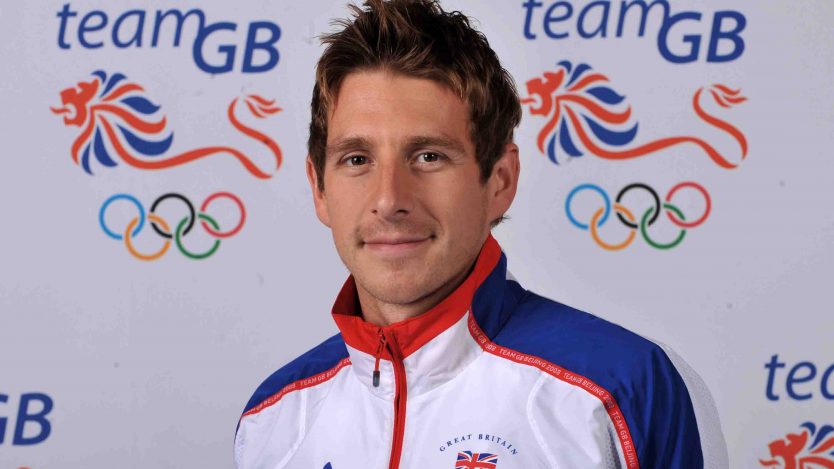
Ahead of his closing keynote speech at GCMA 2021 Conference, double Commonwealth gold medal swimmer Chris Cook explains how he wants to inspire delegates to reach new heights…
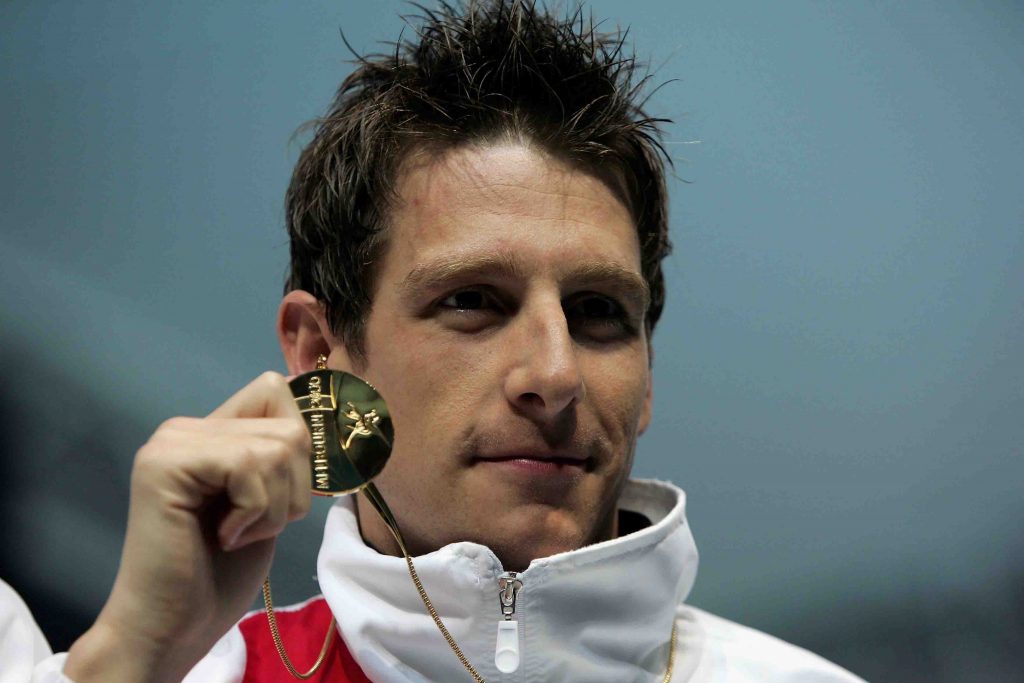
After competing for Great Britain for nearly 10 years, a career that brought him two gold medals at the Commonwealth Games and a spot at two Olympics, Chris Cook turned his attentions from the pool to the world of business.
He now works with companies and organisations to help them achieve, follow their passions, and develop an elite mindset.
An inspirational motivational speaker, Chris will be the closing keynote speaker at GCMA 2021 Conference at Wyboston Lakes Resort next month.
Ahead of his address, titled Two Lengths, we caught up with him to get a taste of what delegates can look forward to.
Remember, you can book your place at GCMA 2021 Conference by visiting our dedicated website here.
Chris, we’re looking forward to hearing you speak at GCMA Conference. Give us a flavour of what you’re going to be talking about…
I’ll be sharing my story – Two Lengths of the Pool. As I went through my journey to become an Olympian and strive to the very top, there were so many lessons I learned.
The biggest was just the power of keeping things simple. I take the audience on a journey, warts and all.
I’m just a normal lad. I’m an average guy. There’s nothing exceptional about me and I think that’s what gives more weight to the story. That’s what the feedback’s been – that it was really humble and inspirational but made me feel like I could do something too. That’s the flavour of what I talk about. I share my story in the hope that other people go ‘well, if he could do something like that, what could I do?’
You say you aren’t an exceptional person and yet you did exceptional things. You swam at the Olympics, the World Championships, the European Championships. You won medals…
I’ve never ever felt exceptional, but when I look back there’s been some exceptional moments. I always remember my sports psychologist saying to me, ‘if we want something exceptional in our hands, we have to be consistently exceptional everyday first’.
I think there’s this massive misconception in the world that we can just go out and get it and have it tomorrow. Some things just take time. They take pain and mastery can be really boring.
That’s the one thing that I’ve learned throughout my time building a business. I’ve got a learn to swim business, I’ve got a coaching and speaking business, and I feel like a lot of my time is spent repeating and banging the same drum constantly.
But if you want to be world class at something, that’s what’s required and it doesn’t change with time.
You’re going to talk about the power of keeping things simple. People understand the concept but if it is simple, why aren’t we all doing it?
We often get caught up with that – ‘if it was that simple, why aren’t we all doing it?’
That’s what people do. They look over the fence and they say, ‘well they’re not doing it so it must be complicated’. We don’t question it. We don’t quibble it. We very much follow a herd and a crowd.
Think about how we were schooled. We were schooled to sit there, be quiet, and listen.
Getting out into the world is the exact opposite. It’s about getting out there and creating something.
I genuinely believe there are two people who emerge when they’re chasing their dreams. There are people who go at things with a ‘find’ mindset, and there are others who go out with a ‘create’ mindset.
The more and more people I work with, and coach, and speak with, It’s the ‘create’ that is winning every single time – those people who feel that inspiration and act, even though they feel like the imposter, even though they feel like ‘well, I’ve not got experience in this’. They just take action.
We’ve all been in that position before. We get caught in that information trap where we go out on a quest and get some information but we do nothing with it. It’s the implementation of that information that’s the most important part. That’s where I feel a lot of people get trapped.
How difficult is it for you to coach people to change this mindset?
It can be tricky and it is different challenges. I always say to people, ‘once we shine a torch on your challenge, face it. That’s the bit you’ve got to do, just face it every day’.
It’s the sum of small actions taken on a daily basis that break down something big. That can be tricky and it can be very different from person to person.
But the exciting thing is watching them grow and learn and develop. Probably the most startling thing for me, as I’m coaching people in business, is I’m starting to see that most people know the answer to the questions they’re asking but, because they’re in a problem mindset, they never find the solution.
The coaching and mentoring really helps people to step into a solution mindset, or almost judge it like it’s not them. That’s the exciting bit for me. It’s very easy to judge someone else’s story, it’s very difficult to judge your own.
Presumably you’ve had to learn this the hard way, through success and failure?
Obviously embracing failings is a really important part of the process. There’s a couple of questions you have to ask yourself at the back end of when you go through something like that, or when you’re going through it.
There’s a quote I read a couple of months ago that said something along the lines of ‘clever people want answers, smart people ask better questions’.
It’s that analogy. When we’re going through these moments if we can ask ourselves ‘what am I here to learn?’ That’s a really important question to just ponder on.
Whenever we go back out and start again, a lot of people drag the baggage with them. Couldn’t you just see that as experience turned into wisdom?
It’s switching the language up a bit, framing it in a different way for the mind to digest and problem solve because that’s what it’s there to do.
Whenever I hit failure, the big issue I had was I attached myself to it. I was spending a lot of time thinking I was the failure – because I was the common denominator.
But when I started to look at it like it was just something I failed at, it was something I tried and didn’t get to work – it was a pushback – it then lost its power.
That’s the shift. It’s when people can move away from attaching themselves, attaching their identity, to the failing thing in front of them and say [instead], ‘that’s interesting. I wonder what it’s here to teach me’. You get a whole different set of responses.
Going back to your keynote speech at Conference, you talked about taking the audience on a journey. How are you going to do that and what are some of the key themes you’re going to divulge?
I’m going to go right back to the start, following that inspiration, and not losing that sense of wonder. I feel as though we get to become adults at a certain stage. We’re told to grow up, get a proper job, and all those things.
I try and buck the trend with people and say, ‘look, keep that sense of wonder’. I don’t feel any older than nine inside my head!
While that brings on some imposter moments for me, I still have this sense of wonder and this sense that anything’s possible.
So I take the audience on the journey but I take them through the warts and all. I don’t just share the medal moments. I’m there to share some real highs, and some medal moments, but what I really want to take them through is that when we’re going through these tricky patches it’s a story. The story we tell ourselves is the most important conversation we’ll ever have because it’s that which frames up your next action.
I’ll also be sharing those lightbulb moments when I realised I was massively over complicating it and, actually, the thing that was really getting in the way was my super ego.
We’ve all got one, and we all need one. Ego’s a good thing, but a super ego isn’t. It’s things like, ‘my job’s a bit tougher than that’ [which] starts coming out when you ask people to keep it simple.
But, when you drill down underneath it, often it’s because they’ve overcomplicated the process. The last thing I always say to people is ‘if you can’t explain your job in one line to a five-year-old you’re over complicating It’.
So how do you translate your skills to a golf club management business? Are there universals in everything we do, whether Olympic athlete or running a golf club, that we can learn from?
Absolutely. In the last 12 years myself and Simon Hartley, my sports psychologist, have been teaming up to work with companies. The message is always really loud and clear. What is it that’s serving you right here and right now?
What is it that you’re doing that you’ve always done that you cannot unequivocally say is helping?
Once you know your two lengths, once you know your mission and once you know where you’re heading, those questions of what’s helping us get there become much clearer.
I’ll never forget doing some work in the NHS. I asked a roomful of pretty high workers ‘what’s your mission statement?’
They all start flicking through the files, ready to get this long-winded mission out. That’s where I paused and said, ‘no, I asked what your mission was. What’s your one liner that you know that you do that contributes to the overall mission? I don’t want the statement. I want the inspired action’. There’s a big difference, because that’s where we lose sight on a daily basis.
Are you looking forward to Conference?
I am. We all face massive challenges. And what I heard from the people that are running the Conference was there is a big challenge in golf.
I think the world is changing thick and fast. It’s only going to get faster. So I do think it’s going to benefit those people, organisations, groups, and coaches that are knowing exactly where they are going.
That’s the bit that’s exciting for me. I feel the Conference is asking some pretty hard questions and I love sharing a space with people like that.
Chris Cook
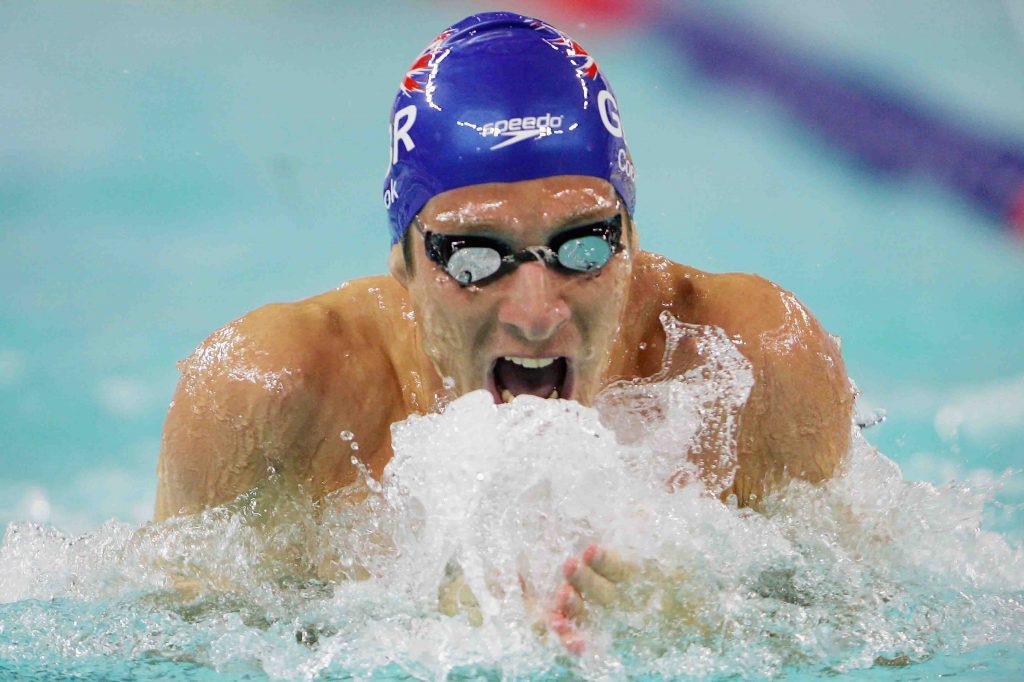
A double Commonwealth gold medallist, a World Championship bronze medallist, twice Olympian and the first British male to break 60 seconds in the 100m breaststroke, Chris Cook had a hugely successful swimming career.
Competing for Great Britain for nearly 10 years, he competed at both the Athens and Beijing Olympiads before hanging up the trunks and turning to business.
To learn more about Chris, visit his website at chriscookgb.com
Check out the full programme from GCMA 2021 Conference, and book your spot, at our dedicated website here.