The stark situation in recruitment and retention was laid bare by GCMA, BIGGA and England Golf at BTME…
“We’ve got a big issue in front of us”. That’s how GCMA chief executive Tom Brooke described golf club staffing at a prestigious conference.
Speaking at BTME, where he was a panel guest in a discussion on the challenges of recruiting and keeping staff in the industry, Brooke said: “We can talk as much as we can about member retention, and golfer retention. But if we don’t have great people leading golf clubs – as golf club managers, hospitality staff, head greenkeepers and greenkeeping teams – there won’t be anyone there to provide for the increase in golf that we’ve seen over the last two years.”
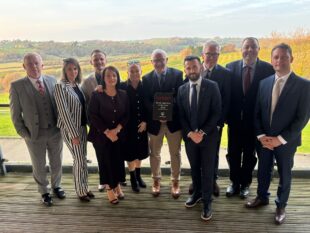
Brooke was talking about the issue with BIGGA chief executive Jim Croxton, England Golf’s chief operating officer Richard Flint, and Rhett Evans, chief executive of the Golf Course Superintendents Association of America.
He said the GCMA was seeing double the amount of recruitment advertising coming through their channels compared with two years ago.
“Without staff retention, we are not going to achieve the member retention targets that we’re setting out for. It’s an issue throughout golf clubs,” he explained.
“I’ve had numerous conversations over the last couple of weeks with golf club managers, and others in the industry, about the challenges but also some of the solutions they are trying to find and trying to navigate their way through.
“Certainly, at greenkeeper level, there is a noticeable gap, but we are seeing the same at club management as well.”
Brooke added that two interesting factors had arisen out of the pandemic, the first being those managers who had been looked after by their clubs and now felt a sense of loyalty to them and didn’t want to risk moving where that might not be the case.
“But equally more concerning for me is the amount of club managers just walking away from the industry, or walking away from their clubs, because of mental health issues, wellbeing issues, lifestyle challenges, and wanting to find a career that is less challenging, less demanding, with less pressure on personal time and less impactful on mental health and wellbeing.
“That’s just becoming so much more of a focus for us, as an employer, employee, representative, and should be for any employer in any business.
“That’s something we need to be a lot more aware of and, between the home unions, ourselves, we need to be really talking to club boards, club committees, and club owners about how they factor that into their employment strategies and training and development opportunities.”
Leading the conversation, Croxton said employment statistics showed that people, particularly in the 16-24 age bracket, were being far more selective about where they work.
He said at the end of 2021, there were 1.2 million job vacancies in the UK – “a huge amount” – and said there was a certain issue of supply and demand.
“We’re now in a market where the employee is king and we are struggling to fill these roles in the industry”.
He added: “The reasons for that, I think, are reasonably clear. If you’re working in hospitality and leisure, you’re working in somebody else’s leisure time.
“Therefore, you are working in unsociable hours. Traditionally these have been roles that are lower paid. I think we have seen, particularly post pandemic, people reviewing their work life balance.
“We know that there are jobs out there where you can get paid a lot more, and we know that people are choosing not to do some of the jobs that we’re offering them.”

And he concluded: “We’re in rude health as a sport, and we’re in pretty poor health, as far as I can see, in terms of having people in golf clubs to meet the demands of these new golfers.”
Flint, meanwhile, said there had been a 90,000 increase in membership in England over the last 12 months – a rise of around 14%.
“Golf clubs are in a healthy place. There are waiting lists. Financially, golf is in a good place,” he said. “But the next 12 to 18 months, as we all know, is going to be a challenge in terms of squeeze on disposable income.
“Those that have chosen membership now, will they choose that in 12 to 18 months’ time? So retention from a golf club’s point of view is absolutely critical but the point about that, from a financial perspective, is now we have a moment in time as an industry, as golf clubs, to invest in our workforce and to support the workforce.
“When we at England Golf talk about workforce, of course the greenkeepers, the club managers and coaches are important. But we also have to support the volunteers.
“There are around 46,000 volunteers within golf clubs across England. Without any of those volunteers – be it organisers or parents – the game wouldn’t exist at certain levels.
“The reality here is how do we get that balance between a paid workforce and the volunteer workforce? That’s a challenge for us and a collective voice is absolutely critical.”
Earlier, Evans said the situation in the UK was mirrored in the United States, where he said 47 million people quit their jobs during the pandemic.
“It’s time that we reset this,” he said. “And we’ve got to change the narrative. Many of us who grew up in this industry have that badge of honour that we were the ones that got up early, we were the ones that worked on Christmas, we were the ones, we were the ones, we were the ones.
“We feel some obligation to pass that along – that you’ve got to receive that same badge of honour and courage. Society now doesn’t want that badge. They don’t. That’s not what they are about.”
Evans said the industry in the USA was coming together – greenkeepers, PGA Tour, LGPA, PGA of America, club managers – in a marketing programme called ‘Make Golf Your Thing’.
“This is now an opportunity for us to share with golfers, non-golfers and potential employees that golf is a great game. It’s fun. It’s outdoors. It’s all the things that we enjoy about the sport and start to lead with that – not lead with ‘it’s bad weather. You have to work long hours. It’s cold. It’s dark’. Let’s start accentuating the positives because there are so many positives.
“For that to work, though, we’ve got to – as leaders in this business – become more flexible. We’ve got to do some things that inspire folks to stay on.”
The panel looked at what could be done to meet the challenges, including sharing success stories better, training for committees and volunteers and more ‘prevailing’ wages.
Evans said: “Sometimes it takes a crisis to create that change. We are going to have to go through a significant disruption for business models to change.
“I know a lot of us don’t want to hear that. But, unfortunately, it takes time for those individuals referenced to understand that if we’re not protecting the greatest asset of our facility, the golf course is going to eventually suffer.
“So we’ve got to pay prevailing wages and we’ve got to put our resources and our time and attention into that operation.”
He added: “Supply and demand is a principle that is real. As they continue to not fill those jobs, and they start to see the effect on revenue and the condition of the golf course, they’ll start to realise ‘we have to make those changes’.”
Brooke continued: “The reality is we’ve got 2,500 small to medium sized businesses in the UK and, depending on their governance, there is a huge range of leadership styles and management structures.
“Trying to get one voice and enabling a succinct message to help with this challenge is something, collectively, we’re going to have to take some real responsibility for.”
Do you subscribe to the GCMA’s weekly E-newsletter? Make sure you’re not missing out on the latest in the world of golf club management. Click here to join in.