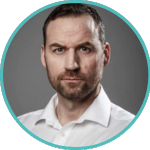
Foremost Golf play a huge role in clubs but how much do you know about the company that’s so important to the work of many professionals? Managing director Andy Martin reveals all…
They’re a key part of the golf club, supporting nearly 1,000 PGA professionals. Foremost Golf are the largest buyer and seller of golf products in the UK, and their combined membership represents 25 per cent of all UK golf sales. But they also do much more.
Their Elite Marketing Programme – ranked number one in digital golf retail marketing – helps PGA professionals and clubs engage better with customers, whether that’s through digital newsletters and websites through to point of sale in the shop itself.
How much, though, do you know about the High Wycombe-based company and what they do to support clubs?
If you’re shaking your heads at this point, we sat down with Foremost Golf managing director Andy Martin to help you fill in the gaps…
Tell us about Foremost?
Foremost have been around since 1984, when we would have been referred to as a cooperative buying group.
That’s our heritage and still a big part of what we do but, in the last 15 years, we’ve moved to help our members by providing strong customer communication and engagement systems that benefit not just the golf shop but the golf club as a whole.
We’re a support engine that sits quietly in the background behind a golf club shop and often resident PGA professional.
Some consumers will see the odd bit of Foremost signage around a golf club, but our main job is to sit in that background and help the golf professional.
We were formed in the Bucks, Berks, and Oxfordshire region (BB&O) and, to cut a long story short, we’ve grown quickly since then and now support 980 PGA Professionals and golf clubs across the UK and Ireland.
To give you an idea of the scale of the group, we now have a representative turnover of £175 million across those club stores.
You say you sit in the background, but you support golf professionals in a number of ways?
Absolutely. We support our members in all the background areas of the business you’d expect but also a comprehensive tool-box of services which includes our leading digital integrated consumer marketing system EMP (digital through to store marketing), free business consultant advice, Central Payments & Invoicing system and even an E-commerce solution which means if customers don’t see a product they want in the club shop, they can order online and have it delivered either to their shop via our ‘Click & Collect’ service or direct to their home.

We’ve also introduced an Online Lesson Booking system, which has been a revelation in saving time not only for coaches but also for golf club members getting access to lesson availability.
The unique ‘Central Invoicing & Payment System’ sits in the background of a member’s business. No one else offers this service and we have a finance team of experts that are there to support our members with any admin queries.
This support team will deal with any supplier invoice disputes so the shop manager or professional can get on with their day and other tasks at the club. This is all orchestrated through our bespoke and easy-to-use ‘Online Document Manager system’. This service on average frees up half a day a week for the shop manager or golf professional, so they can spend their time more effectively – being front-of-house with customers, taking lessons, fitting clubs, or spending time in the business.
That’s in the best interests of both the retail business and the golf club’s business. Our team of business development consultants (BDCs) offer an expert service out on the road and they cover everything from business plans, financial plans, store layout, to wider business advice.
However, in the last 15 years, the company has now moved into supporting its members and clubs with state-of-the-art digital marketing solutions that communicate with customers remotely but also now co-ordinate with solutions at the store and club.
The Foremost group’s Elite Marketing Programme supports members with a complete tool-box of digital solutions, including a modern e-newsletter, personal website, video content, social media solution, exclusive retail campaigns, In-store automated video monitors and an online lesson booking system.
The programme is sophisticated but the core principle is that it provides multiple touchpoints to engage with customers at the club. Every EMP club also has a personal ‘EMP marketing editor’, who is also there to offer support and advise in every aspect of promoting the business across the spectrum – from golf club events to weekly or long term planned retail offers.

What makes a good golf professional in your view?
That’s a great question, and I would look beyond the obvious answers…great golf coach, club fitter, good retail proposition – we should have that covered.
I would say the key has to be ‘retention’ and especially in the situation that we as an industry now find ourselves. Our own Q4 2021 club membership audit showed an increase of 12.5% in club membership numbers from pre-pandemic levels.
A good professional has to be one that helps and contributes to retaining golfers in the game and as members at their club.
For our part we look to provide the tools to help this objective by supporting golf customer engagement. A good professional helps the golfer ‘Enjoy Better Golf’ and that isn’t just in hitting better drives and approach shots but helping to foster friendships and communities.
How?
By putting like-minded new members together into the numerous club WhatsApp groups that exist and swindles so that the golf member’s relationships with the club goes deeper than just golf.
It is also important to maintain good communication channels about the opportunities that are available across the club, not just in peak season but throughout the year.
A good golf professional is one who’s integrated in the golf club and works with the whole golf club team to help it meet its objectives. This is certainly an area that as a company we have worked hard on to help our members communicate the extensive expert golf services they offer to their customers.
We’re all on board this ship together and, in the golf club, the golf professional is an integral part of that team. The pro and his or her staff are often the go-to person at the golf club.
They’re frequently the first point of call when golf club members pop in to grab a scorecard or a coffee, and they’re the person you probably see first and last when you visit your golf club. If you can build friendships and communities within the golf club, that is a massive contributor towards membership retention.
So how do Foremost engage with influencers and decision makers at clubs, such as managers, and how you can you help with the smooth operation of a club?
I believe a good golf professional plays a massive part in helping a golf club with its aims and objectives. The pandemic has obviously seen golf participation rise, but there’s a real risk we lose some of that growth.
Perhaps it’s inevitable that some of those new players drop away, but golf needs to make the most of that shot in the arm and our Elite Marketing Programme can be pivotal to retain that growth.
We’re looking at things holistically. If the golf club is doing well, the golf professional will do well as a result. We have some of the best professionals in the industry out there, but their success is often defined by the state of the game and the membership at their club. As I say, we’re all on the same ship here. For our part, our Elite Marketing Programme is all about helping that engagement with the golfer.

A Foremost Golf pro has a back-end portal (An EMP ‘Gateway’) where they can manage all their digital marketing but also enter what’s happening at the club and communicate with their members.
Importantly, it’s not just the fact that he’s got a new TaylorMade Stealth driver (other products and brands are available) that’s just arrived, it’s what we call the ‘local community’ engagement e.g. the silver birch tree that has been cut down behind the 3rd tee – because the greens committee are trying to get some more light to the tee – and that the blackbird nest in that tree has been moved to somewhere else on the course.
These type of course updates, course maintenance, club and members’ news, are what interest many in membership communities, and that’s why we have produced EMP technologies which means the communication platform we provide is personal and bespoke to every club professional.
For the end-user / golfer we even provide this by individual ‘profiled’ user so lady members receive product and coaching content that is relevant to them and we also do this by the standard of golfer – i.e. handicap – so readers get articles that are appropriate to the individual.
These aren’t Californian algorithms but in the 21st century if you want to engage with the customer it has to be more relevant. They’re personal, and they are bespoke to each and every club.
On the retail side this means that product banners and feature articles are digitally populated and based on the what the retailer stocks – i.e. by retailer brand or supplier selections/choices for their store. Going back to the ‘local venue or club’ content and the fact the greens staff are tining the greens, there is bunker work going out on the course, that there is a club event coming up, the Captain’s Drive-In – those are all relevant to that community and contribute hugely to the overall customer engagement.
You might look at that and wonder, ‘Well, how does that sell golf clubs or lessons and the other commercial aspects of what a golf pro does?’ But it’s about the club.
That’s why the communications we have in what we’ve coined the ‘EMP Toolbox’ are so important. It’s the newsletters, it’s having a website, it’s having an automated in-store monitor with the ticker bar, which the pro can use to say if the course is waterlogged and there is an inspection at noon to see if it will reopen.
It’s all relevant. We support the pro in the background with their social media as well, because not all golf customers are on email. As the next generation matures, they’re going to be on Facebook, Twitter, and Instagram, and that’s where sometimes the golf professional doesn’t have the time or resource to deliver that activity and quite simply that’s where we come in.

You’re talking about a big team that sits there, and that’s why I talk about the support engine. We sit behind the golf pro and help them, and it really is a support team.
Whether it’s their business development consultant, EMP marketing editor, or our team building the digital solutions, running the payment & invoicing platform or negotiating terms or group retail special offers, it’s the collaboration of all those factors which goes into our service.
This communication needs to be integrated within the club’s activity. Presumably you encourage consultation with managers and secretaries about when these communications are released? You don’t want a club newsletter and a professional’s newsletter going out at exactly the same time?
Yes. It’s the collaboration between the two but as we all know, back in the day that used to be easy, didn’t it? With communications, we just sent a letter out to everybody as that was the default.
It’s so different now to 25 years ago, when I was golf manager at Hanbury Manor (within the Whitbread/Marriott group) and we wanted to communicate with the membership. At that time it was all done by post.
Technology has, in fact, arguably made some wider communication a little more complicated as different customer demographics live in different communication platforms. Today everyone has the same challenges in engaging and communicating with customers.
Some customers engage with email, some via Web apps, some via the numerous social media channels.
We provide all the above for our Foremost members to help them engage as best as possible with their customers. Ironically for some communications with our own Foremost membership we revert to physical old-fashioned mailing. The professional can assist getting important messages out to the golf club membership database to help promote club events.

The aim has to come back to engagement and that it benefits all stakeholders and ultimately as I mentioned earlier retention to help strengthen the business. You asked what makes a good golf professional – they’ve got to be part of the team. It’s not them and us separated.
The best golf professionals are the ones that are integrated with the golf club. At Foremost through our marketing tool-box we support our member in supporting his/her club.
For more information on how Foremost can assist your business visit: grip.foremostgolf. com
Do you subscribe to the GCMA’s weekly E-newsletter? Make sure you’re not missing out on the latest in the world of golf club management. Click here to join in.
By mbeedle