MHS Group explain how over the last decade, people have come around to using their mobile devices, especially smartphones, above other devices to browse and buy online. In response, organisations across all industries, including leisure and sports, have adopted mobile strategies to keep pace with fast evolving customer purchasing behaviour.
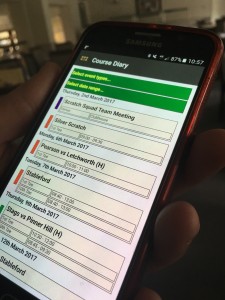 According to Emarsys’ research, in 2015 we were checking our smartphones over 150 times a day and averaged over two hours each day browsing, and Emarsys say that this “number will just continue to grow”. A year ago, 37% of all website visits were being made with mobile devices. Using key events like Black Friday to measure behaviours, in 2016 the share of visits by mobile was 55% compared to desktop’s 45%.
The real point from this is that golf clubs are consumer facing businesses that don’t get to choose how their members and visitors want to visit, how they want to buy from them, or how they want to access the information clubs hold about them. The members decide how, and golf clubs need to help them do this by providing them with suitable online and mobile tools.
Many organisations are now building apps to provide a smoother experience
The world is becoming mobile-first and golf clubs need to be mobile ready. Are you going to accommodate this lifestyle transformation by becoming a mobile-ready golf club?
Apps for members, responsive websites for visitors
With all the effort involved in making sure your club has got a high impact website that is responsive and mobile friendly, being told that you now need a native app as well, doesn’t always sit well with budgets and committees.
Essentially, club websites are for your visitors. They are the online and interactive equivalent of brochures, with screens promoting attractive club imagery. Ideally they’re showing real people having a good time, but their aim should be about getting casual visitors to click on the online tee-time booking tab in a matter of a few seconds.
A smarter experience can influence membership satisfaction
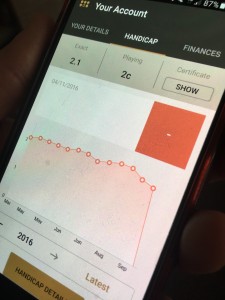 Apps, ie. native apps, are specially built for your members who don’t need websites but who want to book tee times, check their bar and pro shop balances, handicap and have easy access to a certificate when they play elsewhere. To do this means all your administrative software that generates that information needs to be programmed to talk to that native club members’ app as well, because when clicked it needs to extract content that’s personal to your individual members.
Why? Besides their results and handicaps, members want to check other members’ contact details when setting up a game, or a team for the club match. They even want to see their last receipt because they didn’t recall needing to top up their bar account, or needing to top up the Pro Shop one to enter next weekend’s competition.
Members want to do these things in one to two clicks without the drag of various clicks and scrolls to find the right page.
Irritating as that apparently minor detail may be, it’s what largely drives the smartphone experience and why so many organisations are now building apps to provide a smoother experience. The easier, faster and better a company is to deal with, the greater the advantage is over other competitors.
Text-based marketing messages have a staggering 98% open rate
In members’ terms, whilst it is unlikely visitors will switch to another club nearby because of the smartphone experience you offer, it is still a major factor in a members relationship with their choice of club. A smarter experience can influence membership satisfaction through improved communication between them and the club, and in turn, the likelihood of their retention in the future.
Taking advantage of text and push notifications
A mobile phone’s push and text notification function can remind remembers of upcoming events and weather-delayed starts to name a few. The rationale behind the mobile-ready golf club and the native app becomes unchallengeable, and more so if texting is ‘in-app’.
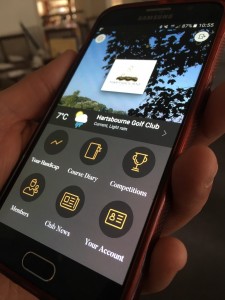 Consider this from Emarsys: as communication platforms go, people prefer texting over phone calls, voicemail, Facebook, and email. Compared to phone calls, 90% of leads prefer to be texted. Response rates from texts are 209% higher, and verification rates (positive or “yes” responses) are 295% higher.
Text messages are less intrusive than phone calls, because they can be replied to whenever is convenient, yet most people read text messages within the first 3 seconds of receiving them. What’s more, unlike email campaigns, text-based marketing messages have a staggering 98% open rate. While not every one of those opened texts results in a sale, 29% of targeted customers will respond to text messages, and 47% of those responders go on to make a purchase.
Mobile readiness is a default for members, not an aspiration
We all know that membership is about playing golf, socialising on a great course and in an ambient clubhouse eating your food. To accommodate this in an online and mobile-first world whilst staying in sync with your members’ lifestyles, your club needs to be fully mobile-ready. The pay off? Being mobile-ready means being on-hand, which will enable your club to attract more members’ to your events more often, all of which will build a thriving club with a healthier bottom line.
This article was written by MHS Group. To contact them call 01732 367 227 or email at [email protected]
By GCMA