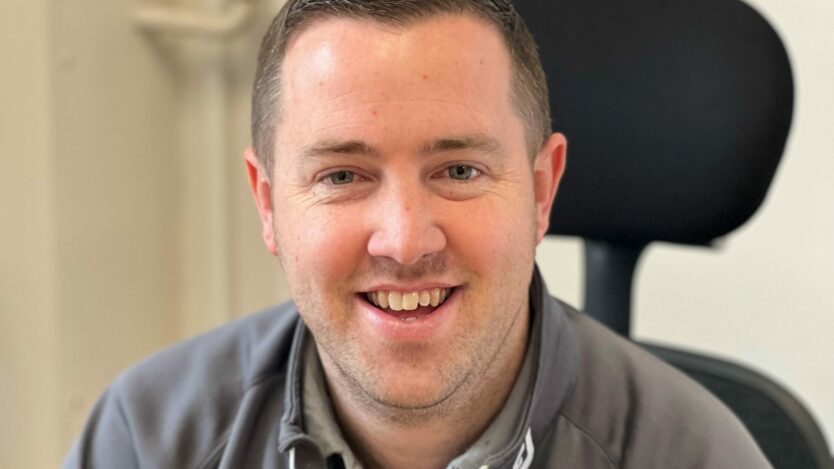
We talk to GCMA members about how they do their jobs and ask what advice they can share with peers like you. This week, we speak to Fulwell secretary Murray Cook.
What’s your guiding ethos for golf club management?
I’ve always been very hands on, and I always try to make sure that the staff can be themselves and are happy.
That doesn’t necessarily mean they get what they want, but the workplace environment is a happy one and they have someone who they can come and talk to if they need to.
I try and make sure they can be themselves because golf clubs traditionally haven’t always been environments where that is encouraged.
I guess my main ethos is that yes, they’re coming to work and getting paid, but, actually, if it’s enjoyable then they are going to stay around longer, and they will put in that extra effort.
So I try and make sure that they see that I’m having fun, and I try and make sure any issues I have aren’t visible to them.
I try to ensure that the workplace is happier when I’m in there, and that no one is on edge.
I want my team to feel able to try things, without a fear of failure.
What inspires and motivates you to come to work?
I love what I do!
When you’re in a service industry and you’re running a golf club, your aim is to make sure that everybody who walks through that door enjoys themselves, and I love making other people happy.
I am also motivated by the possibility of change.
At Fulwell I have the ability to change things, and that doesn’t necessarily mean abandoning our history, but it means we can constantly review how we do things to see if there’s a better way.
I hate the phrase, ‘We’ve always done it this way’. It doesn’t matter! What’s the best way to do it now?
It doesn’t necessarily mean you have to change, but I owe it to the club to look at the options.
It’s like when you plug a journey into a route planner and there’s three options.
Just because you’ve always gone one way doesn’t necessarily mean that’s the best route today.
The other thing that motivates me is that golf clubs become like a family.
You see that a lot when someone is ill or sadly dies, the golf club comes together and look after each other.
What do you wish you’d known at the start of your career?
I wish I’d known how political golf clubs were, and that’s not a negative, but you do have to learn how to navigate that and manoeuver the club in the right direction.
I also think certain clubs fit certain people, and that’s ok.
I think footballers are a good analogy, in that not everyone should strive to play for the biggest clubs in the world.
Many of the best players in the world have made their name playing for the right club for them, and when they’ve moved it hasn’t worked out. Someone like Wilfried Zaha for instance – he’s thrived at Crystal Palace, but things didn’t work out at Manchester United.
What’s the best piece of advice you have received?
It’s better to have tried and failed, than failed to try.
I was taught that from a very young age, and then it was reinforced by my old boss when I was running a golf shop.
He would tell me to take a gamble on things, and believe in my actions.
If you make a mistake, people will usually cut you some slack, but if you don’t try, people will rightly get frustrated.
I remember one specific example, when I said we should take a punt on a big order of waterproofs for the shop for a new brand.
It was a chunky order, but I said we should try it, and my boss went along with that.
We sold the lot in the end and made a tidy profit, but he said he wouldn’t have minded if it hadn’t worked out, as the net benefit in the long run of that learning experience and trusting my own judgement would more than outweigh the potential short-term loss.
The other piece of advice would be that you don’t have to have a fight over everything – pick your battles. Because if are confrontational over everything, people will just go around you and not involve you, and you’ll end up frustrated and angry.
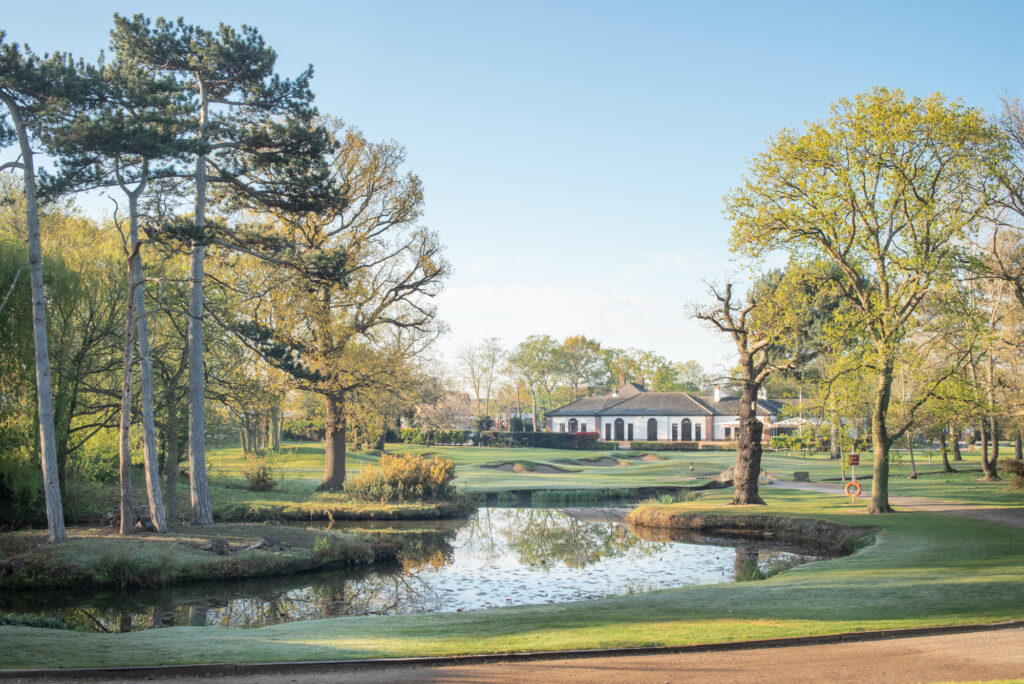
Fulwell GC
Tell us about a great golf hospitality experience you have enjoyed?
Recently I played Royal Liverpool and Royal Birkdale, and they were both fantastic experiences, with excellent customer journeys.
They made you feel like it was a one-off visit. They understand that for most visitors it might well be a once-in-a-lifetime visit, and they treated you accordingly.
They didn’t care who you were, you could have been a prince or someone off the street, they treated you exactly the same, looked after you and wanted to make your day special, which I really liked.
What’s your favourite productivity hack?
I always keep on top of my emails, and it’s the biggest de-stressor.
I’m always the first one in the office, and I get so much of my work done in that first hour.
It’s the biggest thing that I recommend – get in an hour before everyone else and get it done. It keeps you on top of the workload and also allows crucial time to interact with members later in the day.
The phone’s not ringing, no-one’s knocking on the door, and no one expects you to be there.
Whereas if you come in at nine o’clock, you’re straight into rush hour, and people expect you to be there at that point.
I know it’s a bit contentious, but I also have my email on my phone as well, which I find to be useful.
I might not answer an email when I’m at home or off, but I find that I can manage my inbox easily enough – just deleting, forwarding or marking certain emails for attention, which makes it that much easier to get stuff done when I’m in, as I’m prepared for the day.
What do you think the biggest lesson golf clubs can learn from other industries?
I think probably an understanding that you can run a golf club like a business, and that’s okay.
Yes, it’s a members’ club, but you have to run it like a business.
We’re turning over £2 million – you can’t run that with amateurs, and I think there’s still a professionalisation of the industry that needs to happen.
Also, boards and committees need to have accountability and clear roles and responsibilities otherwise how can we expect them to achieve what is expected.
Describe golf club management in 10 words or less
Ever-changing, stressful at times, but incredibly rewarding.
You’re running Golf Inc for a day – what are you changing?
It’s frustrating that there are so many governing bodies who all seem to be pulling in different directions, and I don’t think we have a clear direction as a sport.
We’re not the only sport that’s like that, but without that clear direction, and with conflicting messages, it’s stressful for golf club managers, especially when golfers might be hearing one thing and clubs another.
For instance, during Covid, England Golf were sending out updates that golf clubs could open to golfers and clubs at the same time, so we had no chance to react and golfers were unhappy.
There could definitely be a rationalisation of some of the bodies – there seems to be quite a lot of duplication, and for the ones that are left there would need to be much greater connectivity and communication – in the UK and globally – and one clear strategy for the sport.
What’s the biggest change you’ve seen during your time in golf club management?
I think it’s probably the expectations of golfers, and therefore the demands on staff.
Everyone is working harder to deliver a better experience and customer journey, which is a positive thing – I like the fact that members want things to improve, because if you are standing still you’re going backwards.
What’s your dream job?
I don’t have a specific club in mind, but anywhere that allows me to be me and to make a difference.
I don’t want to just go in, do membership, competitions, AGM and go home. The day I’m doing that, the industry is not for me.
I don’t always want to change things, but I do want to make things efficient and enjoyable for all.
For example, we’ve got a Masters par three competition coming up where we change our holes on the front nine to the same as those at the Masters, and I don’t think that would happen at some clubs, but the members here love it.
Technology you rely on most
I think I’d say social media, because it’s keeping you modern, and keeping you relevant.
You never know who’s seeing it, and if I’m looking at a golf club, as a golfer, I go on their social media to see what type of golf club it is, and I may well make a purchasing decision – green fee, or even membership – based on what I see.
My biggest realisation of that came when I employed a staff member recently, and I found out afterwards that his wife had looked at our social media and told him that it looked like a fun club that would suit him and he could be himself, so he took the job.
We might never have employed him otherwise, and the same goes for customers – you can’t put a number on the impact it has.
What’s your biggest career break?
I worked at Celtic Manor in the build up to the Ryder Cup there, and I had the option to go back and work there during the event.
But my old boss invited me back to help him run his golf shop, while he took on the running of the club as well.
It was tempting to be on-site during a major event, but I decided I would learn far more on the ground in retail, so I took that opportunity to work in the shop, and it was a huge learning curve.
He supported my development, and in the end gave me the opportunity to take over the store, when he began concentrating on the club business.
That led to me getting the job as assistant secretary here, before I had the chance to take over as secretary in 2015, when I was just 27, and I don’t think I’d have had that chance if I’d pursued that opportunity to return to Celtic Manor.