Mike Wells is currently in his second stint as captain of the Yorkshire region. We asked the York Golf Club secretary/manager what it entails…
It was a proud year for Mike Wells when he served as captain of the Yorkshire region in 2012. He enjoyed his stint, and had probably thought that was it.
But when the region’s vice-captain advised he would not be able to assume the captain’s role this year, at around the same time as regional manager Cameron Dawson was about to become GCMA national captain, a novel set of circumstances led to a novel solution.
While Dawson would remain Yorkshire’s Regional Manager, he’d need some assistance in his day job as he fulfilled the obligations associated with being the GCMA’s figurehead. So the region’s past captains broke with tradition and asked Wells if he’d consider taking on the key ceremonial role for the second time – and give Dawson a helping hand. He’s the first captain in the last four decades to repeat in one of the GCMA’s largest regions so who better to ask about the role and what it entails?
You’re the Yorkshire captain for the second time. So just what does the regional captain do?
For me, the primary role is to lead the region – whether that is at matches or at meetings.
It is to be there as the figurehead, as it is in most golf clubs and indeed as it is here at York. That’s the role for the captain of the region to play. It is to represent the ‘Yorkshire region’ when I go to other venues, regions and clubs when it is GCMA related.
As I suspect it is with most regions, our regional manager has historically done most of the day-to-day organisation thus allowing the captain to concentrate on the public relations side of the role.
A significant part of the reason for me coming back on board was that, with Cameron as national captain, he couldn’t do as much of his regional manager duties. We needed to make sure all went smoothly – or at least seemed to as far as Yorkshire members were concerned.
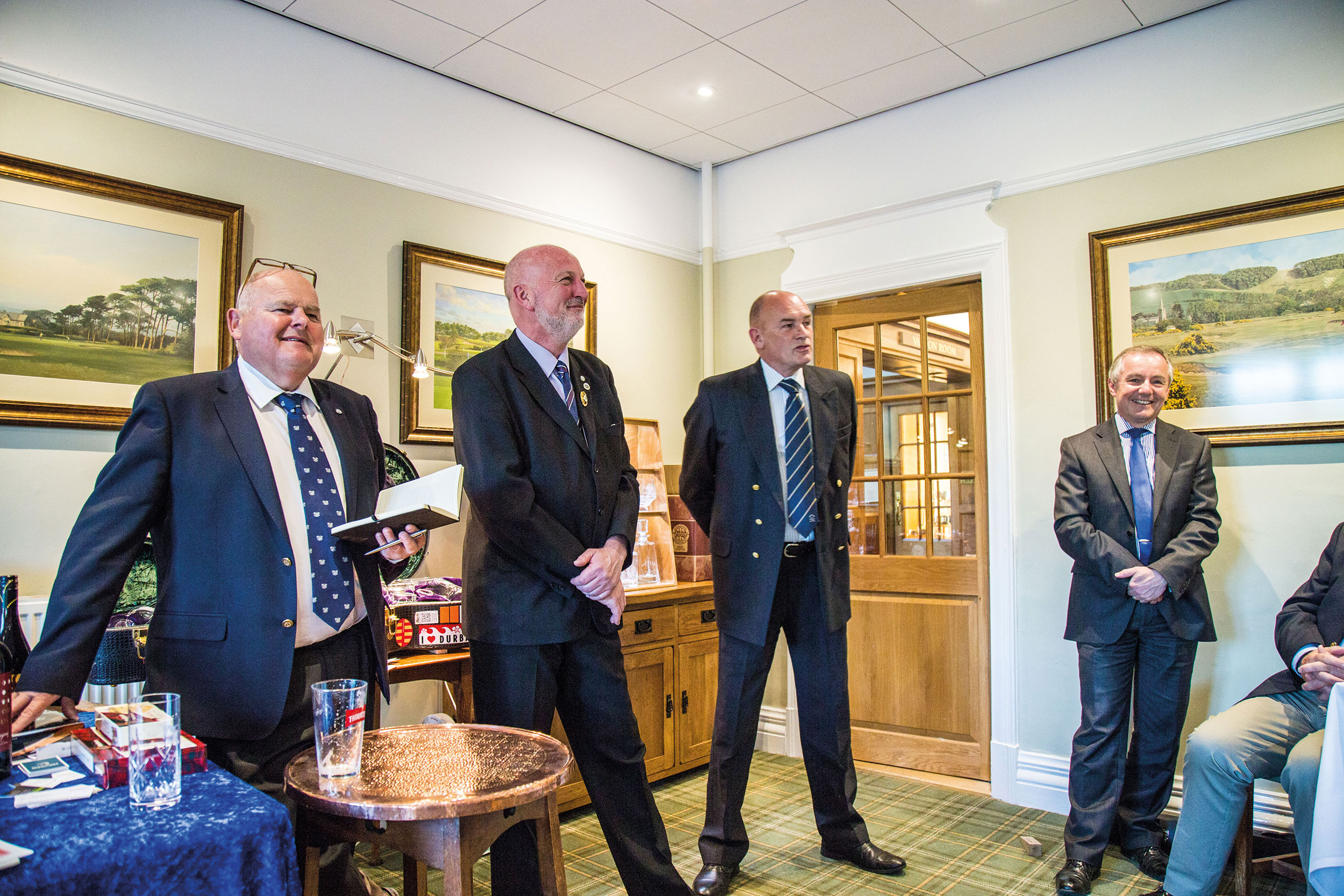 Since I had been involved on committee before, I was able to take some of the more time consuming tasks from Cameron by looking after the region’s matches this year – selecting the teams, notifying players, arranging meals with clubs, arranging late substitutes when needed, collecting and logging payments – all day-to-day tasks that do take time. Additionally, fellow committee member Richard Green and I ran our annual East Coast Classic Event as a further way of reducing Cameron’s workload.
It was clearly exceptionally well run as we won it!
You are a full-time club manager as well. How do you fit all of this in with your job?
When the past captains asked if I would take the role, I was happy to do so. My club were keen to support me since they were aware of the time I put into my role – full-time doesn’t say it all as the hours are far longer than that.
In all fairness, as Cameron had things so well organised originally, the day-to-day administrative work was slotted in between club duties – and if that meant staying at work a bit longer to keep up to date then so be it. It is not as onerous as some people might think.
Probably the most difficult part was sorting out players across the season of matches and ensuring everyone got a fair number of games.
After that, it was simply keeping on top of where we were for each event. It’s no different than planning and running a club match.
I would always say to anybody ‘if you’re given the option to be your regional captain take it and just enjoy it’. To me, it’s great fun. It’s an honour to be the regional captain.
You lead the regional meetings. How are they organised?
In Yorkshire region we have always tried to keep our meetings informative and interesting and thanks is due to our regional managers for doing so over the years. We were aware of concerns that regional meetings could easily become a simple jolly for retired members and not really beneficial to working managers.
“In Yorkshire region we have always tried to keep our meetings informative and interesting…
So some years ago we introduced business meetings outside of our main two meetings of the year – in order to maximise the benefits for working managers in taking time away from the desk by listening to and meeting suppliers.
Our two main meetings – spring and autumn – are a mixture of presentations from key personnel within the industry and reports on what’s going on in golf – things that will be of interest to all attendees whether still working or not – and also about people continuing to network.
To be honest, Cameron does most of the pre-planning and organisation beforehand in discussion with the regional committee – then he and I sit down to agree the running order – after which it’s down to me to keep things going on the day.
It’s a comfort, however, to have Cameron next to me at these meetings to thump me in the arm if I don’t follow the running order or get anything wrong. At that point in the day he is there as our regional manager and not national captain!
That’s not as easy as people might think. Speakers can go over their time and if there are questions it can get away from you. How much of a challenge is the organisational element of leading meetings?
You have to think about ‘how long do they need?’ or, initially, ‘how long do we need them to speak for?’ How much of the day do we want them to fill? How relevant is it?
If we’ve have our chief executive with us, for example, you shouldn’t give him half the time of other people because he is the top man and should have the largest slice of the time available.
It’s the trick of trying to get the timings right. You don’t want to pack too much in, but you don’t want people to get bored.
It’s a fine balance. I think the key thing is actually planning it well and selecting your speakers correctly – then sticking to your schedule come what may.
Yorkshire is a big region and there are all different types of clubs represented. How do you lead a harmonious region?
Yorkshire is huge. We have members at all points of East, West, South and North Yorkshire who travel to regional events – and we have a host of clubs too who are located just as far apart.
They cover the spectrum of golf clubs as well, which often makes for interesting conversations with colleagues at meetings.
We try to make sure we move our meetings around and also try to ensure all of our matches are played at different venues and, if possible, that we’ve got an event in each part of the region.
It’s a way of saying ‘if you can’t come to this, come along to that one: it’s in your part of the region’. When you’re geographically as big as we are, it’s the only thing you can do.
You try and create an environment – and I think we have it here in Yorkshire – where people talk to each other.
I have lots of conversations with managers elsewhere, and not just as captain but as a part of the region. I’ll talk to people in Leeds or Sheffield or Scarborough about what they are doing to make their club better – the sheer distance between us means we are not competitors and so can talk without worrying about anyone stealing an idea to our cost.
We also try and keep ahead of the game so whenever somebody new comes on board, or moves to the region, we speak to them and seek to welcome them to the Yorkshire region.
Have you enjoyed coming back for a second time? It doesn’t happen that often…
Yes. In a way it’s been more fun this time. First time around, you are always a bit nervous. You are trying to do everything right and you end up inevitably doing things wrong. You come back a second time and you can remember what you did wrong, hopefully, and correct it. Most of the time I think I’ve managed that so far.
Because of the nature of this year, with Cameron’s position, it’s been easier for me in a way as running matches helped me get into the swing of it. From that point of view, if I was talking to a future captain I’d say ‘you do the teams, because you’ll enjoy doing it and you have that much more element of control as you go forward’. I love it. It’s been great fun so far and hopefully will stay that way until I hand over the reins next year.
So you would recommend the role?
Without hesitation. If it’s a first-time offer, take it because you will enjoy it. Just don’t get too het up about it. If you get asked to come back a second time, it will be easier than the first time, so enjoy it all the more. It’s an honour and I treat it as that. I don’t treat it as a right, or otherwise and am delighted the region said they would like me to represent them.